

Hurricane season begins in the Atlantic with more activity and less funds in the USA.
Hurricane season begins amid political storm over cuts to the Federal Emergency Management Agency, FEMA
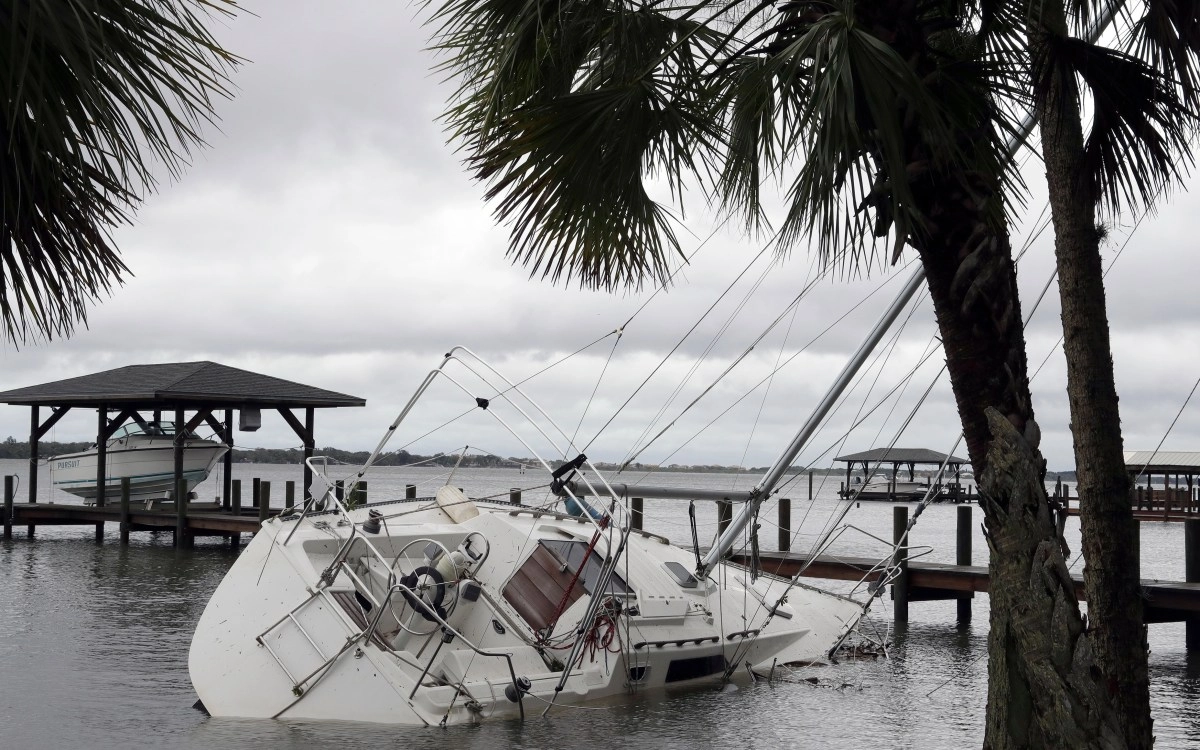

The Atlantic cyclone season begins this Sunday with a forecast of up to 10 hurricanes and 19 named storms, above the historical average due to warming oceans, and amid controversy in the United States over cuts to climate and emergency agencies.
From From June 1 to November 30, there will be between six and ten hurricanes, of which three and five will be major, category three, four or five on the Saffir-Simpson scale, in addition to 13 to 19 named storms, that is, with sustained winds greater than 62 kilometers per hour, according to the National Oceanic and Atmospheric Administration (NOAA). The cyclones will be named Andrés, Barry, Chantal, Dexter, Erin, Fernand, Gabrielle, Humberto, Imelda, Jerry, Karen, Lorenzo, Melissa, Nestor, Olga, Pablo, Rebeka, Sebastien, Tanya, Van and Wendy, according to NOAA. Gladys Rubio, meteorologist at the National Hurricane Center (NHC) in the United States, warned in an interview with EFE that "a more active hurricane season than normal is expected and that is what has been seen in recent years.”
“Every year we have a little more tropical cyclones and the important thing is to prepare all the people who live, for example, in Florida, on the Gulf Coast, in the Caribbean Sea, in Mexico, it is known that they are prone to a tropical system. So the hurricane season begins, we must prepare,” she explained.
The increase in cyclones occurs due to the warming of the oceans, a neutral situation of the El Niño phenomenon and the potential for a more active monsoon in West Africa, which generates more tropical waves, described the meteorologist.
More risks and vulnerability
The estimate for 2025 comes after a season in 2024 that was also larger than usual, with 18 storms and 11 hurricanes, including five that hit the United States, with Helene being the largest of them, as it left more than 200 deaths in southern regions, such as Georgia, Florida and North Carolina.
The director of NHC, Michael Brennan,He indicated that activity has been “very active” over the past 30 years, and insisted that “it doesn’t really matter what the season forecast says, as there are risks of impact every year,” as shown by the 10 hurricanes that are expected to make landfall somewhere in the Atlantic by 2024.
In addition, there is an increase in the population on the coasts, so “even if forecasts and information improve, vulnerability persists or even increases, because people continue to move to hurricane-prone areas,” Brennan said at a press conference to mark the start of hurricane season.
A political storm
Hurricane season begins amid the political storm unleashed by the approval 10 days ago in the House of Representatives of President Donald Trump’s “big, beautiful bill,” which includes a cut of almost 30% annually to NOAA and $646 million to the Federal Emergency Management Agency. Emergency Management Agency (FEMA).
NOAA and NHC executives have insisted to the media that the cuts do not affect their operations and that they are fully staffed to deal with cyclones, although FEMA admitted that it is not prepared in a document leaked to the media in May.
Therefore, Democrats are pushing an amendment to prevent cuts to climate agencies and FEMA, while the budget still has to pass the Senate.
"Cutting funds for weather forecasting does not make the government more efficient, it only makes Americans more insecure," argued Florida Congressman Jared Moskowitz, who is leading this initiative, in a statement on his social networks.
Republicans have ruled out impacts on the disaster response, like Florida Governor Ron DeSantis, who assures that the state does not depend on these resources.
"At the state level, we are ready to support any and all local needs this hurricane season," he said on A message to mark the start of hurricane season.