

The Supreme Court allows Trump to deport immigrants to South Sudan
The Supreme Court paves the way for the deportation to South Sudan of several immigrants who are not from that country and do not know it
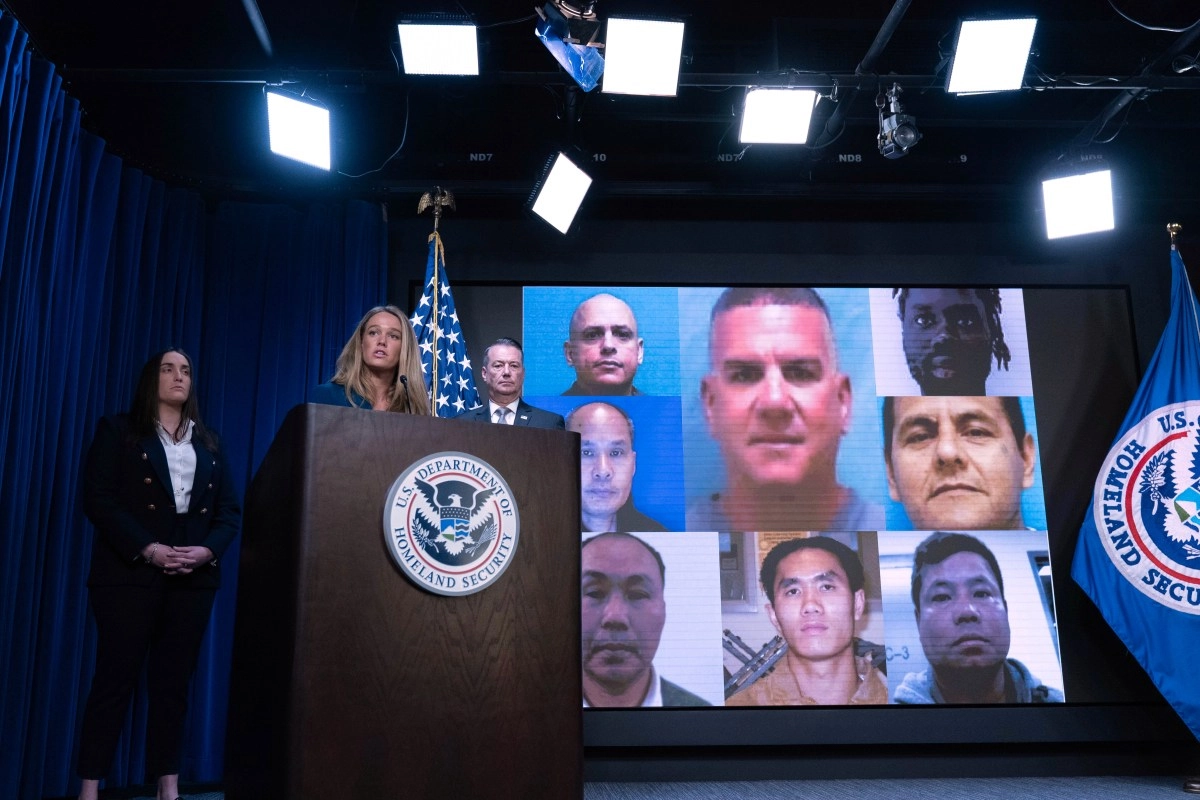

The Supreme Court on Thursday allowed the Trump administration to deport several immigrants who were put on a flight in May bound for South Sudan, a war-torn country with which they have no ties.
Among the 8 immigrants to be deported are two Cubans and a Mexican, who have spent more than a month in custody at a military base in Djibouti, Africa, due to a court order.
Thursday's Supreme Court decision overturns a motion issued by a federal judge that had halted the deportation of eight immigrants to South Sudan, despite the fact that the highest court had allowed the White House to deport migrants to third countries.
Federal Judge Brian Murphy of Massachusetts had determined last May that the Trump Administration violated an order that prevented it from deporting the eight immigrants to a country where they could be tortured without giving them the opportunity for an adequate legal defense.
Due to Judge Murphy's ruling, the eight immigrants and eleven immigration agents were at an air base in Djibouti, where, according to government lawyers, they were in danger due to being exposed to a possible attack from Yemen, in addition to risks to their health due to "deplorable" conditions.
After the ruling that allowed the deportation to third countries, defenders of The migrants asked Murphy to continue halting the deportation, but that order was reversed Thursday.
Justices Sonia Sotomayor and Ketanji Brown Jackson dissented from the Supreme Court majority decision.
“Today’s order makes one thing clear: other litigants must follow the rules, but the government has the Supreme Court at its disposal,” Sotomayor wrote.
Of the eight deported, only one is from South Sudan, and the rest are originally from Cuba, Mexico, Laos, Burma, and Vietnam.
U.S. law stipulates that the government cannot deport migrants to third countries where they could be tortured or otherwise at risk.
The State Department considers South Sudan a dangerous country because of the armed conflict, recommends that Americans not travel there, and withdrew its nonessential personnel from the country in early May.
The South Sudan case is the latest clash between the government and the judiciary, following increasingly aggressive measures to comply with Trump's promise of mass deportations.
To speed up deportations, the Trump administration is seeking agreements with other countries to accept migrants expelled from the country.
Last March, the Trump administration ordered more than 200 people to be sent to a mega-prison in El Salvador, where most remain cut off from their families and lawyers.