

Los Zetas, the Beltran Leyva, and Other Cartels That Arose from Betrayals
What were once armed cells of a cartel ended up becoming mortal enemies
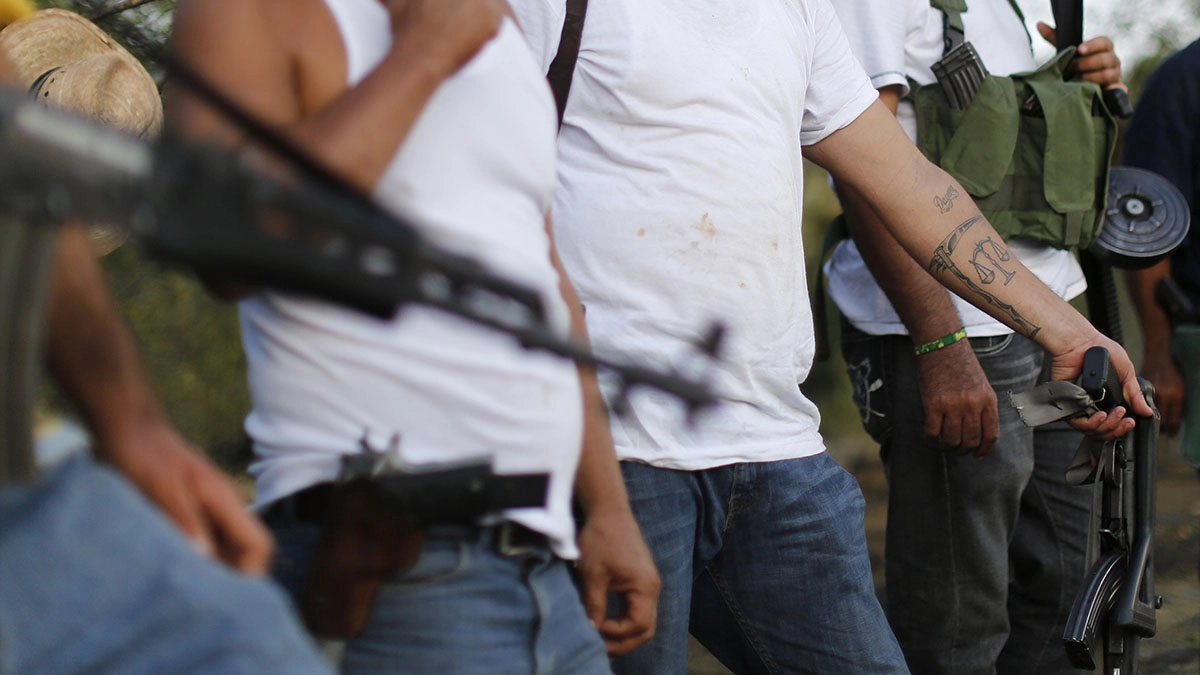

Organized crime in Mexico has been marked by broken alliances, internal betrayals, and power struggles that have given rise to some of the most violent criminal organizations of recent decades.
Los Zetas, the Beltran Leyva cartel, and the Knights Templar arose as splinter arms of larger structures, driven by disagreements, revenge, and internal fractures. Their rise and subsequent fragmentation have left a legacy of violence that still impacts various regions of the country.
Their history began in the late 1990s, when Arturo Guzman Decena, a lieutenant trained by Israeli and US special forces, deserted the Mexican Army to join the Gulf Cartel, according to Insight Crime.
With him, at least 30 members of the Airmobile Special Forces Group (GAFE) and other military units formed an armed wing that soon distinguished itself by its brutality, firepower, and urban warfare tactics.
During the 2000s, Los Zetas expanded their influence throughout much of Mexico and even crossed borders into Guatemala. Their criminal economy was based not only on cocaine trafficking, but also on extortion, kidnapping, human trafficking, and territorial control through terror.
Unlike other cartels, they did not seek agreements: they imposed order with massacres and public executions.
In 2010, after years of tension, Los Zetas broke away from the Gulf Cartel, unleashing an internal war in the northeast of the country. Cities such as Reynosa, Matamoros, and Monterrey became scenes of armed confrontations and forced displacements.
The decline began after the death of Heriberto Lazcano, "El Lazca," in 2012, and the capture of Miguel Angel Trevino, "Z-40," in 2013. The organization divided into rival factions: the Northeast Cartel (CDN) and Los Zetas Vieja Escuela. Although weakened, both cells have maintained a presence in key areas such as Nuevo Laredo.
Born in Badiraguato, Sinaloa,In the same region as Joaquin “El Chapo” Guzman, the Beltran Leyva brothers Arturo, Alfredo, Hector, and Carlos began as operators of the Juarez Cartel.
Their rise in the drug world was consolidated with their entry into “La Federacion” in 2002, a coalition led by Ismael “El Mayo” Zambada, “Nacho” Coronel, and “Chapo” himself.
The Beltran Leyva organization gained power and territory in states such as Guerrero, Morelos, and Jalisco. Its armed wing, Arturo’s Special Forces (FEDA), rivaled Los Zetas in cruelty.
In 2008, a betrayal marked their break with the Sinaloa Cartel: the arrest of Alfredo Beltran was attributed to information leaked by “El Chapo.” The response was immediate: the murder of Edgar Guzman, son of the Sinaloa drug lord.
The Beltran Leyva gang then sought alliances with old rivals like Los Zetas and openly confronted the Sinaloa Cartel. The war generated an unprecedented wave of violence. In 2009, Arturo was killed by the Navy, and in the following years, the group's main leaders were captured.
Despite its dismantling, split-offs emerged such as Guerreros Unidos and Los Rojos, responsible for high-impact acts, such as the disappearance of the 43 Ayotzinapa students, according to the Truth Commission report, according to the Los Angeles Times.
The Beltran Leyva legacy persists in cells that operate in central and southern states, and in figures such as “Chapo Isidro,” with a presence in the northwest.
In March 2011, Michoacan witnessed the birth of a new cartel: Los Caballeros Templarios, which split from La Familia Michoacana after the alleged death of its spiritual leader, Nazario Moreno, “El Chayo.”
According to Insight Crime, they presented themselves as a group of "self-defense" group committed to fighting Mexico's major criminal cartels on behalf of the Michoacan population. The group used religious symbols, codes of conduct, and social propaganda to justify its violence and consolidate power.
With leaders like Servando Gomez, "La Tuta," and Enrique Plancarte, "El Kike," the Templarios controlled political, economic, and criminal life in vast areas of southwestern Mexico. They imposed "quotas" on merchants, looted mines, and trafficked methamphetamines using the port of Lazaro Cardenas as a logistical enclave.
The state began to regain control in 2014 after the deaths of "El Chayo" and "El Kike," as well as the capture of "La Tuta" in 2015. Before that, in just two years they managed to expand to six Mexican states, according to El Economista.
However, the group's fragmentation gave way to new cells like Los Viagras,who are in dispute with the Jalisco New Generation Cartel (CJNG) in Michoacan and Guerrero.
The Templarios also faced pressure from the self-defense forces, civilian armed groups that emerged with official support to combat drug trafficking, which accelerated their collapse as a structured organization.
Betrayals, broken alliances, and a fragmented drug trade
The emergence of cartels such as Los Zetas, the Beltran Leyva, and Los Caballeros Templarios is evidence of a constant in the Mexican criminal world: internal betrayals as a catalyst for new organizations. What were once armed wings or strategic allies ended up becoming mortal enemies.
These betrayals reconfigured the map of organized crime in Mexico, generating a multiplication of groups, territorial disputes, and more fragmented but persistent violence. Today, many of those original structures have disappeared or have been transformed into regional cells with less reach, but with the capacity to generate chaos in their areas of operation.