

Australia: what the ban on access to social networks for those under 16 consists of and how they will implement it
The world's first law aims to reduce the risks children face online, but it has received criticism.
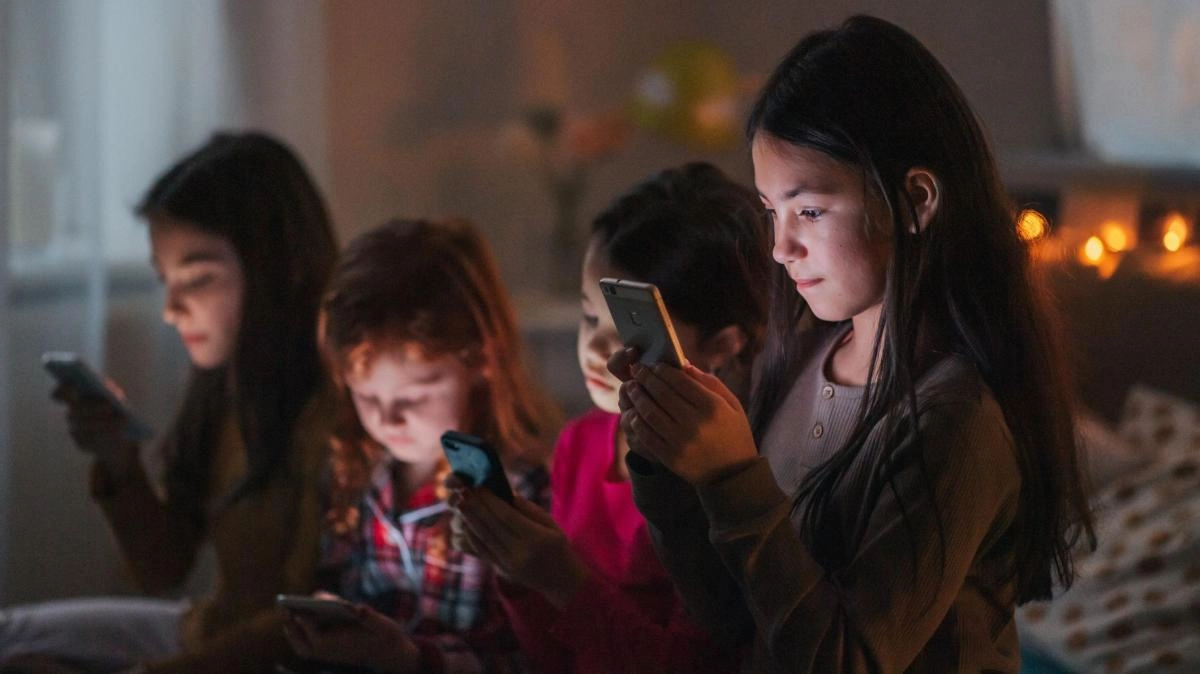

Social media companies will have to take "reasonable measures" in Australia, starting December 10, to ensure that those under 16 cannot create accounts on their platforms. In addition, existing accounts must be deactivated or deleted.
The government of that country asserts that the ban, a pioneering policy worldwide and popular among many parents, aims to reduce the “pressures and risks” to which children may be exposed on the apps.
Risks stemming from “design that encourages them to spend more time in front of screens, while offering them content that can harm their health and well-being.”
A study commissioned by the Australian government earlier this year revealed that 96% of children between the ages of 10 and 15 use social media and that 7 out of 10 had been exposed to harmful content and behavior.
This behavior ranged from misogynistic material to videos of fights and content promoting eating disorders and suicide.
One in seven children also reported experiencing sexual harassment from adults or older children, and more than half claimed to have been victims of Cyberbullying.
Greg Attwells, director of the Australian activist group 36 Months, which has lobbied to raise the minimum age for using social media from 13 to 16, told the BBC that this is not a ban.
It is more of a “measure that will allow young people to get to know themselves before the world does. It is about delaying by 36 months the moment they become digital citizens of a social media ecosystem.”
Platforms Affected
So far, the Australian government has named nine platforms that will be included in the ban: Facebook, Instagram, Snapchat, Threads, TikTok, X, YouTube, Reddit, and Kick, an exclusive streaming platform.
It is also pushing to extend the ban to online video games. Fearing they would be targeted by the measures, platforms like Roblox and Discord have recently implemented age controls on some features, apparently to avoid being included.
The government has stated that it will continue to review the list of affected platforms and will consider three main criteria: whether the platform's primary or sole purpose is to allow online social interaction between two or more users, whether it enables users to interact with other users, or whether users can post content.
YouTube Kids, Google Classroom, and WhatsApp are not included, as they were not deemed to meet these criteria. Children will also still be able to view most content on platforms like YouTube that do not require an account.
Responsible Businesses
Neither children nor their parents will be penalized for breaching the ban. Social media companies will be responsible for enforcing the rule and could face fines of up to US$49.5 million for serious or repeated violations. The government states that these companies must take “reasonable measures” to prevent minors from accessing their platforms and use age verification technologies, without specifying which ones. Several possibilities have been raised so far, including the use of official identity documents, facial or voice recognition, and age inference. The government is urging platforms to use various age verification methods. It has also indicated that platforms cannot rely on users' age declarations or parental consent. Meta, which owns Facebook, Instagram, and Threads, has announced that it will begin closing accounts of teenagers starting December 4. Those who are banned in error will be able to use an official ID or a selfie video to verify their age, according to the company. The other affected platforms have not yet announced how they will comply with the ban. Without a clear understanding of the methods the companies will use, it is difficult to determine the effectiveness of the social media ban. However, there are concerns that age verification technologies may mistakenly block some users and fail to detect others who are minors. The Australian government's own report concluded that facial recognition technology, for example, is the least reliable method for the specific demographic it targets.
It has also been questioned whether the fines for violations are high enough.
As Stephen Scheeler, a former Facebook executive, told the Australian Associated Press: “Meta takes approximately 1 hour and 52 minutes to generate US$50 million in revenue.”
Critics argue that the ban, even if implemented correctly, will not reduce online harm to children.
It does not include dating websites or gaming platforms, nor does it include AI chatbots, which have recently made headlines for allegedly inciting children to suicide and for engaging in sexually explicit conversations with minors.
Others point out that teenagers who rely on social media to feel part of a community will become isolated and argue that it would be more effective to educate children on how to use them.
Australia's Communications Minister, Annika Wells, has acknowledged that the ban may not be “perfect.”
“You will see a “It was a bit messy during implementation,” Wells said in early November. “Major reforms always are.”
Data Protection
Critics have also expressed concern about the large-scale collection and storage of data that will be necessary, and its potential misuse, as platforms attempt to verify users' ages.
Australia, like much of the world, has suffered a number of high-profile data breaches in recent years, including several in which sensitive personal information was stolen, sold, or published.
However, the government says the legislation incorporates “robust protections” for personal information. These stipulate that such information cannot be used for any purpose other than age verification and must be destroyed once completed, with “severe penalties” for non-compliance.
It also states that platforms must offer an alternative to using official identity documents for age verification.
Companies' Response
Social media companies were dismayed by the announcement of the ban in November 2024. They argued that it would be difficult to implement, easy to circumvent, and time-consuming for users, as well as posing risks to their privacy.
They also suggested that it would push children into the dark corners of the internet and deprive young people of social contact. Snap, owner of Snapchat, and YouTube also denied being social media companies.
Google, YouTube's parent company, is reportedly still considering whether to take legal action against the platform's inclusion in the ban.The company did not respond to the BBC's request for comment.
Although it announced it would implement it soon, Meta argued that the ban would leave teenagers with inconsistent protection across the various apps they use.
At parliamentary hearings in October, TikTok and Snap stated they continued to oppose the ban but would implement it.
Kick, the only Australian company included in the ban, stated it would introduce a range of measures and continue to engage constructively with authorities.
“I spoke to someone at one of the big tech platforms and asked them what their concerns were,” activist Greg Attwells told the BBC.
“They told me this represents a risk of global contagion. They are concerned that what is happening in Australia will spread to other parts of the world and they want to contain it within the country,” he added.
Similar bans
The ban on social media use for those under 16 This is a world first, and other countries will be watching closely. Elsewhere, different approaches have been tried to limit children's screen time and social media use and prevent them from accessing harmful content, but none have imposed a total ban on the platforms involved. In the UK, new safety rules introduced in July mean that online companies face hefty fines or even imprisonment for their executives if they fail to implement measures to protect young people from illegal and harmful content. Other European countries allow social media use by children under a certain age only with parental consent. In September, a French parliamentary committee recommended banning social media use for children under 15, as well as establishing a "curfew" on social media use for 15- to 18-year-olds. Denmark has announced plans to ban social media for children under 15. 15 years old, while Norway is considering a similar proposal. The Spanish government has sent a bill to Parliament requiring minors under 16 to have the authorization of their legal guardians to access them.
Meanwhile, an attempt in the US state of Utah to prohibit minors under 18 from using social media without parental consent was blocked last year by a federal judge.
Users' opinion
Teenagers interviewed by the BBC said they were creating new accounts with fake ages before the ban came into effect,Despite the government warning social media companies that it expects them to detect and remove such accounts. Online, teenagers are also recommending alternative social media apps or giving advice in the hope that they will help them circumvent the ban. Some young people, including influencers, have opted for joint accounts with their parents. Analysts also predict an increase in the use of VPNs (which hide the country from which the internet is accessed).
“Yes, children find ways to circumvent the rules. That doesn't mean the law shouldn't exist. We still have rules in place for their safety,” concludes Attwell.