

Censorship against journalists in Mexico not only kill or silence, now watch, alert NGO Article 19
This "institutionalized surveillance" disguises as common good, but in practice, serves as a control tool, states Leopoldo Maldonado
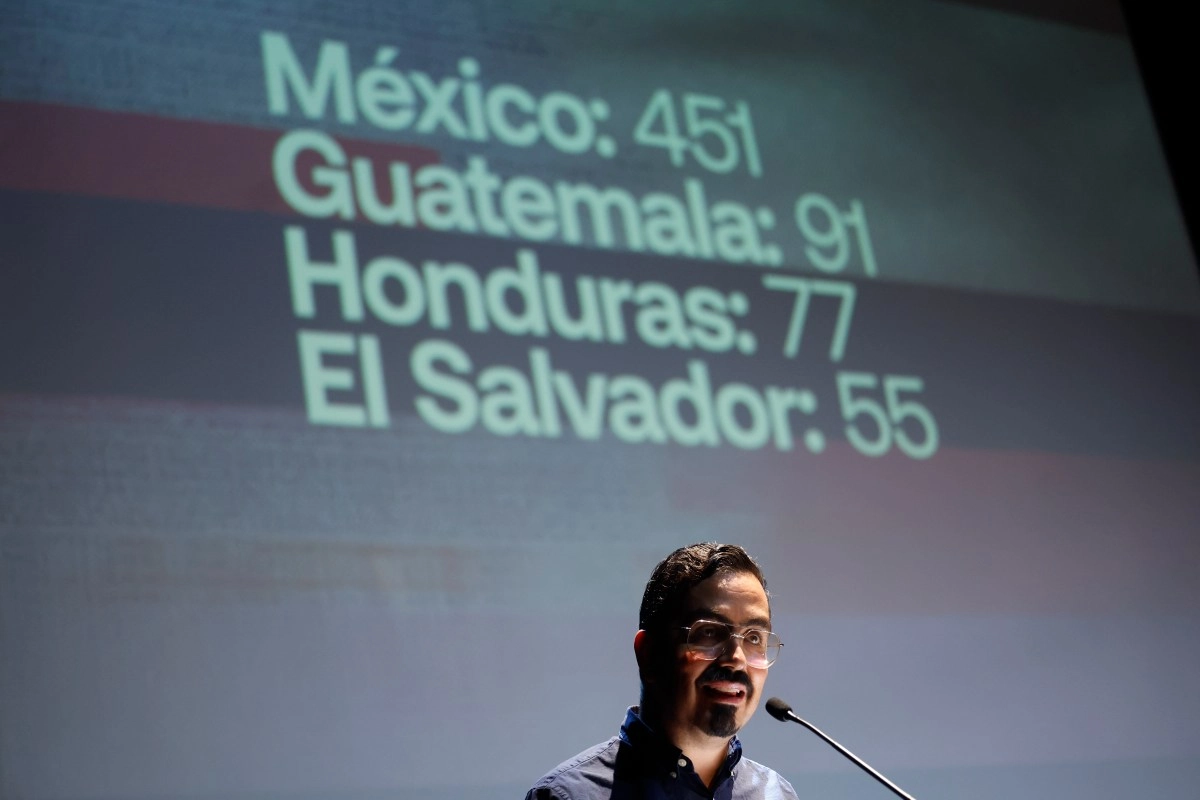

The organization Article 19 warned that censorship against journalists in Mexico has evolved towards more sophisticated mechanisms that no longer only imp lican physical violence, but also technological surveillance, institutional opacity and control of information, in accordance with its 2025 annual report.
The document, titled “Structures of silence: censorship, opacity and surveillance”, was presented at the Spain Cultural Center and offers, for the first time in two decades, a regional analysis covering six countries: Mexico, Guatemala, Honduras, El Salvador, Cuba and Nicaragua.
During the presentation, Leopoldo Maldonado pointed out that there is a shared tendency in the region to discredit the critical press and treatment ar information as a threat. “Violence is only the tip of the iceberg of increasingly complex structures of silencing,” he stated.
Persistent violence and new forms of censorship
The report documents that in 2025 Mexico recorded 451 attacks against journalists, which is equivalent to one attack every 20 hours. These cases include seven murders, one disappearance and multiple homicide attempts related to informative work, which keeps the country as one of the most dangerous in the world for practicing journalism.
Aggressions are not limited to direct violence. The so-called “hostile” environment, which includes smear campaigns, digital harassment, and displacement. Forced attack represented 44% of the attacks in Mexico. To this is the use of the state apparatus to intimidate or block journalistic work.
States such as Mexico City, Puebla and Veracruz concentrated the largest number of cases, reflecting a widespread problematic at local and national levels.
At the regional level, the organization counted 674 attacks against the press in 2025. In countries like El Salvador, 100% of the attacks document ted were attributed to state structures, while in Honduras and Guatemala a significant proportion also came from authorities.
Opacity and surveillance, new risks for the press
The report also identifies a regression in access to public information in Mexico, linked to changes in the transparency system ia. Depending on the organization, new institutions have discarded the great majority of citizen resources, limiting accountability.
In parallel, digital surveillance emerges as one of the main threats. Article 19 documented 456 attacks with Pegasus software in Mexico, which positions the country as one of the main users of this type of technology at a global level. This program, developed by the company NSO Group, has been noticed for its use to tap phones of journalists, activists,and opponents.
The report warns that security initiatives promoted by the government of President Claudia Sheinbaum could expand the capabilities of state surveillance, including access to personal data by security forces, which raises concerns about possible abuse.
For experts, this combination of violence, opacity and espionage creates an environment where journalism becomes increasingly risky. “When inf or investigate or even ask becomes dangerous, we are in a phenomenon of silencing that directly affects democracy,” Maldonado warned.
The report concludes that, in this panorama, journalism in the region not only faces physical threats, but also an structural system ural that seeks to inhibit freedom of expression, which represents a growing challenge for democratic institutions in Latin America.