

US assures that the Strait of Hormuz is open while exchanging attacks with Iran
The actions take place after the attack against a Cypriot-flagged ship that was sailing along that important commercial route.
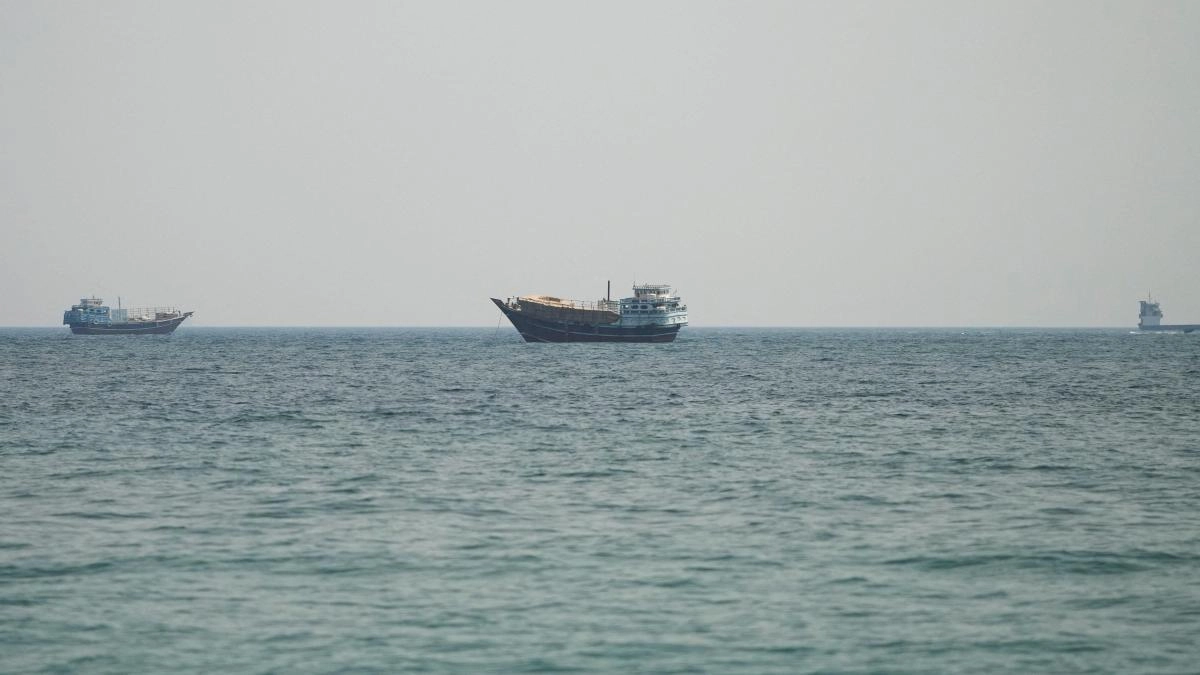

The United States assures that the Strait of Hormuz remains open, despite Iran claiming to have closed the sea route amid new attacks between the two.
Hostilities, which flared up earlier in the week, continued into the weekend.
This Sunday, the US Central Command announced the beginning of a wave of attacks against Iran to - as indicated in a message on its
Previously, on Saturday, US forces had announced that they had attacked more than 140 targets in Iranian territory.
The offensive was a response to an attack by Iranian forces against a ship transiting the strait. According to Iran, the vessel was using an unauthorized route.
Iran has attempted to impose its control over the strategic sea route and, early on Sunday, declared that it would remain closed until further notice.
Iran's Islamic Revolutionary Guard Corps (IRGC) also launched wide-ranging attacks against US bases and allies in the region on Sunday, escalating the scale of hostilities.
The military organization claimed to have attacked a US base in Jordan, while the United Arab Emirates (UAE), Qatar, Kuwait, Oman and Bahrain said they responded to missile and drone attacks from Iran.
The BBC has asked US Central Command (Centcom) for comment on the attack in Jordan.
Qatar, a mediator in ceasefire talks, had not been attacked since April, while the UAE had not been attacked since May.
On Sunday afternoon, Iran's IRNA news agency reported that the "enemy" had launched missiles toward Qeshm, a strategically important island in the Gulf that hosts a key Revolutionary Guard base.
The resumption of attacks has jeopardized the provisional ceasefire agreement signed last month, whose objective was to reopen the strait and achieve, in the long term, a definitive end to the conflict.
Earlier this week, US President Donald Trump declared that the Iranian strikes ended the ceasefire, while Iranian Foreign Minister Abbas Araghchi accused the US of violating the agreement.
However, Trump said the talks would continue and that mediators were trying to revive the process.
US media reported that Iran told US officials that the attacks on oil tankers earlier in the week were a mistake and attributed responsibility to a domestic dissident group.
The latest wave of hostilities was triggered after the Revolutionary Guard announced that it had fired a missile at a vessel attempting to navigate an unauthorized route.
Centcom stated that the Islamic Revolutionary Guard Corps “flagrantly attacked” a Cyprus-flagged ship that “could not continue its journey” due to damage to the engine room.
The US high command added that a member of the crew of the MV GFS Galaxy was missing.
The United Kingdom Maritime Trade Operations Organization (UKMTO) reported that military authorities told it that the ship's crew was forced to abandon ship and were in a lifeboat.
“Iran was given another opportunity to demonstrate its compliance with the Memorandum of Understanding after being held accountable for previous attacks on commercial vessels, but it has failed again,” Centcom wrote in X.
He also noted that the US strikes hit 140 Iranian military targets, including missile and drone facilities, communications networks and coastal surveillance posts.
The statement was shared by US Secretary of Defense Pete Hegseth, who wrote: "Iran made a bad decision. Now they are paying the consequences."
The Revolutionary Guard, for its part, claimed that the US had attacked “several coastal bases and telecommunications towers on the southern coast.”
In response, Iran declared that its “first phase” of retaliation included attacks on the Prince Hassan air base in Jordan, claiming to have destroyed the base's command and control center as well as hangars for MQ-9 drones.
On Sunday, Centcom reiterated that the strait remained open and warned that US military forces were positioned to ensure traffic continued to flow freely.
However, earlier the speaker of the Iranian Parliament, Mohammad Bagher Ghalibaf—who is also the country's chief negotiator with the US—wrote in X that the “era of unilateral agreements is OVER.”
"We told them: keep your word or pay the price. Reality is knocking at the door," he concluded.