

Fear of the raids no longer stops day laborers
People continue to arrive at Home Depot to find a way to earn a living and continue putting food on their families' tables.
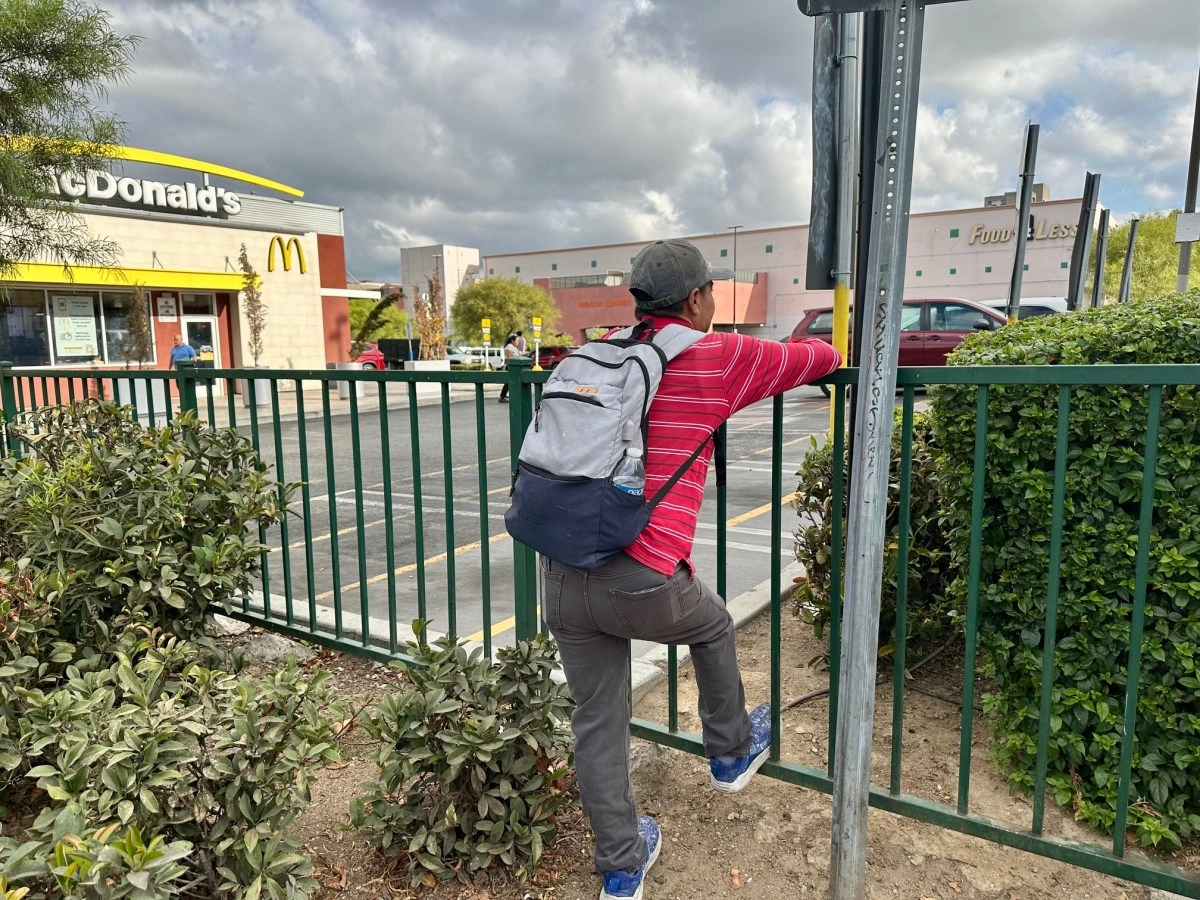

Pedro feels blessed because he has not been present during the four immigration raids that have taken place in the parking lot of the Home Depot store in the Westlake neighborhood of Los Angeles between June and August.
"Thank God, I've had work with my bosses on those days. When I can't get anything done with them or I take a break, almost always once or twice "I come here to Home Depot once a week," says the day laborer.
Home Depot parking lots in Los Angeles County and Southern California have been subject to constant immigration raids since June.
The Home Depot store in Los Angeles' Westlake neighborhood has been the target of four raids by Immigration and Customs Enforcement (ICE) and Border Patrol agents.
The first raid was on June 6, when the violent mass raids began in Los Angeles; another was recorded on June 22; and on August 6, they returned with Operation Trojan Horse, where federal agents arrived with a Penske moving truck, posing as employers in search of workers. In that operation, 16 day laborers were taken away.
On August 29, there was another operation in the same parking lot of the Home Depot in the Westlake District, and between 8 and 15 day laborers were arrested.
“I’ve been in this country for eight years, and God has allowed me to work without problems. But I’m not worried about being arrested. God has the final say. I have my trust in my Heavenly Father, who gave me life, and I came here to support my children,” says Pedro, who supports his wife and two children in Guatemala.
Although Pedro, whose specialty is painting, claims he’s not afraid, he tries to stay away from the larger group of day laborers located closest to the Home Depot store.
“I don’t like to mix with them because they smoke, and I don’t have any vices,” he says.
For decades, employers, contractors, and home improvement professionals have turned to Home Depot to buy materials.Many of them usually hire day laborers who remain outside the stores looking for informal employment.
But because these stores have become the target of immigration raids by federal agents, many in the community wonder why the day laborers continue to come looking for work.
“It’s out of necessity. We have to pay rent and send money to our families back home,” says Pedro.
Day laborers arrive at Home Depot stores as early as six in the morning and stand at the entrances waiting for work. Some remain searching for work until three in the afternoon.
The multiple raids have not stopped them from continuing to go every day in the hopes of earning some income. As soon as they see a car or a moving truck approaching, they run to offer their services to the driver.
After the raids, around the Home Depot in the Westlake District of Los Angeles, there are at least four volunteers from the Tenants Union, who have taken it upon themselves to offer their time to immediately spread the word if immigration agents arrive.
“It’s a devastating situation. We are living through moments of terror against the immigrant community. Day laborers and car washers are being harassed,” says Martha Arevalo, director of CARECEN, an organization that has a center for day laborers a few steps from the Westlake Home Depot, where federal agents have arrived to carry out military-style raids, with army vehicles, masked, firing tear gas and rubber bullets.
The pro-immigrant leader says that necessity forces day laborers to continue coming to Home Depots in search of work, despite the threat of that the Immigration Department arrives at any moment.
“The workers are very afraid, but their need to put food on the table for their children, pay the rent, and provide for their family is greater.”
She adds that the day laborers are a fighting community, and their strength is incredible.
“All they want is to work in peace while the raids become more and more violent,” she laments.
Arevalo adds that unfortunately, the recent Supreme Court ruling will allow immigration agents to arrest anyone who looks Latino, who speaks Spanish, who is a day laborer or domestic worker.
“That ruling is enough justification to violate their rights, and we are going to continue seeing these raids.”
How to Protect Day Laborers
Arevalo says they have developed security protocols and provided training to their team to keep the center next to the Home Depot in the neighborhood safe Westlake.
Every time we have a raid,We met to discuss how to improve these protocols. It has been very difficult to plan and protect the community because we are facing an administration that ignores the laws of our country. Nor does it follow the orders of the federal courts.”
So – he says – they are very clear that they will continue fighting for the rights of undocumented immigrants.
After the United States Supreme Court gave the green light on September 8 to carry out immigration operations based on racial profiling, the National Day Laborers Network (NDLON), through its leader, Pablo Alvarado, called for organizing and attending vigils and demonstrations on September 18 to demand that the courts protect the rights of the Fourth Amendment to the Constitution.
The NDLON has also launched the Adopt a Day Labor Corner campaign to record and report on the raids; and they invite those who are not at risk of deportation to participate as volunteers.
“If you are a US citizen, support immigrant workers, adopt a corner, a Home Depot, a car wash,” he says.
And it asks that people spread the word about its national hotline for U.S. citizens who are victims of racial profiling, which they can call for help and information if they are detained or captured amid the ICE crisis.
Hundreds of day laborers have been literally kidnapped in raids at Home Depots in Southern California. In August, a day laborer escaping a raid outside the Home Depot in Monrovia was struck and killed by a vehicle.
According to the firm Placer.ai, Home Depot stores in Los Angeles have experienced a 10.7% drop in foot traffic year-over-year and a 10% drop in traffic in July. This is a much larger drop than other stores in the country during the same period, which reported declines between 2.7% and 3.8%.