

Heat wave and severe storms hit US during 4th of July celebrations
More than 140 million people remained under alerts, while thousands of homes were left without power and several events were canceled or modified
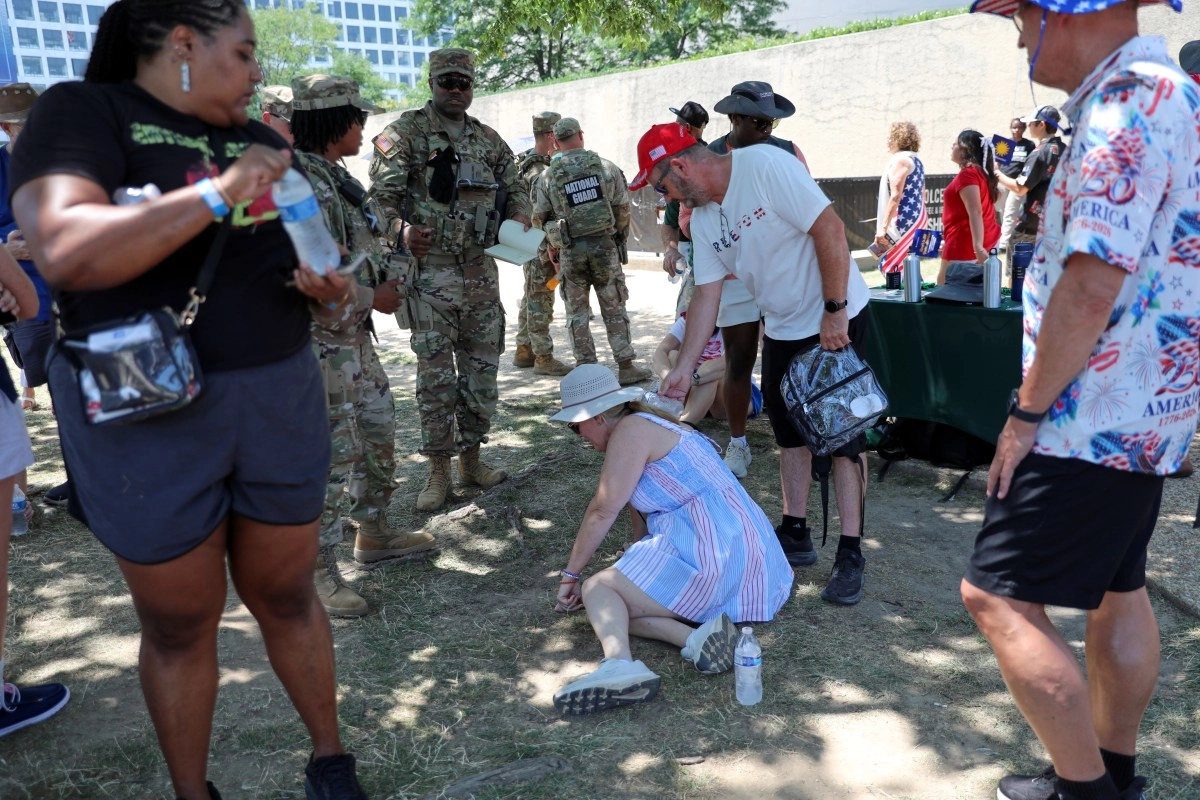

The celebrations for the 250th anniversary of the Independence of the United States were marked this Saturday by a combination of extreme heat, severe storms and electricity outages that affected millions of people in different regions of the country.
While more than 140 million Americans remained under high temperature warnings, another storm system threatened to bring strong wind gusts, heavy rain and flash flooding from the Great Plains to the Northeast.
Storms forced events in Washington and New York to be modified
The National Weather Service maintained alerts for severe storms for a wide swath of the country, with more than 75 million people within risk areas.
Areas most threatened included parts of the Mid-Atlantic—including Washington, D.C. and Baltimore—as well as parts of Kansas and Oklahoma, where numerous storms capable of producing destructive winds were expected to form.
In Washington, D.C., thunderstorms forced a temporary evacuation of the National Mall ahead of President Donald Trump's Independence Day speech. Attendees were directed to nearby government buildings as the storm passed and the official event began several hours later than planned.
In New York, organizers brought forward the start of the traditional Macy's fireworks show to avoid it coinciding with the arrival of the storm system.
Forecasters also warned that some slow-moving storms could cause flash flooding due to heavy rainfall.
Washington recorded its hottest 4th of July ever
Although temperatures dropped slightly compared to Friday, conditions remained dangerous in much of the east of the country.
Washington D.C. It reached a preliminary temperature of 102 degrees Fahrenheit (38.9 °C), setting a new record for a Fourth of July and surpassing the 100 °F mark recorded in 1919.
Authorities in the capital reported that 51 people received medical attention for heat-related problems during the independence anniversary activities, of which 12 were taken to hospitals.
Relief is expected to come gradually over Sunday, especially in the northeast of the country. The expected highs will be around 88 °F (31 °C) in New York and will barely reach 75 °F (24 °C) in Boston, well below the values recorded in recent days.
Nearly 800,000 homes were left without electricity
Extreme heat and storms also put severe strain on the power grid.
According to the specialized portal PowerOutage, about 779,000 homes remained without electricity supply on Saturday due to interruptions recorded in states in the Midwest and Northeast.
Authorities warned that the figure could vary as the repair work progressed, although the number of people affected would be considerably higher because each report corresponds to one home.
The heat forced parades to be canceled and transportation modified
The weather conditions also altered several events scheduled to commemorate the 250th anniversary of independence.
In Philadelphia, the traditional Salute to Independence Semiquincentennial Parade was canceled due to extreme temperatures.
In Washington, D.C., organizers suspended the national Fourth of July parade after consulting with the National Park Service, local government and other institutions involved in the celebrations.
Likewise, the railway company Amtrak canceled several trains due to high temperatures affecting the railway infrastructure.
For their part, the Great American State Fair and the FIFA Fan Zone, installed on the National Mall, delayed their opening by two hours to reduce public exposure to extreme heat.
Weather authorities warned that storms will continue to affect parts of the Mid-Atlantic throughout Sunday, especially northern Virginia, Washington D.C., Baltimore, Philadelphia and southern New Jersey, while the drop in temperatures will begin to spread across the northeastern United States.