

I feel poorer today than in December: the rise in prices in Venezuela since Maduro's capture
While international attention is focused on the political changes taking place in Venezuela, for Venezuelans, rising prices are the main concern
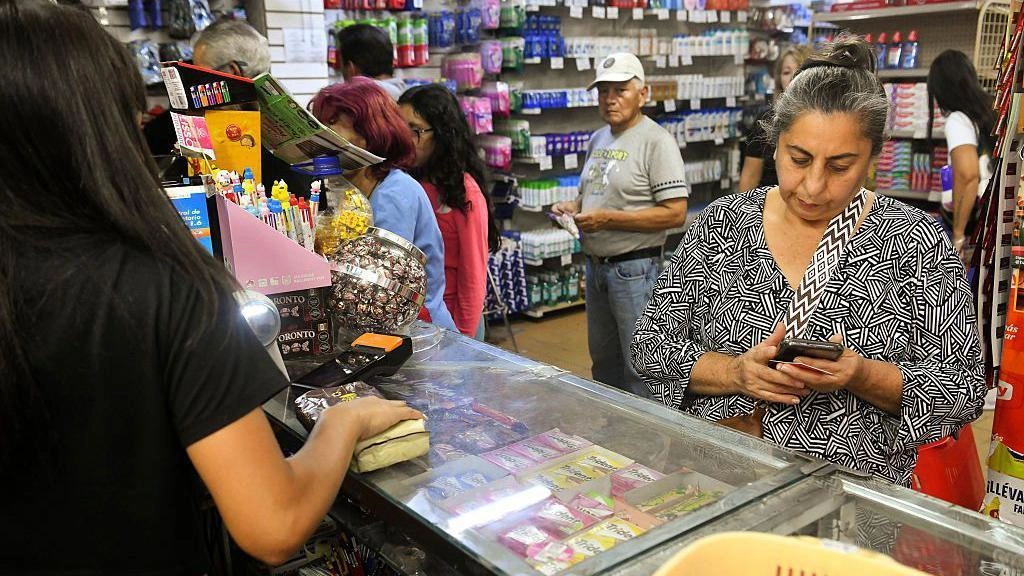

In a supermarket in eastern Caracas a few days ago, I faced a dilemma: how much would I be willing to pay for a kilo of apples?
The same thing happened to me when I tried to buy My usual deodorant made me realize that in the Venezuelan capital I had to abandon my loyalty to a product I've used to almost a decade. Why would I pay US$13 for a deodorant that costs 2.5 pounds sterling (US$3.4) in London? And who in Venezuela can pay US$10 for a kilo of apples?
While international attention is focused on the change of government in Venezuela and the country's shift after the US attack and Maduro's capture, on the streets of Caracas, a major concern for Venezuelans is once again the cost of living, high prices, and the country's economy.
In Caracas markets and shops, prices are rising rapidly in a context marked by political and currency instability and in a country plagued by inflation for years.
“I feel poorer today than I did in December,” says Maria Luisa, around 50 years old, while buying vegetables with her daughter Sofia at the Chacao market in the east of the city. “Money doesn't go as far now as it did a month ago,” she insists. Sofia explains that she spent part of the day looking for food for her cat. She says that at the end of last year it cost between US$3.50 and US$4 per kilo, and today it's US$6. “It costs almost double all of a sudden,” she complains. In downtown Caracas, the story is the same. With a large amount of bolivars in his hand, which seems like a lot but is actually worth little, Yarilen, a 55-year-old pensioner, says that in addition to the drop in purchasing power, the volatile exchange rate is difficult to keep track of in an economy that has experienced de facto dollarization in recent years. "One business charges in bolivars and the next in dollars. You have to do the math in your head all the time," she explains.
Moderate Growth and High Inflation
The Venezuelan economy is once again being impacted by political instability, which has traditionally driven up the price of the dollar,As well as by the current inability to freely sell its oil, its main export, due to the economic sanctions imposed by the United States and the maritime blockade that prevents Caracas from placing crude oil on the black market with the help of a “ghost fleet,” as it was used to do since the first sanctions were imposed in 2017.
According to the latest projections from the International Monetary Fund (IMF), published in October, Venezuela ended 2025 with an inflation rate of 548%.
The same source predicted moderate economic growth of 0.5%, a very modest figure considering that the country's Gross Domestic Product (GDP) is now almost 80% lower than the historical peak of 2012, which was driven by high oil prices.
These projections did not take into account The events of January 3, when President Nicolas Maduro was arrested and transferred to a New York jail, where he is expected to face US justice on charges related to drug trafficking and weapons possession.
An improvement in the situation is expected
But a large number of Venezuelans oppose the idea.
“This is a country rich in oil, gold, and minerals… For outsiders to come and take control is like someone entering your house without permission,” Sandra, who sells ice cream to support her family, tells BBC Mundo.
She too has been affected financially by the country's instability, and says that the fear of new episodes of violence makes Venezuelans even more cautious with their spending.
“People work in fear. “Everyone is already home by early morning,” he adds. “I want change for the country, but not like this.” According to economist Jesus Palacios, the Venezuelan economy faces short-term challenges such as rampant inflation and exchange rate pressure. “The loss of purchasing power was already felt in December, and that has repercussions for a slower growth rate,” the UCAB professor tells BBC Mundo. He also points out that the shortage of foreign currency due to restrictions on oil exports and the difference between the official and parallel exchange rates have pushed many businesses to raise prices, even in dollars, generating inflation in foreign currency as well. The official exchange rate sets one dollar at approximately 330 bolivars. But the parallel exchange rate is much higher and is often used as a reference for setting prices, which the government has denounced as a tool for distortion and speculation.
Palacio warns that if there is no downward adjustment of prices in dollars, Venezuela could become one of the most expensive countries in the region, and even the world.
But he adds that there are expectations that the situation will improve after the oil agreements announced by Trump and the acting president, Delcy Rodriguez.
“Probably in a couple of weeks, a significant cash flow will begin to be noticeable.”
“Constantly hustling”
Jose Guerra, professor of Economics at the Central University of Venezuela, agrees.
“President Trump's announcements have managed to create favorable expectations: the parallel dollar has decreased by more than 40% from January 8, when the announcement was made, to January 13. And the exchange rate gap has “It has been decreasing,” he tells BBC Mundo.
Officially, the minimum wage in Venezuela is set at 130 bolivars, which is equivalent to less than one dollar, but both economists explain that the real remuneration tends to be somewhat higher.
“The government grants bonuses that bring the average salary to between US$60 and US$70, something still far below the basic food basket, which for a family of four was US$470 per month,” notes Guerra, a staunch opponent of the current government.
Economist Jesus Palacios adds that the average Venezuelan tends to have several jobs and does not depend so much on their official salary, but rather seeks supplementary activities.
“They sell cakes, they try to buy something and resell it. They are constantly hustling. Nearly 60% of the population has supplementary activities. they can afford to buy what they had planned.
Click here to read more stories from BBC News Mundo.
Subscribe here to our new newsletter to receive a selection of our best content of the week every Friday.
You can also follow us on YouTube, Instagram, TikTok, have been denounced by the government as a tool of distortion and speculation.
Palacio warns that if there is no downward adjustment of prices in dollars, Venezuela could become one of the most expensive countries in the region, and even the world.
But he adds that there are expectations that the situation will improve after the oil agreements announced by Trump and the acting president Delcy Rodriguez.
“Probably in a couple of weeks a significant cash flow will begin to be noticeable.”
“Constantly hustling”
Jose Guerra, professor of Economics at the Central University of Venezuela, agrees.
“President Trump's announcements have managed to create favorable expectations: the parallel dollar has decreased by more than 40% from January 8, when the announcement was made, to January 13. And the exchange rate gap has been narrowing,” he tells BBC Mundo.
Officially, the minimum wage in Venezuela is set at 130 bolivars, which is equivalent to less than one dollar, but both economists explain that the real remuneration tends to be somewhat higher.
“The government grants bonuses that bring the average salary to between US$60 and US$70, still far below the basic food basket, which for a family of four was US$470 per month,” notes Guerra, a staunch opponent of the current government.
Economist Jesus Palacios adds that the average Venezuelan tends to have several jobs and doesn't depend so much on their official salary, but rather seeks out supplementary activities.
“They sell cakes, try to buy something and resell it. They are constantly hustling. Nearly 60% of the population has supplementary activities.
Thoughtful, they wander through the markets of the Venezuelan capital, comparing prices and wondering if they can afford to buy what they had planned.