

ICE Raids Prevent Survivors of Domestic Violence from Denouncing Abuse
They create a climate of fear in immigrant communities, and reduce complaints by a third in Los Angeles
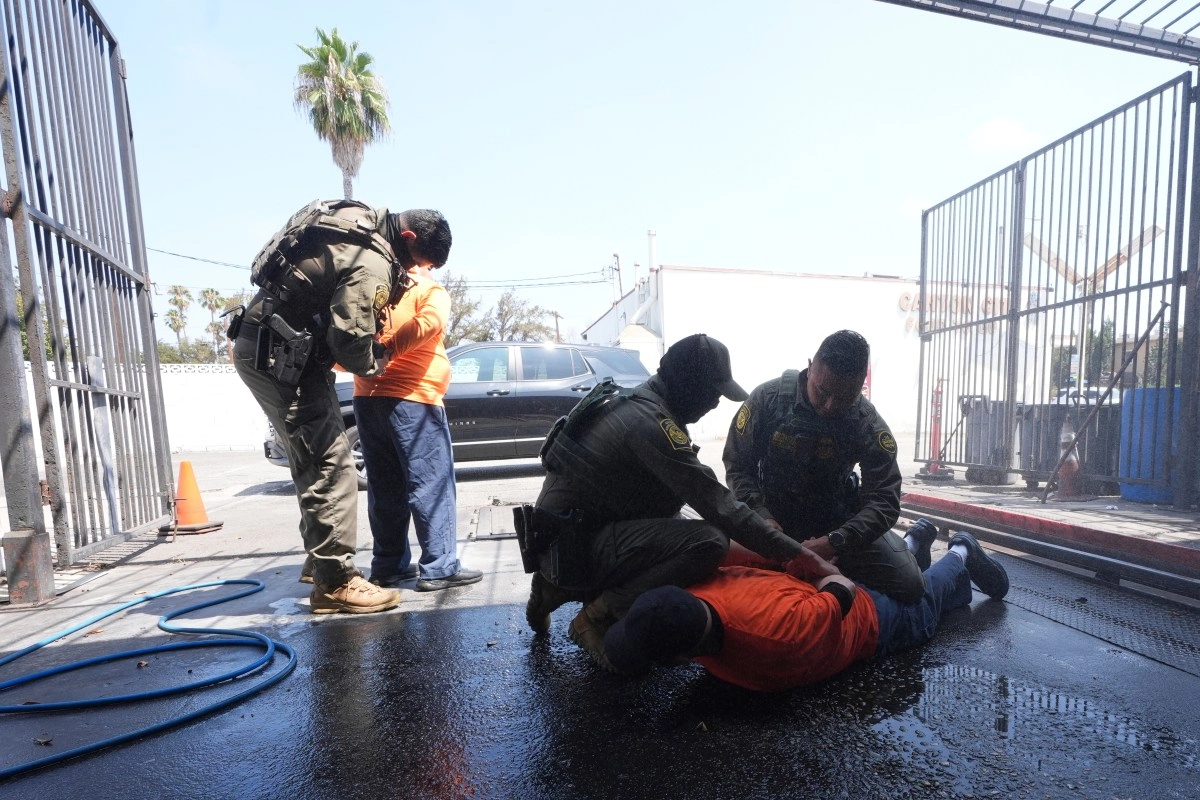

Immigrant survivors of domestic violence or violent crimes who apply for VAWA visas or U visas in search of immigration status face increased scrutiny and stricter application procedures, but in addition, Immigration and Customs Enforcement (ICE) raids, particularly in Los Angeles, have increased the fear of reporting.
Asylum protections for survivors of gender-based violence have also been weakened.
New anti-DEIA restrictions have been placed on domestic violence organizations that receive grants from federal agencies, such as the Office on Violence Against Women and the Department of Housing and Urban Development.
During the videoconference “Immigrant Survivors of Domestic Violence Face Growing Barriers to Safety and Justice,” organized by American Community Media (ACoM), participants discussed the challenges immigrant survivors face and possible avenues for support.
Fear of Coming Forward
Carmen McDonald, executive director of the Survivor Justice Center, said that when the immigration raids began, the fear they generated reached survivors.
“The impact is that it drives people away from the help they need and makes our communities more unsafe every day.”
She explained that her team works with survivors of domestic violence, sexual assault, and human trafficking, to whom they primarily offer services in family law and immigration.
“We are seeing an increase in fear among all of our clients. We know that after the ICE raids, complaints of discrimination and hate decreased in Los Angeles County by about a third, not because the incidents went down, but because people were afraid to report.”
She indicated that they are seeing a similar pattern with domestic violence reports, so the government and nonprofit organizations are aware of this,have launched “know your rights” campaigns to try to reach people who have chosen to go underground and provide them with legal education.
However, she said people are still afraid, especially survivors.
“When they see agents in their neighborhoods, dressed in plain clothes or wearing masks, or bounty hunters taking their friends and neighbors without warning, they ask themselves: ‘If I go to court to protect myself from abuse, will I be next? Will I be arrested?’”
She explained that data shows that many of the people detained have no criminal charges filed, which generates fear in everyone, including survivors.
“Imagine that you have fled abuse, you are ready to appear in court and face your abuser, but instead of thinking about safety and justice, you wonder: Will ICE be waiting at the courthouse door? ” This is happening while family court and other state courts are accepting remote appearances.”
She said they continue to see clients who don’t want to go to court, and many are afraid their abuser will turn them in.
“There are resources we want people to know about, but we want them to understand that this isn’t just a humanitarian crisis. It’s a public safety crisis. When immigrants are too afraid to call the police, we’re all less safe because abusers are walking free.”
It’s Worth Reporting
Attorney Morgan Weibel, director of legal services for the Tahirih Justice Center, said that last month they helped an immigrant survivor who was applying for VAWA protection, seeking an emergency protective order against her abuser, with whom she was still living.
“As I was serving her the protective order, a local sheriff threatened to report her to immigration agents for deportation. I was terrified and almost gave up on applying for a more permanent protective order for fear of being arrested when I appeared in court.”
Weibel said she’s not alone, but worries that survivors are wondering if it’s even worth it to apply for the protections they’re still entitled to under our laws.
“In 1994, historic bipartisan legislation known as the Violence Against Women Act (VAWA) was passed. It was the first comprehensive federal response to address domestic violence and created protections for certain family members of abusive U.S. citizens and green card holders to obtain their own immigration status without the involvement or even the knowledge of their abusers.”
She noted that the primary premise of these VAWA and U visas (for serious crimes) was to provide security for survivors to report and cooperate in the prosecution of crimes committed by their clients.
But she noted that the administration continues to undermine that sense of security by insisting that all law enforcement agencies take immigration action.
“While eliminating these visas would require an act of Congress, this administration has taken and continues to take other steps to make it significantly more difficult for survivors to access protection.”
For example, she explained that they are using extensive vetting and adding interviews to the VAWA application processes.
“Now, a VAWA applicant, and even someone with an approved application, can be detained and deported. They also changed the process for denying a U visa or VAWA; before, the person would simply lose their immigration status, but now the government is putting those people in deportation proceedings, where they have to appear before a judge to defend themselves against deportation.”
New Restrictions and Funding
Patima Komolamit, executive director of the Center for the Pacific Asian Family, said that immigration has always been used as part of the dynamic of domestic violence.
“There is coercive control, a threat of deportation by a partner who is a U.S. citizen or permanent resident. And now we see that it’s completely entrenched in our government, and it really threatens our survivors.”
She said immigrant survivors are vulnerable because of their limited English proficiency, their lack of work history in the U.S., and the often coercive and exploitative use of their immigration status as a means to oppress and abuse.
That’s why it’s imperative, she said, that services exist to provide shelter, comprehensive advocacy and accompaniment services, and help them navigate their path so they can live their own lives and be independent.
“In the non-profit and gender-based violence sectors, we are often on the sidelines of potential government cuts as social services like ours are often not prioritized.”
She noted that this year, the landscape has become increasingly difficult with different types of restrictions coming from funding sources that have long been incredibly supportive of anti-gender violence organizations.
“The purpose and objective of these restrictions is to align with the Trump administration’s executive orders promoting gender ideology specific to the gender roles of women and men,and ensuring that domestic violence is viewed as something rooted in criminal justice and not necessarily in societal norms and traditional gender roles.”
Therefore, she mentioned that many of these restrictions prevent them from doing their work to help the most vulnerable survivors and facilitate their access to services.
“These types of restrictions just create a sense of nervousness and fear, and also doubt, like, what is it, what can be done, and how broad are these restrictions in terms of being able to scrutinize and monitor the organization.”
She stated that as an organization that has been working with immigrant survivors for 47 years, they need to make sure that funding continues because the government cannot provide those services and that is why non-profits were created because there is a need to serve survivors of domestic violence and sexual assault.