

Massive attack on kyiv: Putin's message to the NATO summit
kyiv suffered heavy Russian bombing prior to the alliance meeting in Ankara. Is there a message behind it?
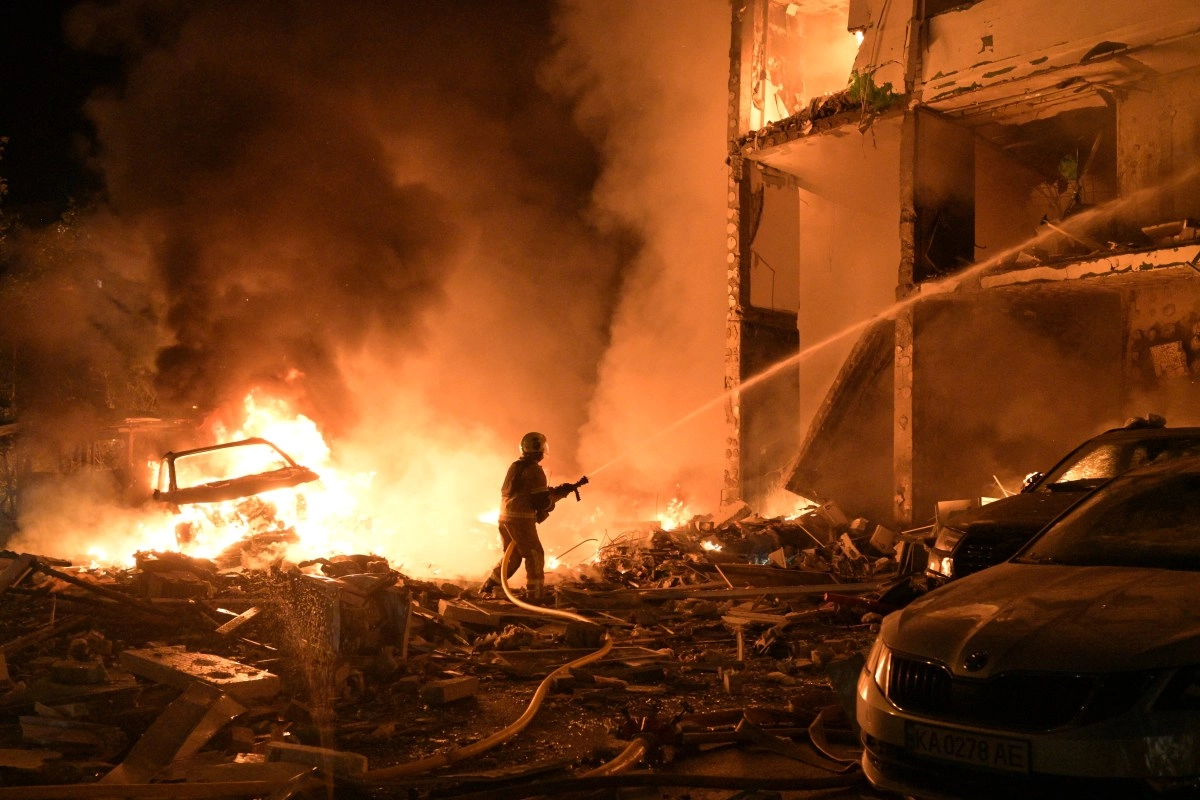

After another intense Russian bombing, Ukraine is slowly recovering. During the early hours of Monday, July 6, 2027, Russia launched a massive combined attack on the Ukrainian capital.
Never before has Moscow used so many missiles and drones at the same time. The impacts on homes and infrastructure caused at least 19 deaths and dozens of injuries in the Ukrainian capital.
Lack of air defense against missiles
On the night of July 5, Ukrainian President Volodymyr Zelensky warned his citizens that, according to intelligence services, Russia was preparing a new large-scale attack. "That's typical of Putin: immediately after US Independence Day and before the NATO summit in Ankara. Russia wants to cause even more damage and kill people," Zelensky explained on Telegram. The president urged Ukrainians to comply with the air alarm. In addition, he called on Ukraine's partners to accelerate the shipment of interceptor missiles for the Patriot systems.
The warning became reality. According to the Ukrainian General Staff, Russia launched 68 missiles of different types and 351 drones on Monday night. Although there was a high percentage of cruise missiles shot down, it was not possible to shoot down a single ballistic missile. Yuriy Ihnat, spokesman for the Ukrainian Air Force, explained that the main reason for this was the lack of Patriot missiles.
Foreign Minister Andrij Sybiha called the recent bombing “one of the most brutal attacks of all time, in which dozens of ballistic missiles were used.” He urged NATO heads of state and government to listen to what the people of kyiv have had to suffer. "Protect Ukrainian children from Russian ballistic terror. There is no more urgent task," Sybiha wrote on the X social network.
A message from Putin to NATO countries?
Oleksandr Kraiev of the Ukrainian Prism foreign policy council believes that, with this new and devastating attack against Ukraine on the eve of the NATO summit in Ankara, Vladimir Putin wants to send a message to the North Atlantic Alliance: that none of its decisions in support of Ukraine will be able to stop Russia. "He wants to intimidate Europeans and allies so that, at some point, they consider their help to Ukraine useless, following the motto 'No matter what is done, Putin will attack anyway,'" Kraiev told DW.
Ivan Us of Ukraine's National Institute for Strategic Studies also sees a connection between the bombings and the NATO summit. According to him, Putin wanted to show that Russia has power, that Russia is to be feared, and that Moscow will always be in a position to attack the civilian infrastructure of NATO countries, in case they oppose Russia and help Ukraine.
The expert also highlights that, among supporters of the war against Ukraine in Russia, the conviction is maturing that their country cannot win this war. Massive attacks would therefore aim to reorient domestic political discourse in Russia in the direction desired by Putin. "Russia must create and maintain an image that makes it appear powerful, strong and victorious in this war. The attack on kyiv is aimed at showing that Russia still has a chance," Us tells DW.
Will Putin's terror strategy work?
Following the latest attack on kyiv, European Commission President Ursula von der Leyen stated that Ukraine needs new air defense systems and that this issue will be discussed at the NATO summit.
Experts interviewed by DW point out that Washington's stance on Putin and the war in Ukraine is gradually changing. According to Oleksandr Kraiev, US President Donald Trump is now convinced that Russia is sabotaging the peace process instead of promoting it. Ukraine, for its part, is achieving successes. It stops the enemy on the front lines, deals blows to Russia's energy sector and economy, and is a predictable negotiating partner.
If it were up to Trump, the NATO summit in Ankara should reaffirm this change, Kraiev believes. At the same time, he highlights that allies could express to Trump their support for his new position and try to translate it into a document or a joint statement. “Shooting at the Ukrainians to break them: this strategy has not worked for Putin so far, but rather has had the opposite effect,” says Kraiev.
Ivan Us predicts that the summit will continue to recommend that NATO countries that have Patriot missiles hand them over to Ukraine in exchange for NATO guarantees. The issue of licensing Ukraine for the production of these missiles could also be discussed. Additionally, the summit could approve $140 billion in military aid to Ukraine through NATO over two years, Us says.