

Oil blockade: How long will it take for Cuba to collapse?
As the US oil embargo on Cuba tightens, the country is rapidly running out of fuel
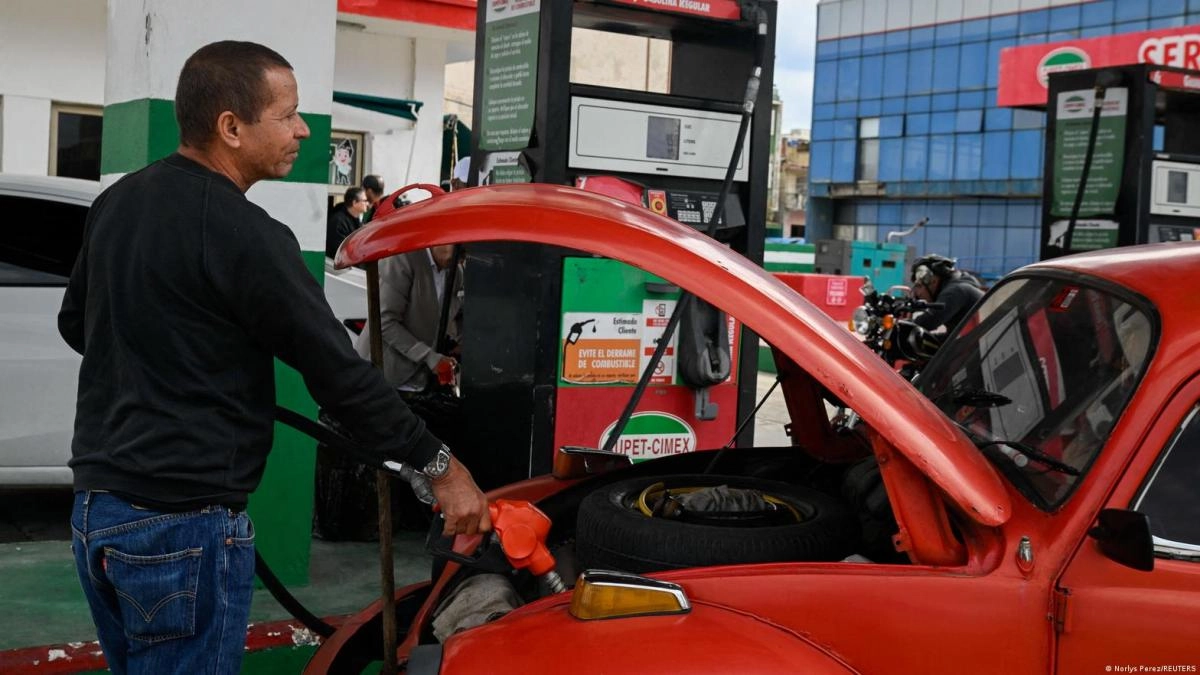

For days, a cold front brought polar air to Cuba, causing temperatures to drop below zero in parts of the island for the first time ever. But the freezing air hasn't been the only thing that has battered Cuba from the north. The United States, after attacking Venezuela—Cuba's closest ally—and kidnapping its leader, Nicolas Maduro, cut off Venezuelan oil supplies to Havana. In late January, US President Donald Trump called Cuba an "unusual and extraordinary threat" to national security and threatened to impose tariffs on any country that supplies oil or petroleum products to the island nation. Cuban President Miguel Diaz-Canel initially called the measure "fascist, criminal, and genocidal." Since then, he has stated that his country is willing to engage in dialogue with the United States, but "without pressure or preconditions." He also warned that Cuba is “on the verge of collapse” and announced rationing plans to cope with the energy crisis.
Between Uncertainty and Hope
The country is only able to produce around 40% of the energy it needs. Blackouts have become commonplace: they can last between 10 and 15 hours and have even reached the capital, Havana. Bert Hoffmann, a leading researcher at the GIGA Institute for Latin American Studies in Germany, says that, apart from that, life in Havana continues as normal.
“I've observed a widespread attitude of waiting and seeing what happens. There's a great deal of normalization of the crisis, a kind of 'keep calm and carry on,'” he explains to DW. "Blackouts have increased, fuel is even scarcer, but it's been a fairly gradual process. There are still cars on the streets." However, he adds that this appearance of normality is deceptive: in his opinion, the country “has no prospects” of receiving oil in the near future.
Decisive moment in Caracas
Hoffmann states that things have changed since January 3, the day Venezuela ceased to be Cuba's main oil supplier. The island's second-largest supplier, Mexico, also halted its oil shipments to Cuba in January.
Since December, hardly any oil shipments have reached the island. In January, Cuba appears to have purchased a single tanker shipment of oil. Departing from Lome, Togo,the shipment was due to arrive in early February, but changed course en route to the Dominican Republic.
Hoffmann believes it is safe to assume this occurred due to pressure from the United States. “That means that even if Cuba could buy oil, it wouldn't arrive,” he says, arguing that the same would apply to potential shipments from Algeria, Angola, China, or Vietnam. “At the moment, I assume the United States is investing heavily in preventing oil from reaching Cuba,” Hoffmann adds.
Cuba's current oil demand is estimated at 100,000 barrels of crude per day. Until now, between a third and a quarter of that amount came from Venezuela. In 2025, Mexico supplied between 6,000 and 12,000 barrels per day, while Russia and Algeria delivered smaller amounts.
Cuba cannot meet its needs with renewable energy
In recent years, with support from China, Cuba has made significant investments in solar power. However, these parks cannot meet the country's electricity needs. The island's electricity supply continues to rely primarily on Soviet-designed thermal power plants prone to accidents, making Cuba highly dependent on energy imports.
Hoffmann states that no one really knows how long the remaining oil reserves will last. At the end of January, the British newspaper Financial Times predicted that resources could last for another 15 to 20 days. In any case, the consequences will be fatal.
“Basically, it's a matter of weeks until the fuel runs out. Then, not only will tourists be unable to travel from the beaches to the airports, but food won't be able to get from the farms to the cities,” Hoffmann explains. And without food, people will starve. In another example, he points out that “if the trucks don't have fuel, the hospitals won't be able to get oxygen and the patients will die.”
Mexico wants to mediate
Mexico recently announced that it would send humanitarian aid and was evaluating “diplomatic channels” to be able to send oil to Cuba. But the country's options are limited, since the Mexican economy is closely tied to that of the United States. And with the trade agreement between the United States, Mexico, and Canada ready for formal review, Trump has an additional advantage.
Mexican President Claudia Sheinbaum has offered to mediate in the talks between Havana and Washington. But it is not clear what will be discussed. US Secretary of State Marco Rubio,He has already stated in a recent Senate hearing that he “would love to see” regime change in Cuba. Unlike Venezuela, Cuba has less economic value than symbolic importance. The Caribbean island represents in many ways the resistance of states to the Monroe Doctrine, which the United States often cites to claim a special sphere of influence in the Western Hemisphere, especially in Latin America. “They have scores to settle,” Hoffmann says. “Washington believes it has Cuba by the throat and that the time has come for it to capitulate, whatever that means in concrete terms.” Consequently, he says he finds it hard to imagine “on what points the Cuban leaders could agree with Trump and Rubio.” Russia will continue to supply oil to Cuba. Cuba's Deputy Foreign Minister, Carlos Fernandez de Cossio, told the Spanish news agency EFE that “it would be a mistake to say that a bilateral negotiation (with the United States) is being designed.” However, Havana has repeatedly expressed its willingness to engage in a “serious, constructive, responsible dialogue that respects the sovereign equality of both states,” Cossio stated. In light of the effective oil blockade, Fernandez de Cossio added that his country had “limited options” for managing resources. Meanwhile, Russia's ambassador to Havana, Viktor Koronelli, stated in an interview with the Russian news agency RIA that Moscow will continue to supply oil to Cuba. “Russian oil has been supplied to Cuba on numerous occasions in recent years,” he said. “We hope this practice will continue.”Havana has repeatedly expressed its willingness to engage in a “serious, constructive, responsible dialogue that respects the sovereign equality of both states,” Cossio stated. In light of the effective oil blockade, Fernandez de Cossio added that his country had “limited options” for managing resources. Meanwhile, Russia's ambassador to Havana, Viktor Koronelli, stated in an interview with the Russian news agency RIA that Moscow will continue supplying oil to Cuba. “Russian oil has been supplied to Cuba on numerous occasions in recent years,” he stated. “We hope this practice will continue.”Havana has repeatedly expressed its willingness to engage in a “serious, constructive, responsible dialogue that respects the sovereign equality of both states,” de Cossio stated. In light of the effective oil blockade, Fernandez de Cossio added that his country had “limited options” for managing resources. Meanwhile, Russia's ambassador to Havana, Viktor Koronelli, stated in an interview with the Russian news agency RIA that Moscow will continue supplying oil to Cuba. “Russian oil has been supplied to Cuba on numerous occasions in recent years,” he stated. “We hope this practice will continue.”responsible dialogue that respects the sovereign equality of both states,” de Cossio stated. In light of the effective oil blockade, Fernandez de Cossio added that his country had “limited options” for managing resources. Meanwhile, Russia's ambassador to Havana, Viktor Koronelli, stated in an interview with the Russian news agency RIA that Moscow will continue to supply oil to Cuba. “Russian oil has been supplied to Cuba on numerous occasions in recent years,” he said. “We hope this practice will continue.”Havana has repeatedly expressed its willingness to engage in a “serious, constructive, responsible dialogue that respects the sovereign equality of both states,” de Cossio stated. In light of the effective oil blockade, Fernandez de Cossio added that his country had “limited options” for managing resources. Meanwhile, Russia's ambassador to Havana, Viktor Koronelli, stated in an interview with the Russian news agency RIA that Moscow will continue supplying oil to Cuba. “Russian oil has been supplied to Cuba on numerous occasions in recent years,” he stated. “We hope this practice will continue.”Havana has repeatedly expressed its willingness to engage in a “serious, constructive, responsible dialogue that respects the sovereign equality of both states,” de Cossio stated. In light of the effective oil blockade, Fernandez de Cossio added that his country had “limited options” for managing resources. Meanwhile, Russia's ambassador to Havana, Viktor Koronelli, stated in an interview with the Russian news agency RIA that Moscow will continue supplying oil to Cuba. “Russian oil has been supplied to Cuba on numerous occasions in recent years,” he stated. “We hope this practice will continue.”responsible dialogue that respects the sovereign equality of both states,” de Cossio stated. In light of the effective oil blockade, Fernandez de Cossio added that his country had “limited options” for managing resources. Meanwhile, Russia's ambassador to Havana, Viktor Koronelli, stated in an interview with the Russian news agency RIA that Moscow will continue to supply oil to Cuba. “Russian oil has been supplied to Cuba on numerous occasions in recent years,” he said. “We hope this practice will continue.”Havana has repeatedly expressed its willingness to engage in a “serious, constructive, responsible dialogue that respects the sovereign equality of both states,” de Cossio stated. In light of the effective oil blockade, Fernandez de Cossio added that his country had “limited options” for managing resources. Meanwhile, Russia's ambassador to Havana, Viktor Koronelli, stated in an interview with the Russian news agency RIA that Moscow will continue supplying oil to Cuba. “Russian oil has been supplied to Cuba on numerous occasions in recent years,” he stated. “We hope this practice will continue.”Havana has repeatedly expressed its willingness to engage in a “serious, constructive, responsible dialogue that respects the sovereign equality of both states,” de Cossio stated. In light of the effective oil blockade, Fernandez de Cossio added that his country had “limited options” for managing resources. Meanwhile, Russia's ambassador to Havana, Viktor Koronelli, stated in an interview with the Russian news agency RIA that Moscow will continue supplying oil to Cuba. “Russian oil has been supplied to Cuba on numerous occasions in recent years,” he stated. “We hope this practice will continue.”” de Cossio stated. In light of the effective oil blockade, Fernandez de Cossio added that his country had “limited options” for managing resources. Meanwhile, Russia's ambassador to Havana, Viktor Koronelli, stated in an interview with the Russian news agency RIA that Moscow will continue supplying oil to Cuba. “Russian oil has been supplied to Cuba on numerous occasions in recent years,” he stated. “We hope this practice will continue.”” de Cossio stated. In light of the effective oil blockade, Fernandez de Cossio added that his country had “limited options” for managing resources. Meanwhile, Russia's ambassador to Havana, Viktor Koronelli, stated in an interview with the Russian news agency RIA that Moscow will continue supplying oil to Cuba. “Russian oil has been supplied to Cuba on numerous occasions in recent years,” he stated. “We hope this practice will continue.”