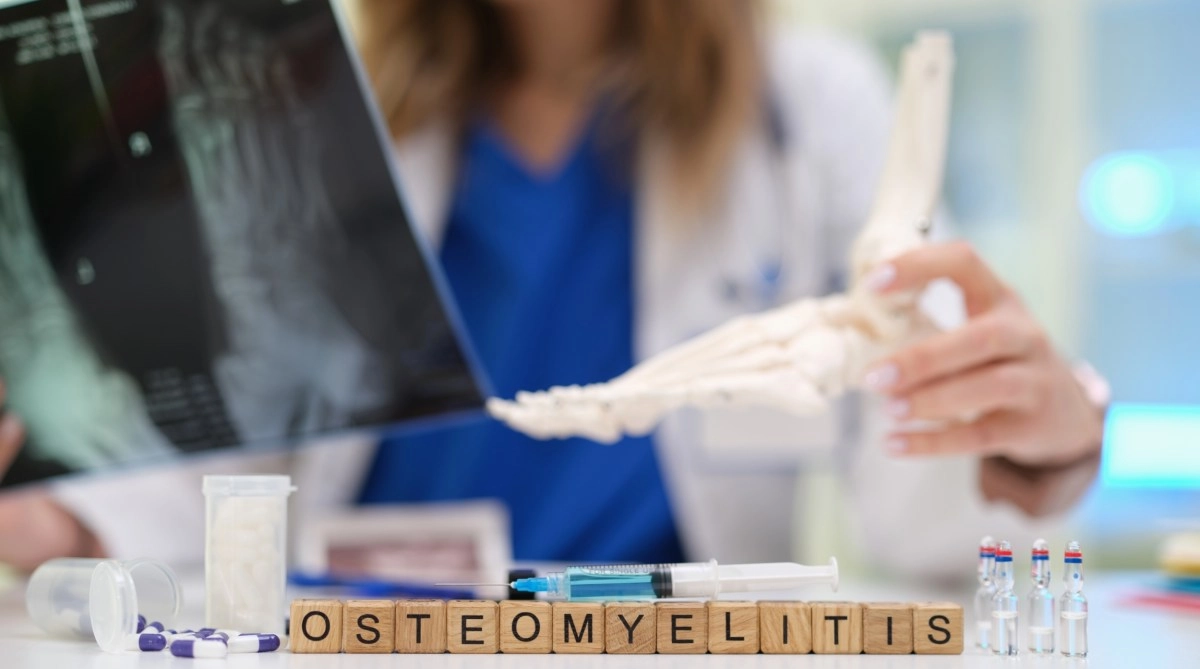

Osteomyelitis represents one of the most complex challenges in the field of infectious osteoarticular diseases. This pathology, characterized by infection of bone tissue, has accompanied humanity since ancient times, but continues to be a significant threat in contemporary medicine. It is a bacterial infection that affects the bones and bone marrow, causing inflammation, intense pain, and potentially permanent damage to bone tissue if not treated properly. This condition, which can present acutely or chronically, constitutes a medical emergency requiring immediate specialized attention. Although advances in antibiotic therapy and surgical techniques have substantially improved the prognosis, the treatment of this condition still requires a multidisciplinary and prolonged approach. The severity of osteomyelitis leads to complications that can compromise the patient's quality of life and even put entire limbs at risk. Origin and Cause of Infection: The most common bacterium responsible for osteomyelitis is Staphylococcus aureus, although other microorganisms such as streptococci, gram-negative bacilli, and, in specific cases, mycobacteria or fungi may also be involved. The infection can reach the bone via three main routes: hematogenous dissemination (through the bloodstream), by contiguity from nearby infected soft tissues, or directly following an open fracture, orthopedic surgery, or penetrating trauma.
High-risk groups include patients with diabetes, peripheral vascular insufficiency, compromised immune systems, intravenous drug users, and people with implanted orthopedic devices. In children, osteomyelitis tends to spread hematogenously, while in adults, direct spread or contiguous infection predominates.
Clinical Manifestations
Symptoms vary depending on the presentation. In acute osteomyelitis,Patients experience severe bone pain, high fever, malaise, and swelling in the affected area. Mobility may be significantly limited. In contrast, the chronic form has a more insidious course, with persistent but less intense pain, intermittent drainage of purulent material through fistulous tracts, and less pronounced systemic symptoms. Diagnosis: A Comprehensive Approach. The diagnosis of osteomyelitis requires a combination of clinical evaluation, laboratory tests, and imaging studies. Inflammatory markers such as erythrocyte sedimentation rate (ESR) and C-reactive protein (CRP) are usually elevated. Plain radiography may show bone changes, although these often appear weeks after the onset of infection. Advanced imaging techniques play a crucial role. Magnetic resonance imaging (MRI) is the most sensitive study for detecting early osteomyelitis, allowing visualization of bone marrow edema, abscesses, and soft tissue abnormalities. Computed tomography is useful for evaluating bone destruction and surgical planning. Nuclear medicine studies, such as bone scintigraphy, can identify multiple foci of infection. However, the diagnostic gold standard is bone tissue culture obtained by biopsy, which allows identification of the causative microorganism and determination of its antibiotic susceptibility, thus guiding specific treatment. Treatments: Antibiotics and Surgery. The management of osteomyelitis requires a combined approach that integrates prolonged antimicrobial therapy and, frequently, surgical intervention. Antibiotic treatment is the cornerstone, usually initiated intravenously with broad-spectrum drugs until culture results are obtained. Once the pathogen is identified, therapy is adjusted according to the antibiogram. The duration of antibiotic treatment is considerably long, generally between four and six weeks, although in chronic cases it can be prolonged for months. The most commonly used antibiotics include vancomycin for methicillin-resistant Staphylococcus aureus, cephalosporins, clindamycin, and fluoroquinolones. After the initial intravenous course, many patients can continue with highly bioavailable oral antibiotics. Surgical intervention is necessary in multiple scenarios: when there is necrotic bone tissue that needs to be removed (debridement), to drain abscesses, remove foreign bodies or infected implants, or when medical treatment fails to control the infection. Aggressive surgical debridement, which involves the removal of all infected or devitalized bone and tissue, is essential to eradicate chronic infection.In complex cases, reconstructive procedures may be required to fill bone defects using grafts, osteogenic distraction techniques, or vascularized tissue flaps. Occasionally, when the infection is intractable and life-threatening, amputation may be the only therapeutic option. Complementary Therapies: In addition to conventional treatment, there are adjuvant modalities that can improve outcomes. Hyperbaric oxygen therapy has shown benefits in selected cases, especially when vascular compromise is present. The use of antibiotic-impregnated bone beads or cements allows for sustained local release of high concentrations of the drug directly at the site of infection. With timely and appropriate treatment, most cases of acute osteomyelitis resolve successfully. However, the chronic form presents greater challenges, with recurrence rates that can reach 30%. Potential complications include the development of pathological fractures, septic arthritis, formation of bone sequestra (fragments of dead bone), spread of infection to other sites, and, rarely, malignant transformation of the chronic fistulous tract.