

Remittances from the US to Mexico fall in 2025, with risk of an even more complicated year
For millions of Mexican families, remittances continue to be a key source of income, so their decline ignites risks for thousands of people
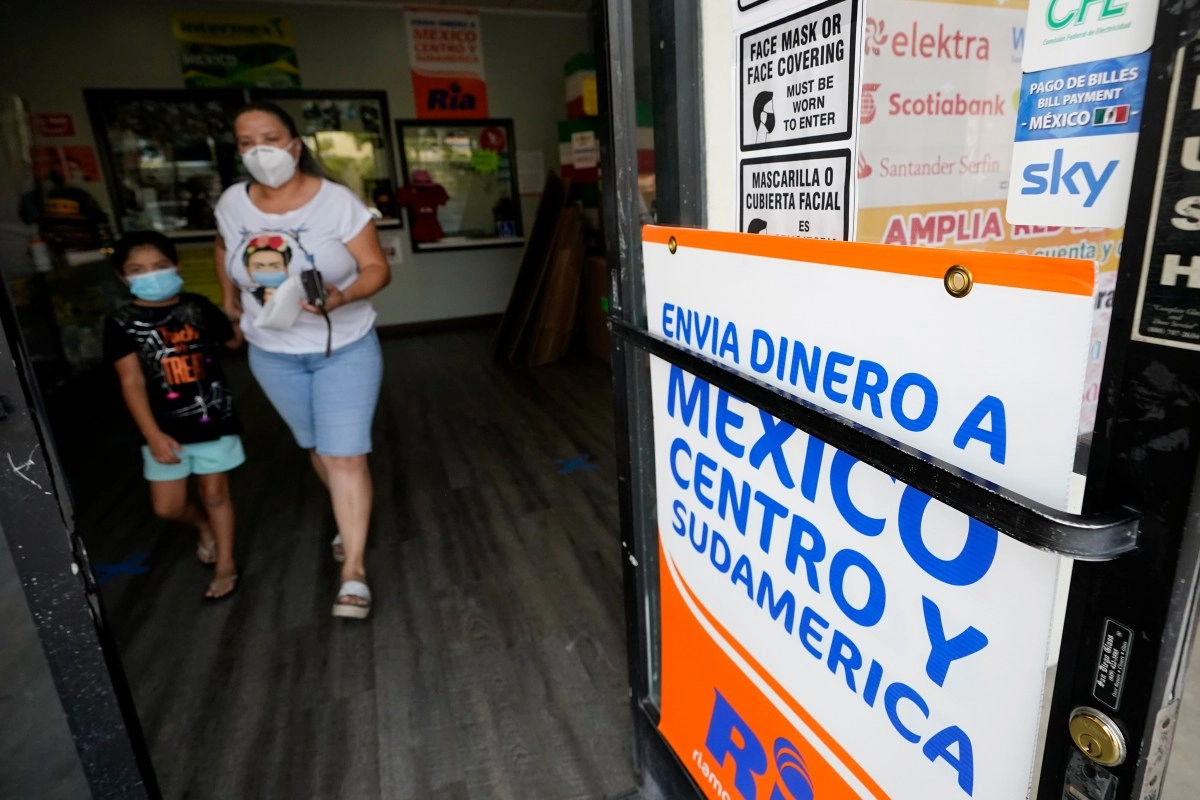

After more than a decade of continuous growth, remittances sent from the United States to Mexico registered an annual decline in 2025, and the percentage of labor income that Mexican immigrant workers allocated to support their families also decreased.
According to figures from the Bank of Mexico (Banxico) and estimates based on data from the U.S. Current Population Survey (CPS), indicate that in 2025 Mexico received $61.791 billion in remittances, of which $60.006 billion came from the United States, representing 97.1% of the total. This represents a 4.6% annual decrease in total remittances and a 4% decrease in those sent from the United States. This marks the end of an 11-year streak of consecutive growth. According to the report, in 2025, Mexican immigrant workers in the United States sent 16.2% of their annual wages back to Mexico. This means that 83.8% of their labor income remained in the United States, allocated to expenses such as housing, food, health, taxes, social security, debt and mortgage payments, among others. In absolute terms, the annual wage income of Mexican immigrant workers closed the year at $369.325 billion. Of that amount, $60 billion was sent as remittances, so approximately $309.319 billion was spent or remained in the United States. When asked why remittances are decreasing, analysts cite several factors, such as the lower employment rate for Mexican immigrant workers in 2025, the voluntary and involuntary return to Mexico of migrants who previously sent money, and absenteeism or irregular attendance at work due to fear of arrest or deportation, as the main ones. However, for Mexico, this figure is not insignificant, as remittances represented 3.36% of Mexico's GDP, slightly below the 3.5% recorded in 2024. Although the proportion is relevant, it is still lower compared to countries like Nicaragua, with 27.2% of GDP; Honduras, 25.2%; El Salvador, 23.5%.Experts warn that there could be additional pressures this year, including a possible economic slowdown in the United States, as well as a further tightening of immigration policies and the possible appreciation of the Mexican peso against the dollar.