

Researchers achieve the impossible and find one of the seven wonders of the world (Photos)
Archaeologists found 22 blocks of the Lighthouse of Alexandria in the Mediterranean Sea and are making progress in its digital reconstruction after centuries underwater
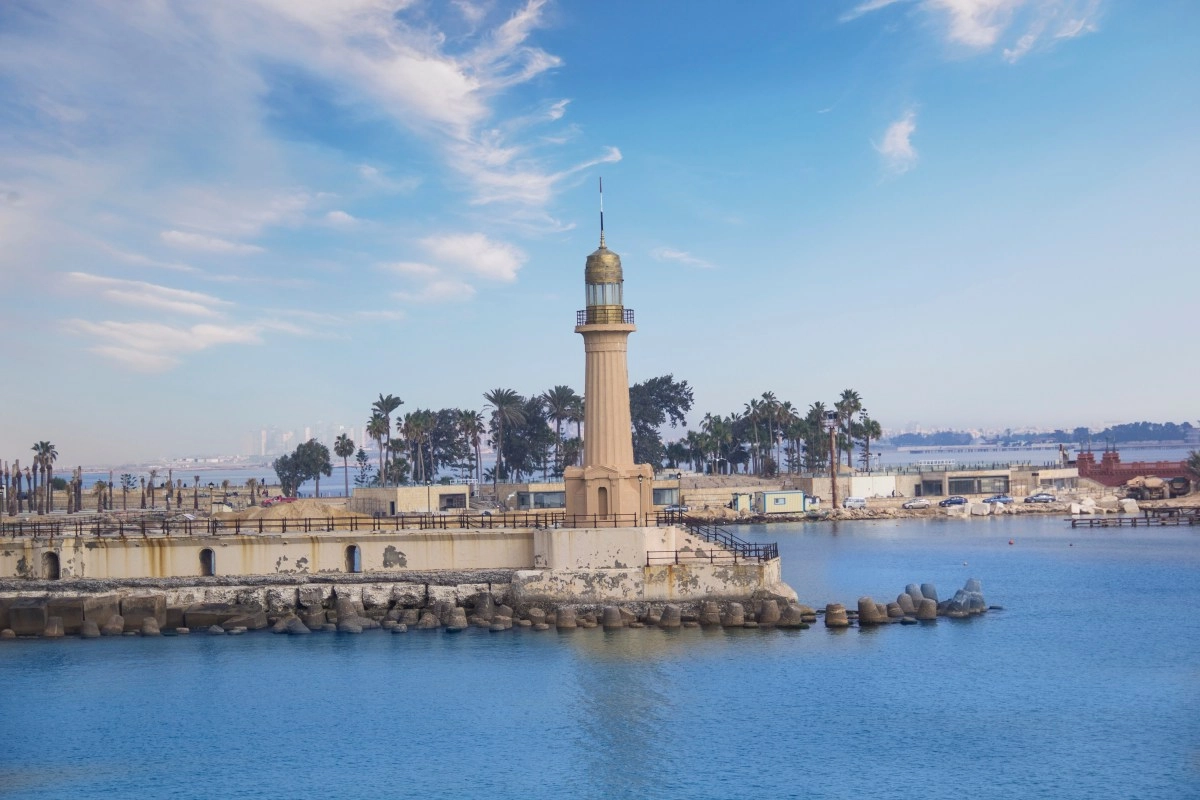

An international team of archaeologists made history by finding 22 blocks that are part of one of the most legendary constructions of Antiquity and represent one of the seven wonders of the ancient world: the Lighthouse of Alexandria.
These pieces were submerged for centuries at the bottom of the Mediterranean Sea, off the coast of Egypt, specifically in the eastern port of the city of Alexandria.
The mission was led by the French National Centre for Scientific Research (CNRS), headed by archaeologist Isabelle Hairy, the Egyptian Ministry of Tourism and Antiquities, and the Dassault Systemes Foundation. They now intend to document, study, and digitally reconstruct this ancient structure.
What exactly did they find about the Lighthouse of Alexandria?
Among the elements recovered from the seabed are lintels, jambs, thresholds, and paving slabs, with estimated weights between 70,000 and 80,000 kilos each, details El Cronista. These pieces formed part of the monumental entrance to the Lighthouse of Alexandria and reflect an architecture that combined Egyptian and Greek traditions, characteristic of the Hellenistic period.
The archaeological work began more than two decades ago. In 1994, French archaeologist Jean-Yves Empereur led a large-scale exploration that documented more than 3,300 objects, including sphinxes, obelisks, columns, and enormous granite blocks. However, the heaviest and most complex fragments had remained underwater until now. After nearly 30 years of underwater research and thanks to the use of advanced technology, specialists managed to extract these monumental pieces, considered key to understanding the lighthouse's original structure. Now, they will be analyzed by experts to virtually reposition the pieces, like a giant archaeological jigsaw puzzle. The ultimate goal is to offer a faithful digital recreation of the lighthouse, accessible to both researchers and the general public.
Origin of the Lighthouse of Alexandria and why it is considered a wonder of the ancient world
The Lighthouse of Alexandria was built at the beginning of the 3rd century BC, during the reign of Ptolemy I Soter, and designed by the Greek architect Sostratus of Cnidus. It rose more than 100 meters above the island of Pharos and fulfilled an essential function: guiding ships navigating the complex waters of the Alexandrian port.
For more than 1,600 years it was the tallest structure ever built by humankind. Its decline began after several earthquakes, until a particularly devastating one in 1303 rendered it unusable.
Centuries later, in 1477, much of its stone was reused to build a fortress on the same site, under the command of Sultan Al-Ashraf Sayf al-Din Qa'it Bay.
Today, it is considered one of the seven wonders of the ancient world for various reasons: its engineering feat, its functions, its technological innovation, its cultural value, and especially its historical influence.
Besides the Lighthouse of Alexandria, the other wonders of the ancient world are:
And in the modern world, another seven wonders of the world were selected through a global vote in 2007. You probably know some of them, but here they are: