

“There is no sovereignty with an empty plate”: the reforms inspired by China and Vietnam with which Cuba tries to rescue
The measures announced by the Díaz-Canel government include the expansion of the private sector and more openness to foreign investment
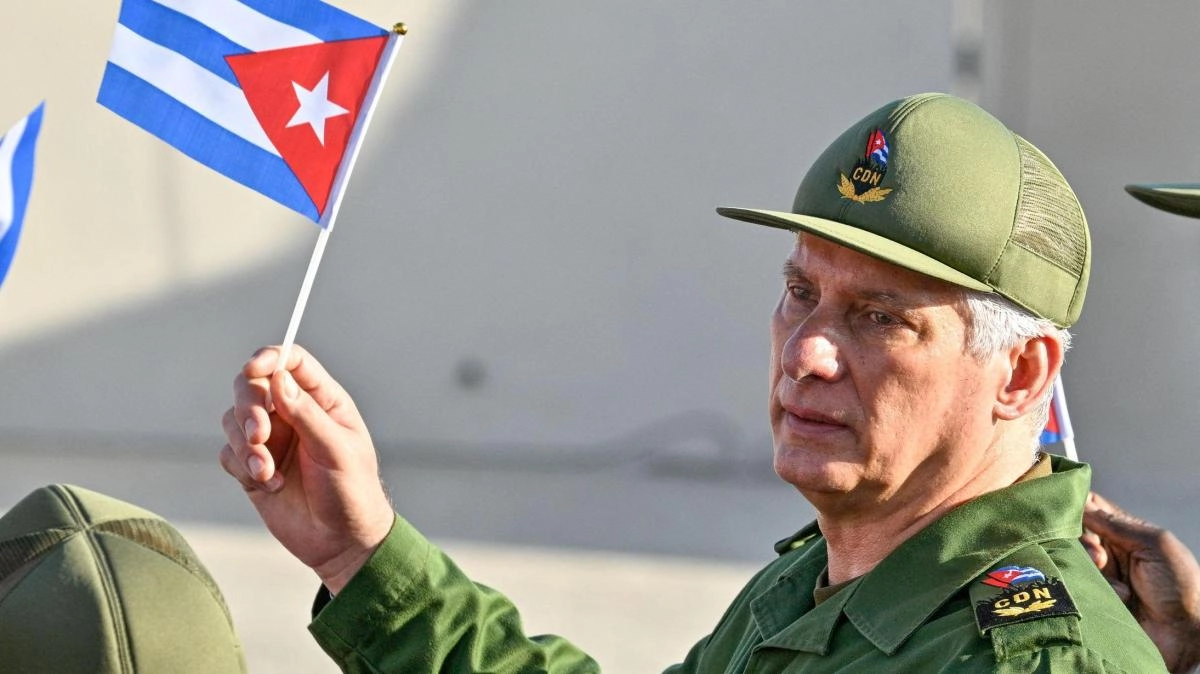

A few days ago, Cuba presented what many point out as its largest package of economic reforms in decades.
The government chaired by Miguel Díaz-Canel announced a program of 176 guidelines that seeks to reactivate a practically collapsed economy.
The measures, approved by the National Assembly of People's Power on June 18, include the expansion of the private sector, more openness to foreign investment, the adoption of market mechanisms to allocate resources and radical changes in agriculture, the financial system or foreign trade.
If applied, they would significantly reduce the tight control that the State maintains over the economy in the Cuban socialist system.
An entrepreneur could open several companies, a farmer would have more incentives to produce, a private company would directly import its inputs and emigrants would be called to play an important role in the national economy.
It is important to point out that at the moment they are general lines of action and it is not clear when, or with what specific mechanisms, they will be put into practice.
They arrive, in any case, in a context of deep crisis with constant blackouts, food and fuel shortages, collapse of national production, lack of foreign currency and massive emigration that has decimated the country's active population.
Added to this is the pressure from the US administration of Donald Trump, which has tightened both its economic siege and its political offensive to force changes on the island.
Far from recognizing a change in ideological direction, Cuban authorities defend the transformations as a response to the country's current circumstances to preserve the socialist project established after the Revolution that brought Fidel Castro to power in 1959.
"There is no sovereignty with an empty plate. The food of the Cuban people will be treated as what it is: a matter of national security," said President Miguel Díaz-Canel in the session in which the new measures were approved.
The reforms seem to point to a model of market socialism similar to that of China or Vietnam, where state planning under the political monopoly of the Communist Party is combined with broad spaces for private enterprise and foreign investment.
Díaz-Canel himself recently acknowledged having studied “a lot” the reforms with which both Asian countries promoted economic development without giving up the single-party system.
Both China since the late 1970s and Vietnam since the mid-1980s implemented radical market-oriented reforms that lifted hundreds of millions of people out of poverty.
The question is whether Cuba can follow a similar path in a very different historical, economic, social and political context.
It is also questioned whether the regime wants and can translate these proposals into concrete changes with clear rules, defined deadlines and sustained application over time.
What the measures consist of
The 176 transformations announced by the Cuban government seek, in general terms, to give more space to private initiative and reduce part of the control that the State has traditionally exercised over the economy.
If applied as they have been presented, an entrepreneur would be authorized to operate several companies instead of just one, private companies could grow beyond the limit of 100 workers and farmers would have more scope to produce and sell their products.
Private entities and cooperatives would gain freedom to import and export products and inputs, as well as access financing.
Regarding the state sector, certain public companies would have more autonomy to operate and some could transform into commercial companies with the participation of other economic actors.
The State would progressively stop allocating resources centrally to move towards a system in which companies access inputs, foreign exchange and financing in the market.
The door would also be opened for the first time to business participation in financial activities such as microcredit, exchange houses and even certain banking services (although it has not been clarified whether this will involve the creation of private banks as such or a more limited opening of the financial sector).
In addition, the reforms seek to attract capital from Cubans residing abroad to participate in companies, finance new businesses and contribute resources to sectors considered strategic for economic recovery.
For Cuban economist Pavel Vidal, the key measures are those related to the expansion of non-state economic activity.
"Removing the limit of 100 workers from the private company, making it a private company, not just an MSME; that a person can participate in the properties of a company; that the private company can dedicate itself to different activities and not a single activity (...) for me that is fundamental," he explains to BBC Mundo.
Vidal believes that one of the most relevant transformations could occur in agriculture, where greater freedom to produce, market and set prices would help create economic incentives similar to those that promoted the first reforms in China and Vietnam.
Miguel Alejandro Hayes, a Cuban economist based in Miami, points out the elimination of the worker limit as one of the most important changes.
“They are de facto authorizing large private companies,” he indicates in his interview with BBC Mundo.
However, he is skeptical about the actual implementation of these measures and the idea that they represent a radical break with the past.
Hayes maintains that many of them respond more to an update of the legal framework than to a profound transformation of the system and affirms that, if the existing economic and political power structure does not change, “everything else is cosmetic.”
The economist believes that part of the transformations seek to formalize dynamics that already exist in practice.
“They are not going to authorize private exchange houses, but rather legalize those that already exist,” he illustrates, in reference to the informal currency market that has operated for years outside official channels.
Another Cuban economist, Emilio Morales, is even more critical when interpreting that the measures respond to “a false will for change, the change that the regime always claims to make when crises reach the extreme, but that it can never fulfill in practice because in reality it is not interested in seeing Cubans prosper.”
Although at first glance the reforms are presented as the most favorable to the private sector in Cuba since 1959, it is unknown to what extent they will end up translating into real changes.
Furthermore, essential aspects are unknown: which sectors will continue to be reserved for the State, how banking opening will work, what limits there will be on private participation in state-owned companies, or when and how many of the guidelines will come into force.
The inspiration of China and Vietnam
If the new Cuban measures take China and Vietnam as a reference, it is because both countries embraced market economies under the absolute political power of their respective communist parties.
China began its opening process in 1978 under the leadership of Deng Xiaoping, while Vietnam did the same in 1986 with the program known as Đổi Mới or “Renewal.”
Under the premise of not abandoning socialism but reforming it, both the Communist Party of China (CPC) and the Communist Party of Vietnam (CPV) introduced changes that gave a much more important role to the market, private initiative and foreign investment.
Private companies began to play a growing role in the economy, farmers received greater incentives to produce, state-owned companies received more autonomy, and the two countries progressively opened to international trade and investment.
Although its income levels remain below those of its neighbors South Korea and Japan, as well as the US, Europe and other developed countries, its success is undeniable: China has become the second largest economy in the world and Vietnam is one of the fastest growing in Southeast Asia.
Several of the measures now announced by Cuba are reminiscent of that formula, such as giving greater autonomy to state companies, expanding the possibilities of private enterprise, decentralizing the allocation of resources, partially liberalizing agriculture or trying to attract capital from the diaspora.
The progressive replacement of some universal subsidies with aid to the most vulnerable sectors or the creation of incentives for companies to operate with market criteria are also similar to Asian references.
Can the model be applied in Cuba?
The measures announced by Havana are reminiscent in many ways of the reforms undertaken by China and Vietnam, but does Cuba today have the conditions that allowed these countries to turn their economic openings into success stories?
Here the differences are important, since Cuba finds itself in a complex situation with a paralyzed economy, an intensifying energy crisis, limited access to international capital and an aging population.
When China and Vietnam began their reforms they were poor countries, but they had a young population, abundant labor and enormous potential to join the world economy.
Cuba, on the contrary, has seen its population reduced from about 11 million inhabitants to around 9 million due to mass emigration and has one of the oldest societies in Latin America: 25.7% of Cubans are over 60 years old, according to official data.
The migratory exodus of recent years has also caused a significant flight of qualified workers.
Added to this is the deterioration of infrastructure, a deep energy crisis and a lack of the export industrial base that drove the growth of China and, later, Vietnam.
“In Vietnam and China, agriculture was initially an important engine of economic growth,” says Pável Vidal.
In Cuba, on the contrary, “there is an especially urban population, very aged, which poses a great challenge for all economic sectors and especially agriculture: the deficit of young personnel,” he says.
The economist also points to another key factor: international insertion.
“Vietnam managed to attract diaspora capital, knowledge and international contacts,” he says.
Vidal believes that the reforms will have a limited scope if Cuba remains isolated from the international economy and without normal access to the global financial system.
And this has no easy solution, since Cuba is practically bankrupt: it is experiencing a serious shortage of foreign currency, its international credit tap has been turned off for not paying its debts, and it lacks liquidity.
The persistence of US sanctions also weighs: although the embargo has been in force for more than six decades, the Trump administration has tightened its financial and trade restrictions on the island, making access to foreign currency, foreign investment and international financing even more difficult.
Recently the US State Department announced new sanctions against Gaesa, as well as against financial institutions linked to this business conglomerate of the Cuban military elite that controls a large part of the foreign currency businesses on the island.
These restrictions limit the arrival of investment, make financial operations more expensive and make access to international credit even more difficult, in addition to dissuading potential investors and complicating the permanence of the few foreign companies that remain in Cuban territory.
In fact, the main foreign hotel corporations operating in the country – including the Spanish Meliá and Iberostar – abandoned most of the hotels they managed at the beginning of June due to growing legal uncertainty, added to the deterioration of operating conditions and the energy crisis.
If these conditions persist, it is difficult to imagine that the reforms alone can foster the economic recovery that the government is pursuing.
BBC Mundo contacted the Cuban government for this article, but did not receive a response.
Will to change or survival strategy?
The Díaz-Canel executive places a good part of its hopes for recovery in attracting foreign investment and capital from the diaspora, which is not considered an easy task either.
“Credibility is the main problem,” says economist Miguel Alejandro Hayes, after mentioning that the lack of regulatory clarity, legal uncertainty and the experience accumulated over decades of regulatory changes could deter potential investors.
The caution is also explained by the background: in recent years Cuba has approved measures such as the expansion of self-employment, the delivery of land in usufruct, monetary unification or the authorization of private MSMEs.
Although some produced specific advances, most did not achieve their intended objectives or were subsequently limited by new regulations, fueling skepticism about the system's capacity for reform.
Some economists such as Emilio Morales interpret the recent announcement by the Cuban regime as a reaction to a specific situation, rather than the result of a planned transformation strategy.
“The announcement comes when the Cuban regime has strongly felt the pressure that the Trump administration has exerted on its neck,” he says.
And he adds that the announcement of new reforms "is not of his own volition, much less out of political conviction that profound changes must be made in the country's economy. In reality, it is a last-minute emergency strategy to try to survive US pressure."
“What Cuba needs is a political change that bury this system and give way to a democracy with separation of powers, with free enterprise, free market and freedom of thought,” he says.
Thus, several unknowns remain: whether the measures will be applied, whether they will survive internal resistance, whether they will be able to attract foreign investment and capital from the diaspora, and whether they will have a real impact on production, employment and the standard of living of Cubans.
Although the reforms outline a course reminiscent of that followed by China and Vietnam, it remains to be seen if Cuba will be able to follow that path in an economic, demographic and geopolitical context that a priori appears much more adverse.