

Tribute in Pasadena to those who served in combat
David Bischoff, Vietnam veteran and son of immigrants, criticized the use of the armed forces against current immigration
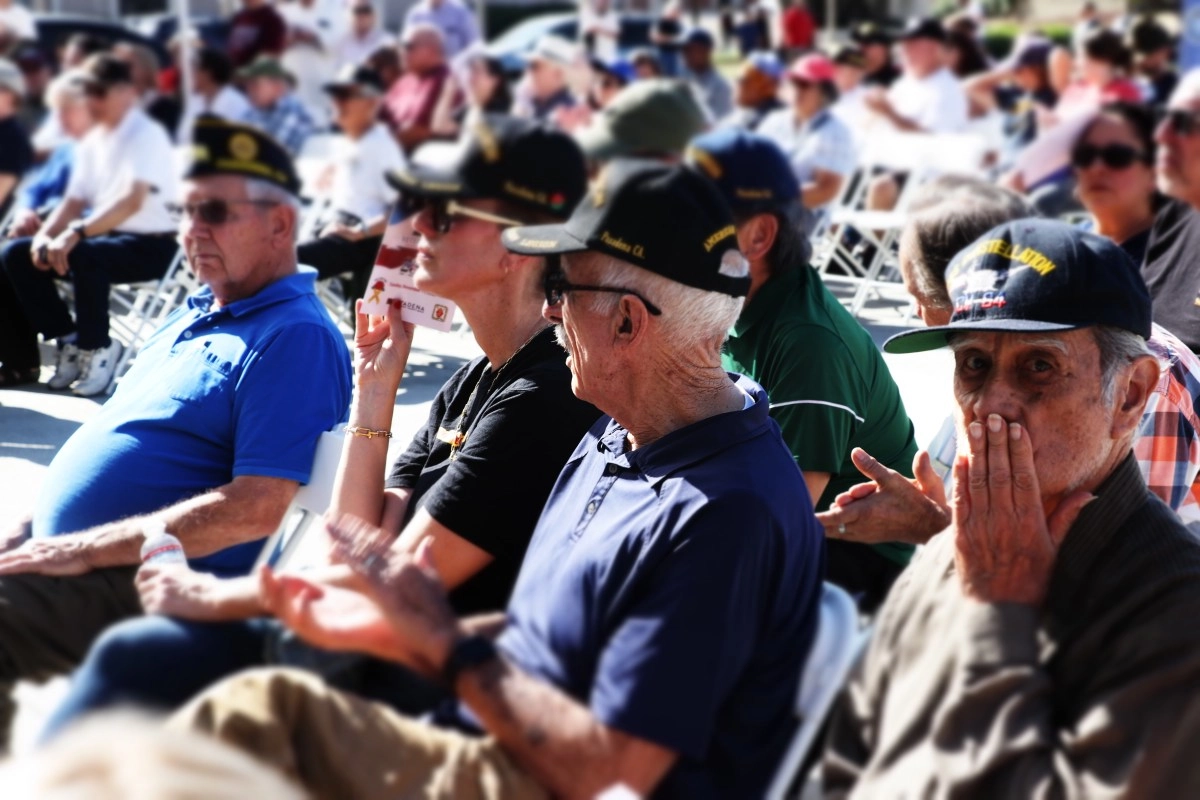

On the 71st anniversary of Veterans Day, government officials and American heroes honored veterans who fought for freedom and democracy, but also criticized the use of the National Guard and the Army to interfere in immigration matters under President Donald Trump. Trump has federalized troops from California to Portland, from Texas to Chicago; From Virginia to Idaho, and from South Carolina to Georgia, among other states in the United States, to detain, repress, arrest, and deport undocumented immigrants; although they have also detained and arrested citizens of Latino origin. The president has requested the intervention of the armed forces to stop irregular crossings on the southern border with Mexico and to reinforce the staff in the immigrant detention centers. Additionally, to protect federal buildings during the protests in Chicago, Los Angeles, and Portland.
Latino Contribution: “It is important to recognize that this country is a great country, and we as immigrants have a responsibility to recognize those who have protected this nation,” declared Pasadena Mayor Victor Gordo during the solemn ceremony held on the steps of City Hall. “Also, the country must understand that, as Latino immigrants or immigrants from anywhere in the world, we have been part of that military force to protect not only the people who have been here, but also the people who have come and those who will come to contribute to ensuring that the United States remains a great country.”
Aware of the work now being done by members of the National Guard and their collaboration in the aggressive and violent enforcement of immigration laws, alongside ICE and Border Patrol agents, Gordo described the situation as “a disgrace.” “It is a disgrace, not only for the country, but for the members of the military force,” he emphasized. Elderly. "We must raise our voices in the American spirit. What they are doing now is un-American," emphasized the elder, who was born in Zacatecas, Mexico. “These actions should not happen in this great country.”
Origin of the Holiday Dwight David “Ike” Eisenhower, the 34th president (from 1953 to 1961) in US history, signed a law restoring November 11 as Veterans Day,encouraging his fellow citizens to commit to the cause of peace and to honor the nation's veterans for their courage, honor, patriotism, and sacrifice.
'Treated Like Animals' Sacrifice like that made by David Bischoff, a 79-year-old Vietnam War veteran, who stated that, in that conflict, “the country was betrayed.” "I was drafted and, because I had a college degree, I became an officer. I was in Vietnam part of '68 and part of '69. I was wounded twice. I received two Purple Hearts and other decorations. Yes, I was very lucky to come back alive." “Vietnam shouldn't have existed.” Bischoff, the son of a mother who emigrated from Germany to Ellis Island (New York), argued that immigration in the past was more compassionate, unlike the harsh treatment immigrants receive today. "My grandmother couldn't emigrate unless she had someone to take care of her. It could be family or friends. She emigrated not to receive free food, free housing, free medical care. Everything for free. When she got here, she had to learn things: the language, how to get a job, everything," he told La Opinion. "Immigration was different. And now Trump is creating this cruel and terrible situation of getting rid of them [the immigrants] as quickly as possible." “And they treated a lot of people like animals,” said the Vietnam veteran. “I don't like how they're treating people.” He added that “what this administration is doing is terrible, sending the National Guard and the Army to deal with immigrants,” both undocumented and citizens of Latino origin. New Generations Present at the Veterans Day celebration, Albeniz Guillen, a 16-year-old cadet and son of Salvadoran immigrants, said he aspires to be a soldier and expressed that, if he were part of the United States military, he would not detain immigrants to hand them over to ICE. “Being a soldier has many benefits, and I like helping people,” he stated. “That thought is like part of my family and my personality.” Betsy Cuevas, a retired Army sergeant with 22 years of service, reflected on her positive experiences in the armed forces and the importance of Veterans Day. “It's a time to remember and honor veterans,” said the Senior Military Instructor in the Army's JROTC program at Blair High School. For his part, Adrian Hernandez, a former Marine Corps contractor, also values ??Veterans Day for the recognition of military service and the sacrifices made by veterans. “I am concerned about the current treatment of veterans and the use of the armed forces for the enforcement of immigration laws,” Hernandez said. “It's sad, because of the potential long-term impact on the nation's pillar, among those who have served the homeland.”
Under the blazing sun, Veterans Day commemorations were held in front of Pasadena City Hall, and during the ceremony, the late US Army Lieutenant Colonel Raymond G. Harvey,awarded the Medal of Honor by President Harry S. Truman, was honored. Harvey, born on March 1, 1920, in Ford City, Pennsylvania, and raised in Oklahoma, was a Chickasaw Indian. He was one of the most decorated service members living in Pasadena when he enlisted in the Army in 1939. In his memory, Pasadena Major Victor Gordo read the “Official Medal of Honor Citation.” In 2010, Lieutenant Colonel Harvey was posthumously inducted into the US Army Military Hall of Fame Oklahoma. During World War II, Harvey served in the 79th Infantry Division, landing in Normandy, France, a week after the D-Day landings and participating in the division's campaigns in northern France and Germany. Harvey received the Distinguished Service Cross (the second highest decoration after the Medal of Honor), two Silver Stars, two Bronze Stars, and two Purple Hearts for his service during World War II. He took command of C Company, 17th Infantry Regiment, and the 7th Infantry Division shortly after the division's landing at Inchon, South Korea, in September 1950. Harvey was also awarded the Medal of Honor for "remarkable gallantry and intrepidity beyond the call of duty in combat" when his company was trapped under heavy automatic weapons fire from numerous well-entrenched positions on March 9, 1950. 1951, near Taemi-dong, South Korea, according to his Medal of Honor citation. Lieutenant Colonel Harvey retired from the Army in 1962. He later worked for Northrop Corp., was an investment banker, and then director of Indian affairs for the Arizona Division of Emergency Services. Harvey died in 1996 at the age of 76. Also remembered was Captain Reginald B. “Reggie” Desiderio, who died in combat during the Korean War. Captain Desiderio posthumously received the Medal of Honor for his actions on November 27, 1950. The ceremony included a speech by Associate Justice Eileen Moore, a Vietnam War combat nurse, and a flyover by the Condor Squadron at 11:11 a.m. During the ceremony, the late US Army Lieutenant Colonel Raymond G. Harvey, who was awarded the Medal of Honor by President Harry S. Truman, was honored. Harvey, born on March 1, 1920, in Ford City, Pennsylvania, and raised in Oklahoma, was a Chickasaw Indian. He was one of the most decorated servicemen living in Pasadena when he enlisted in the Army in 1939. In his memory, Pasadena Major Victor Gordo read the official Medal of Honor citation. In 2010, Lieutenant Colonel Harvey was posthumously inducted into the Oklahoma Military Hall of Fame. During World War II, Harvey served in the 79th Infantry Division, landing in Normandy, France, a week after D-Day and participating in the division's campaigns in northern France and Germany. Harvey received the Distinguished Service Cross (the second-highest decoration after the Medal of Honor), two Silver Stars, two Bronze Stars, and two Purple Hearts for his service during World War II. He took command of Company C, 17th Infantry Regiment,and the 7th Infantry Division shortly after the Harvey was also awarded the Medal of Honor for “remarkable gallantry and intrepidity beyond the call of duty in combat” when his company was trapped under heavy automatic weapons fire from numerous well-entrenched positions on March 9, 1951, near Taemi-dong, South Korea, according to his Medal of Honor citation. Lieutenant Colonel Harvey retired from the Army in 1962. He later worked for Northrop Corp., was an investment banker, and then director of Indian affairs for the Arizona Division of Emergency Services. Harvey died in 1996 at the age of 76. Also remembered was Captain Reginald B. “Reggie” Desiderio, who died in action during the Korean War. Captain Desiderio posthumously received the Medal of Honor for his actions on November 27, 1950. The ceremony included a speech by Associate Justice Eileen Moore, a combat nurse in the Vietnam War, and a flyover by the Condor Squadron at 11:11 am. During the ceremony, the late US Army Lieutenant Colonel Raymond G. Harvey, who was awarded the Medal of Honor by President Harry S. Truman, was honored. Harvey, born on March 1, 1920, in Ford City, Pennsylvania, and raised in Oklahoma, was a Chickasaw Indian. He was one of the most decorated servicemen living in Pasadena when he enlisted in the Army in 1939. In his memory, Pasadena Major Victor Gordo read the official Medal of Honor citation. In 2010, Lieutenant Colonel Harvey was posthumously inducted into the Oklahoma Military Hall of Fame. During World War II, Harvey served in the 79th Infantry Division, landing in Normandy, France, a week after D-Day and participating in the division's campaigns in northern France and Germany. Harvey received the Distinguished Service Cross (the second-highest decoration after the Medal of Honor), two Silver Stars, two Bronze Stars, and two Purple Hearts for his service during World War II. He took command of Company C, 17th Infantry Regiment, and the 7th Infantry Division shortly after the Harvey was also awarded the Medal of Honor for “remarkable gallantry and intrepidity beyond the call of duty in combat” when his company was trapped under heavy automatic weapons fire from numerous well-entrenched positions on March 9, 1951, near Taemi-dong, South Korea, according to his Medal of Honor citation. Lieutenant Colonel Harvey retired from the Army in 1962. He later worked for Northrop Corp., was an investment banker, and then director of Indian affairs for the Arizona Division of Emergency Services. Harvey died in 1996 at the age of 76. Also remembered was Captain Reginald B. “Reggie” Desiderio, who died in action during the Korean War. Captain Desiderio posthumously received the Medal of Honor for his actions on November 27, 1950. The ceremony included a speech by Associate Justice Eileen Moore, a combat nurse in the Vietnam War, and a flyover by the Condor Squadron at 11:11 am. landing in Normandy, France,a week after the D-Day landings and participating in the division's campaigns in northern France and Germany. Harvey received the Distinguished Service Cross (the second highest decoration after the Medal of Honor), two Silver Stars, two Bronze Stars, and two Purple Hearts for his service during World War II. He took command of C Company, 17th Infantry Regiment, and the 7th Infantry Division shortly after the division's landing at Inchon, South Korea, in September 1950. Harvey was also awarded the Medal of Honor for "remarkable gallantry and intrepidity beyond the call of duty in combat" when his company was trapped under heavy automatic weapons fire from numerous well-entrenched positions on March 9, 1951, near Taemi-dong, South Korea, according to his Medal citation. Honor. Lieutenant Colonel Harvey retired from the Army in 1962. He later worked for Northrop Corp., was an investment banker, and then director of Indian affairs for the Arizona Division of Emergency Services. Harvey died in 1996 at the age of 76. Also remembered was Captain Reginald B. “Reggie” Desiderio, who died in combat during the Korean War. Captain Desiderio posthumously received the Medal of Honor for his actions on November 27, 1950. The ceremony included a speech by Associate Justice Eileen Moore, a Vietnam War combat nurse, and a flyover by the Condor Squadron at 11:11 am landing in Normandy, France, a week after the D-Day landings and participating in the division's campaigns in northern France and Germany. Harvey received the Distinguished Service Cross (the second highest decoration after the Medal of Honor), two Silver Stars, two Bronze Stars, and two Purple Hearts for his service during World War II. He took command of C Company, 17th Infantry Regiment, and the 7th Infantry Division shortly after the division's landing at Inchon, South Korea, in September 1950. Harvey was also awarded the Medal of Honor for "remarkable gallantry and intrepidity beyond the call of duty in combat" when his company was trapped under heavy automatic weapons fire from numerous well-entrenched positions on March 9, 1951, near Taemi-dong, South Korea, according to his Medal citation. Honor. Lieutenant Colonel Harvey retired from the Army in 1962. He later worked for Northrop Corp., was an investment banker, and then director of Indian affairs for the Arizona Division of Emergency Services. Harvey died in 1996 at the age of 76. Also remembered was Captain Reginald B. “Reggie” Desiderio, who died in combat during the Korean War. Captain Desiderio posthumously received the Medal of Honor for his actions on November 27, 1950. The ceremony included a speech by Associate Justice Eileen Moore, a Vietnam War combat nurse, and a flyover by the Condor Squadron at 11:11 amCaptain Desiderio posthumously received the Medal of Honor for his actions on November 27, 1950. The ceremony included a speech by Associate Justice Eileen Moore,a combat nurse in the Vietnam War, and a flyover by the Condor Squadron at 11:11 am. Captain Desiderio posthumously received the Medal of Honor for his actions on November 27, 1950. The ceremony included a speech by Associate Justice Eileen Moore, a combat nurse in the Vietnam War, and a flyover by the Condor Squadron at 11:11 am.