

Volunteers bring food to homes of immigrant families that fear exiting due to raids
The delivery of grocery bags was born out of compassion and need, based on the fear unleashed by ICE

For a long time, Genesis Mendez worked two jobs while studying biology at Biola University to save up to buy a car, and when she finally got one, she decided to use it to bring food to immigrant families who are afraid to go out on the streets.
“Two months ago I started distributing food. It has been very nice to help the people,” she says.
At first, the families looked at her with suspicion, but now that they know her, when they see her arrive with food, they are very happy.
“In one of the homes where I take food, a little girl always comes out very happily to greet me; and excitedly exclaims, “Oh, thank you very much! It’s a blessing!”
Genesis is part of the CLUE Justice volunteer group that delivers food twice a week in their own cars to immigrant families or asylum seekers in the city of Los Angeles.
“I would say I take food to five to six families twice a week. I like it because it’s fresh food that helps them stay healthy.”
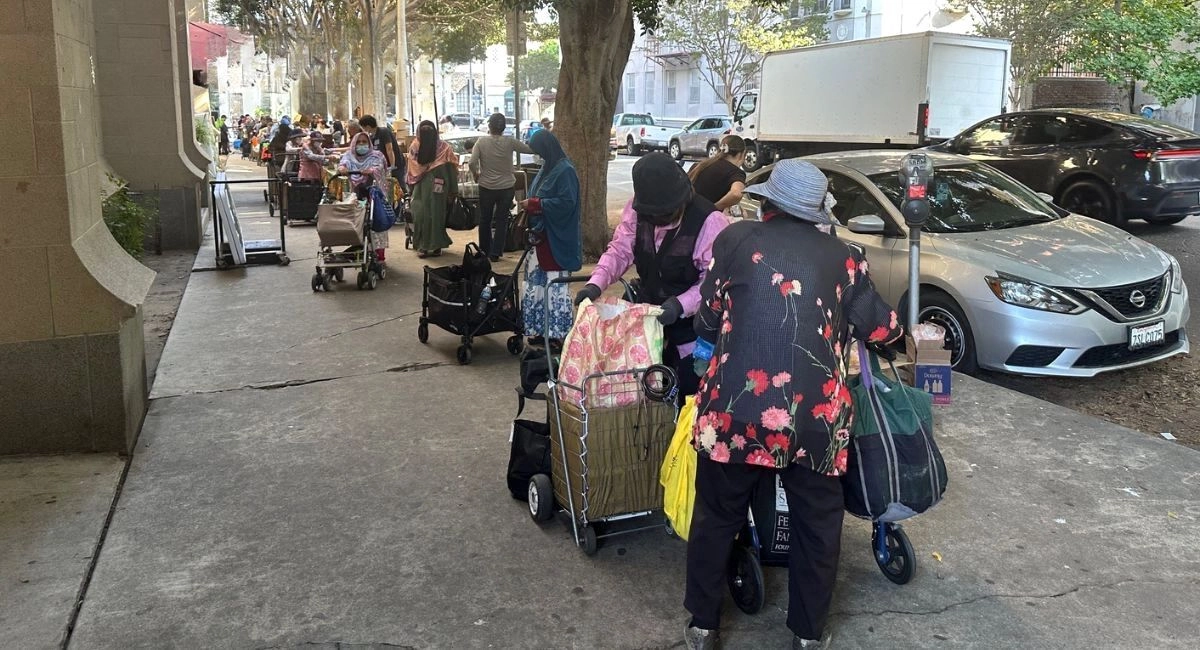
Around a well-known church in the Koreatown neighborhood of Los Angeles, long lines of people form to receive the food that is distributed twice a week.
Generally, they are members of immigrant families, asylum seekers, and people in need.
“Before Trump, they distributed food to between 500 and 800 families on Wednesdays and Fridays, but when the raids started, people stopped coming. The drop was drastic. Only about 200 people came, and we had a lot of food left over. We discovered it was because they were afraid of being detained or seen on the streets,” says Sithy Bin, faith-based immigration organizer at CLUE Justice.
“Many of these people have family members who have been detained in ICE (Immigration and Customs Enforcement) raids.”
This food bag delivery program was born out of phone calls from families asking if there was a way to deliver groceries to their homes because they were afraid to go out.
“‘We need food!My father was detained and deported,' they told me. Hearing that broke my heart. We started calling faith leaders and community members to see if we could get together a group of volunteers to pack food and deliver it to the homes of these families.”
That's when Clergy and Laity United for Economic Justice (CLUE Justice), a coalition of congregations from various faith denominations, organized the food delivery program for these families who could no longer go to church to pick it up for fear of an immigration raid.
“We managed to gather about 20 volunteers to distribute the bags of food to the homes; And because of the risky situation and the fear of ICE, some families don’t want the food delivered to their homes but instead ask to pick it up at certain locations where they feel safe to go.”
The food bags include fresh produce, vegetables, fruits, canned food, rice, dairy products, and a wide variety of other items. The food is donated by the Los Angeles Regional Food Bank.
Bethany Fox, a Presbyterian minister, has been volunteering for two weeks distributing food to immigrant families.
“With everything going on, it’s easy to feel overwhelmed and a little helpless. But I'm committed to doing small things to try to make life easier for those who are having a really hard time."
He says Friday is his day off, and since he has extra time, he thought with all the suffering and injustice happening, he might as well take a couple of hours to deliver food.
How do people react when they see you arrive with bags of food?
"I think they're grateful. I leave several boxes of food in a place that's like a community center, and neighbors go get them. It's as if they're already somewhat organized in their own neighborhood. They have friends and contacts, and they let each other know."
Since the raids have intensified in Los Angeles and Southern California, it's common to see undocumented immigrant groups created on social media asking if they know of any places where food donations are available, because they're struggling to buy food.
"It's a little unfair, because we live In a place with so much wealth and so much food, the problem isn't that there isn't enough. It's just not distributed fairly. So this is just one way to ensure that those who are hungry can get food and nutrition," says Pastor Fox.
Many immigrant families have stopped going to work for fear of being caught in an immigration raid, so their income has decreased.
Vanessa, a mother of five young children, who is one of the beneficiaries of the food delivery in Los Angeles,He says that after his colleague was let go from his job because the company didn't want to get into trouble with immigration, he found out through Instagram that a church was handing out food.
“It's been a blessing and a huge financial help. Every piece in the package they send us helps us. They include protein like meat and peanut butter, but also cereal, canned food, vegetables, and fruits.”
Vanessa says that without these food donations, they would obviously be having a hard time.
“Finding a program that delivers food to your home is a plus. So not having that would make our lives harder, especially with a newborn. We would probably have to look for other resources, and that would put us at risk.”
Vanessa asked for help finding other groups to help them with diapers for their baby, personal hygiene products, and laundry soap.
Bin, the CLUE Justice organizer, believes that as a person of faith, feeding those who are hungry is not only important, but essential.
“The Scriptures call us to this: ‘For I was hungry and you gave me food, I was thirsty and you gave me drink, I was a stranger and you took me in’ (Matthew 25:35, NIV).”
She adds that her grocery bag delivery program was born out of compassion and need. “No family should have to choose between feeding their children and staying safe.”
According to information revealed by the Homeland Security spokesperson, between June 6 and August 6, ICE and Border Patrol (CBP) made 4,163 arrests in the Los Angeles area.