

Indiana primary confirms Trump's power and his total control of the GOP
The result not only changes the face of the state Senate, but also sends a warning to Republicans considering moving away from Trump's line.
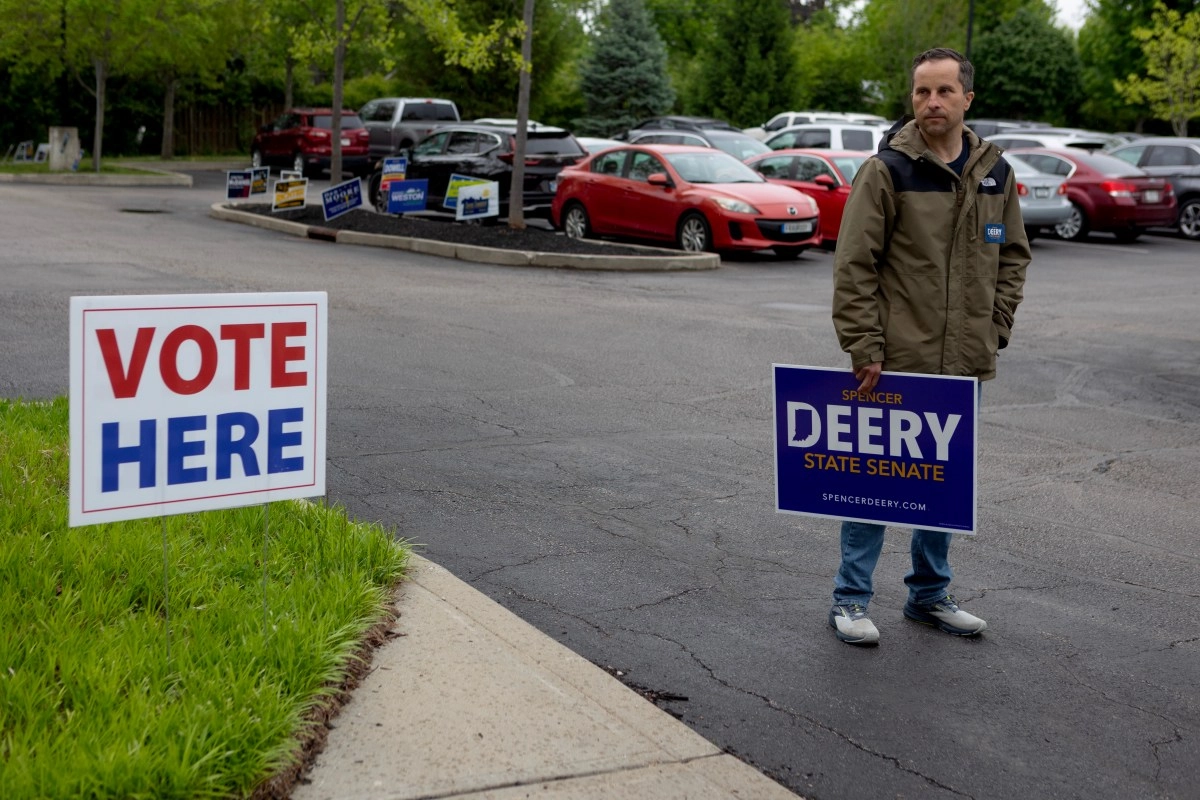

The political weight of President Donald Trump was again felt strongly in Indiana, where several Republican legislators who challenged his agenda were defeated in key primary elections the state Senate, in a day that made clear that its influence within the Republican Party, known as GOP (Grand Old Party) and, continues to be determining the midterm elections.
Tuesday's elections functioned as an internal thermometer of the party, after months ago a group of Republican state senators blocked a redistricting plan promoted by Tru allies mp. The measure would have reinforced the conservative advantage of the state in the federal Chamber of Representatives, but was rejected in a rare show of internal resistance, say analysts consulted by the EFE agency.
According to these experts, the Indiana vote was a real stress test to gauge Trump's strength among Republican voters. It's just a few months before the mid-term elections that will form the House of Representatives and the Senate for the last two years of the legislature.
Meanwhile, Kevin Roberts, president of the Heritage Foundation and key player in Trump's policies, warned that “Indiana's primary should give the conservatives the hope that we can remove the politicians who speak like conservatives but who, ultimately, help the left.”
Political punishment of republican dissidents
In what analysts and strategists describe as a well-coordinated political operation, the president backed challengers in seven of eight contests in which legislators who opposed his initiation participated active. According to results compiled by The Associated Press, at least five of the candidates supported by Trump managed to win, while only one of the incumbent managed to retain his seat.
Among the most notable victories is that of Blake Fletcher, who defeated a sitting state senator in northeast Indiana. Michelle Davis and Tracey Powell managed to beat legislators in exercise in key central districts of the state. In another relevant race, the backing of former Vice President Mike Pence wasn't enough to save Jim Buck, who fell to a rival boosted by Trump.
The results consolidate a trend: the candidates aligned with the “Make America Great Again” (MAGA) movement continue to displace more traditional Republican figures, in an internal struggle that redefines the ideological course of the party.
Millionaire investment and message heading to November
Behind these victories there was strong economic investment. According to sources close to the campaign, external groups aligned with federal senator Jim Banks allocated more than 8 million d and advertising dollars to support candidates similar to the former president. Influential conservative organizations, such as Turning Point USA and the Club for Growth, also joined the effort.
“The message is clear: Republican voters in Indiana want leaders who faithfully represent their conservative values,” said Banks in a statement after the results were known.
The impact of these primaries goes beyond the state level. For political strategists, the result reinforces Trump's ability to shape candidacies within the GOP, even at times when its national popularity shows signs of wear, with approval rates that are between 30% and 35%.
Additionally, the outcome could influence future battles over electoral redistricting, a practice known as gerrymandering, in other Republican-controlled states, especially in the Southern country.
As the midterm elections approach, the Indiana case is emerging as a warning for those within the Party Re publican consider challenging the political line marked by Trump: his support still has decisive weight among the conservative electoral base.