

Neither hurricanes nor fires: this is the climate risk that costs homeowners the most money
Storms with hail and strong winds surpassed hurricanes as the main source of insured losses. States with highest risk
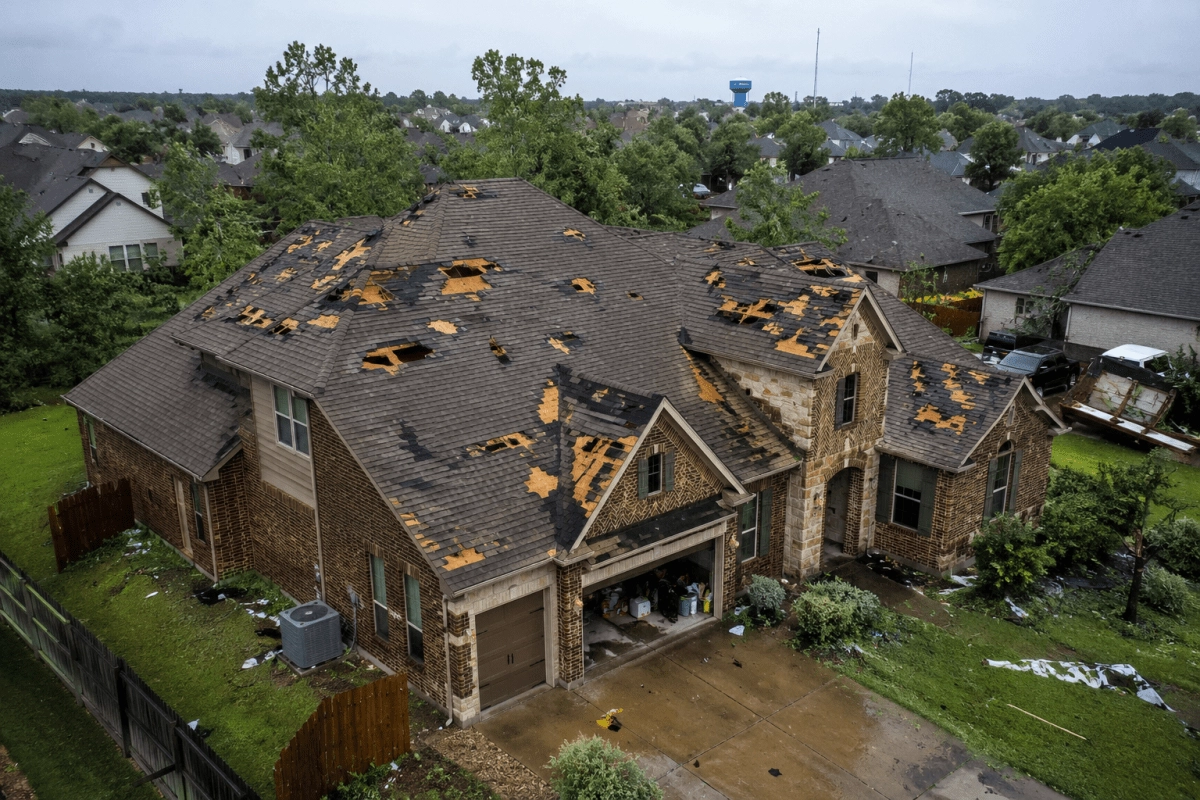

For years, hurricanes and floods were at the center of concern for homeowners and insurers. However, a new analysis warns that another type of weather phenomenon has become the main source of insured losses: severe storms capable of producing hail, tornadoes and strong gusts of wind.
In 2025, so-called severe convective storms caused more insurance payments than cyclones and became the most expensive insured natural disasters in the world, according to a report by the specialized firm First Street.
You can see: Hurricanes in the US: when the 2026 season begins and which states are most at risk
Hail, wind and tornadoes: an increasingly expensive threat
These storms typically last only a short time, but can cause significant damage to roofs, windows, vehicles, power lines, and other structures. Unlike hurricanes, which concentrate their losses in a few large-magnitude episodes, hail and wind events are repeated more frequently and affect extensive urban areas.
Hail appears as the main responsible for insurance payments within this category, followed by severe gusts. When a storm passes through a city, it can simultaneously damage homes, cars, businesses, and public infrastructure.
Convection is the vertical movement of heat and moisture in the atmosphere, a process that can promote the formation of storm clouds and severe weather, according to the National Weather Service.
You can see: Hurricane Genevieve: what danger it now represents for Mexico and the United States
The United States concentrates a good part of the losses
Insured and uninsured losses caused by these storms reached approximately $82 billion in 2025, with about $68 billion in the United States, according to data cited in the study.
The impact is especially high because many of the exposed areas concentrate high-value homes, industries and commercial buildings. The Midwest and North Texas are among the regions where insurance costs are rising the fastest.
Illinois and Ohio appear among the most vulnerable states due to the combination of frequent storms, large cities and expensive properties. North Carolina and Georgia also face significant risks, especially in metropolitan areas such as Charlotte and Atlanta.
What can happen with home insurance
Hail, wind, and tornado damage are typically included in standard homeowners policies. However, increased claims frequency and cost could result in higher premiums, special deductibles, or stricter conditions for renewing coverage.
For now, private insurers have not withdrawn en masse from the most affected regions, as has happened in some markets exposed to hurricanes or wildfires. But they are already raising rates rapidly in certain areas.
For homeowners, it is advisable to review what damages the policy actually covers, what is the deductible applicable to wind or hail and if the insured amount is enough to rebuild the home with current costs. It is also advisable to document the condition of the roof and property before a storm, as photographs can be helpful when filing a claim.