

The new proposal that complicates Chinese cars in the US
A legislative proposal seeks to prevent the entry of Chinese vehicles into US territory, even if they are driven by visitors
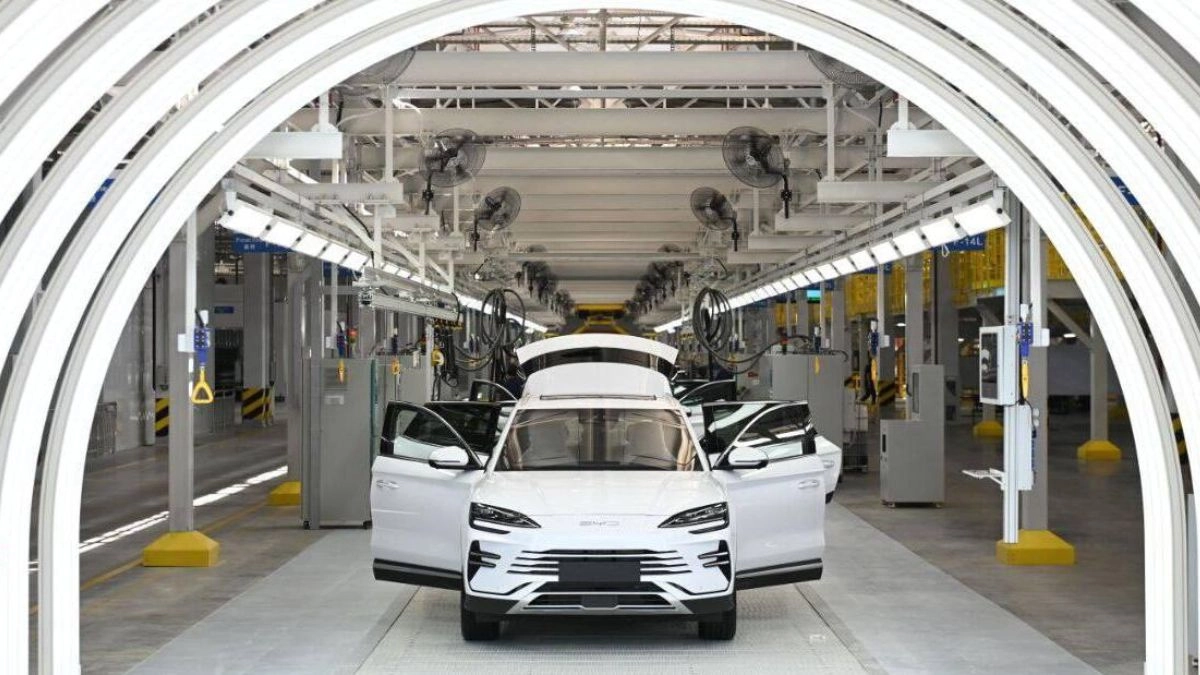

Crossing the U.S. border in a car could become more complicated for some foreign drivers. A new proposal presented in the US Congress poses restrictions that would not only affect the sale of Chinese vehicles, but also their entry into the country, even when used by tourists.
Read also: Toy Story 5 style: this is the Porsche inspired by Woody, Buzz and Jessie
The initiative reflects the growing level of tension between Washington and Beijing on issues related to technology, industry and security. This time, the focus is on connected cars and the information they are capable of collecting.
You can read: Fire risk forces Jeep to recall 1.1 million vehicles
The bill, called Protecting America from Chinese Cars Act, was promoted by Congresswomen Haley Stevens and Elissa Slotkin, representatives of the state of Michigan, one of the main centers of the American automotive industry.
A ban that would go beyond sales
Unlike other measures applied in recent years, this proposal is not limited to preventing the marketing of certain vehicles within the United States.
The text contemplates restrictions for cars considered to be of Chinese origin even if they are not being sold in the US market. This could affect drivers from Canada or Mexico who try to enter the country aboard one of these models.
The measure seeks to close possible indirect access routes for Chinese manufacturers that have strengthened their presence in other North American markets.
Vehicles that could be affected
One of the aspects that has generated the most debate is the breadth of the definition used by the proposal.
The legislation does not only target vehicles designed or manufactured in China. It also includes models produced by companies in which Chinese companies have a stake of more than 15%.
This interpretation could extend the scope of the standard to various manufacturers with international operations, even when part of their production or development is carried out outside the Asian country.
Concern about data
The project's promoters maintain that modern vehicles are much more than simple means of transportation. Today's systems incorporate cameras, sensors, communication tools and connectivity functions capable of collecting large amounts of information.
For those who support the initiative, this data could represent a potential risk if it ends up in the hands of governments considered adversaries by the United States.
For this reason, they consider it necessary to strengthen controls on certain vehicles and manufacturers linked to China.
A new dispute in the automotive industry
Mexico and Canada also appear at the center of the discussion due to the growth that Chinese brands have experienced in both markets, especially within the electric vehicle segment.
Although the future of the proposal is still uncertain, the debate shows that the automobile has become an important piece of global technological competition. It is no longer just about manufacturing or selling more vehicles.
Connectivity, data management and digital security are acquiring increasing weight in the political and commercial decisions of the world's main powers.