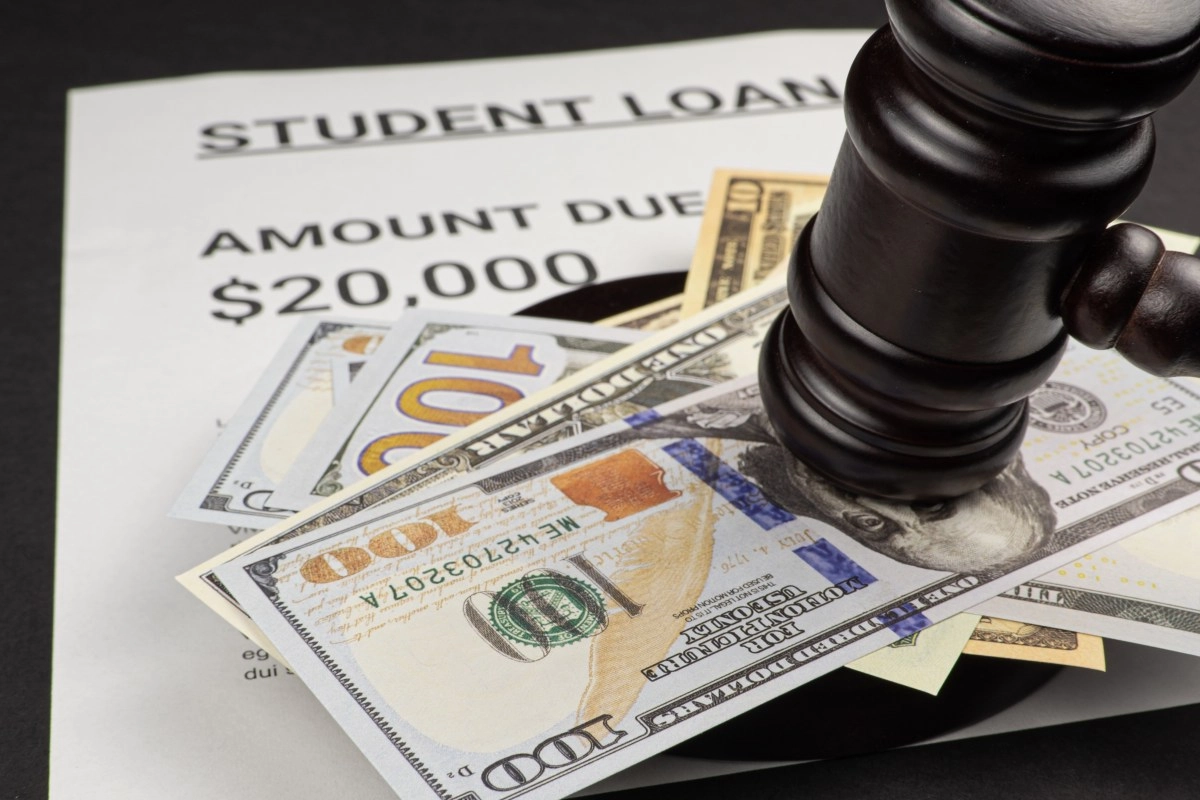

A few years ago, a lawsuit was filed against the U.S. Department of Education after some students requested debt relief for being deceived by an educational institution. Today, more than 170,000 people could cancel their student loan debt thanks to a recent court decision in their favor. We explain all the details you need to know to identify if you are part of the beneficiaries.
The measure is part of a class-action lawsuit filed in 2019 by students who claimed to have been victims of private, for-profit universities. The plaintiffs claimed that these institutions used deceptive practices to attract students, who ended up with large debts for educational programs that did not offer the promised value.
The case relied on the so-called Borrower Defense rule, a mechanism that allows you to request the cancellation of federal student loans when a school engaged in fraud or made false statements to convince students to enroll.
With that decision, the United States Department of Education must move forward with the forgiveness of approximately $11 billion in student loans corresponding to more than 170,000 people who had not yet received a final response to their applications.
“In terms of financial compensation, Sweet v. McMahon is the largest class action settlement in American history and the largest settlement ever reached against the federal government,” said Eileen Connor, president and CEO of the Project on Predatory Student Lending (PPSL). “It is also among the largest deals of any type in the United States.”
What is the class action lawsuit about?
The lawsuit began with nine original plaintiffs, including Theresa Sweet, a California resident who studied at the Brooks Institute of Photography. They accused the U.S. Department of Education of failing to resolve debt cancellation requests that they argued met the requirements established by law.
In the lawsuit filed in 2019, the students claimed that many schools offered programs that ended up harming thousands of people.
“The schools, in effect, offered useless products that left students with thousands of dollars in debt, a damaged credit history, and limited access to future student aid,” the borrowers said in the original lawsuit.
The plaintiffs also argued that since 2017, the Department of Education failed to adequately address requests for relief. While waiting for a response, many continued to accumulate interest, affect their credit history, and miss opportunities to obtain financing, such as mortgage loans or to buy a car.
One of the cases presented to the court showed that a student's balance went from around $250,000 to more than $400,000 while she waited for the resolution of an application that was finally accepted years later.
After learning of the new development in the case, Theresa Sweet recalled the long road traveled by the borrowers.
“This case was always about borrowers coming together to stand up for what was right,” stated Theresa Sweet. “Through the ups and downs of the last seven years, we became a community united by the belief that what happened to us was unfair, and it became clear how many people had been harmed by the same broken system.”
So far, the agreement reached in 2022 has already allowed nearly $6 billion in federal loans to be canceled for approximately 300,000 students. However, the litigation ended up involving nearly 500,000 borrowers, due to the accumulated backlog of more than 210,000 pending applications.
Who qualifies for cancellation?
Not all people with student loans will be able to access this benefit. The agreement applies to those who submitted a request for relief under the Borrower Defense rule before the dates established by the judicial agreement, especially those cases that remained unresolved since 2022.
The Department of Education has a deadline of June 15, 2027 to complete the cancellation of the debts included in the process. While awaiting final resolution, benefited borrowers are not required to make payments on those loans.
According to Connor, the average canceled balance exceeds $48,000 per person, although he clarified that the amount varies considerably depending on each case.
Those who submit new applications are no longer part of this specific agreement.
You may also be interested in: