

14 years after DACA, 'Dreamers' in the crosshairs of deportations
The Trump administration, since its first term (2017-2021), has tried to eliminate DACA in a litigation that continues in court
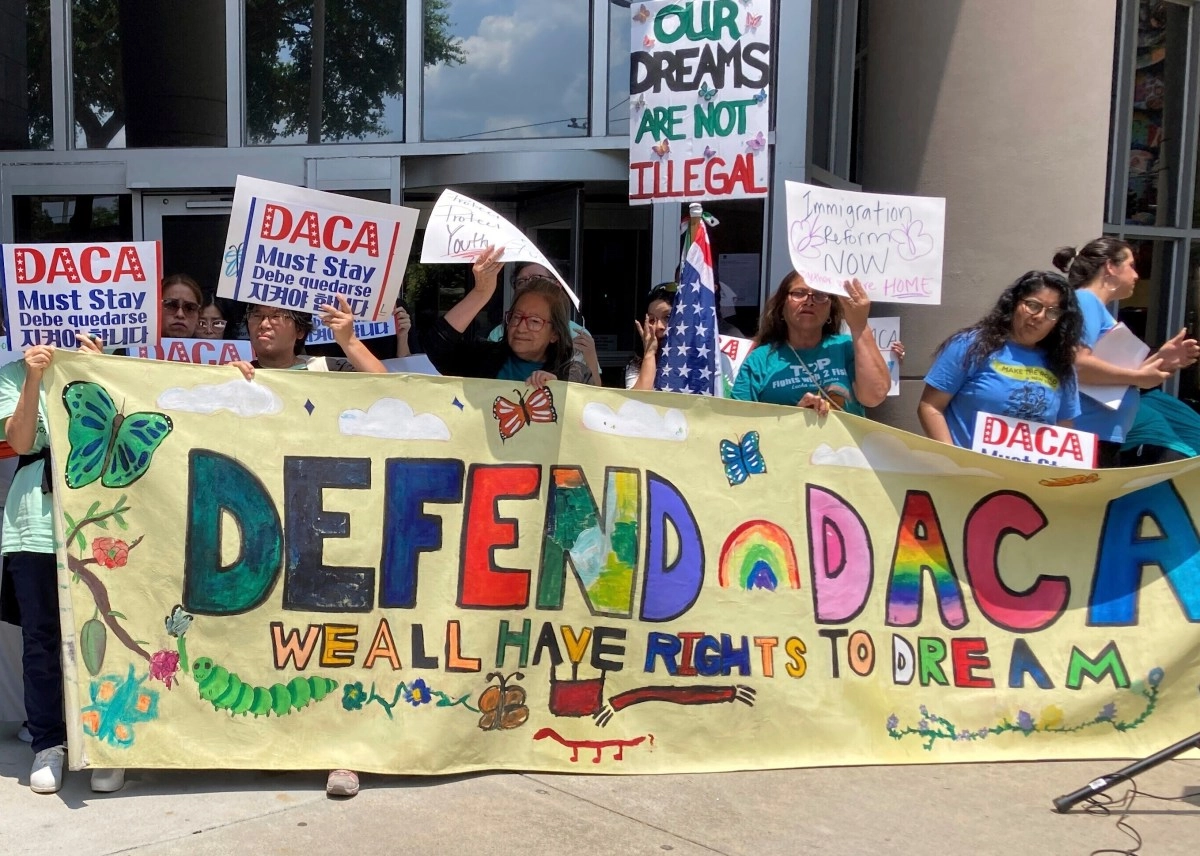

This June 15, 2026 marks 14 years since Democratic President Barack Obama issued the executive order that granted Deferred Action for Childhood Arrivals (DACA), an anniversary that is commemorated in the midst of one of the most critical chapters for Dreamers who have not been exempt from Donald Trump's machinery of detentions and deportations.
The Trump administration, since its first term (2017-2021), has tried to eliminate DACA in a litigation that continues in court. But during the current administration, there have been more cases of arrests and deportations of DACA beneficiaries, which in addition to granting them work permits, are supposed to protect them from deportation.
But DACA protections have been weakened through litigation, and severe delays in renewing work permits causing many recipients to even lose their jobs. It also makes them more vulnerable to being detained and deported.
Additionally, the Board of Immigration Appeals (BIA) ruled that being a DACA recipient does not automatically guarantee protection from deportation.
Exact figures have not been offered, but in late February, in a letter sent to Illinois Democratic Senator Dick Durbin, DHS indicated that between January 1 and November 19, 2025, ICE arrested 261 DACA recipients and deported 86 of them.
The Home is Here movement estimates that more than 340 are detained by ICE and 90 are deported. Without a doubt, there are several cases that have attracted media attention.
Last week, Senator Durbin unsuccessfully introduced amendments to the ICE and CBP spending plan to protect Dreamers from deportation.
Durbin introduced the original Dream Act to legalize Dreamers on April 25, 2001. It's been 25 years and there is still no solution on the horizon.
A FWD.us report from May notes that 14 years later, “DACA recipients have grown and changed, but DACA policy has not advanced at the same pace and, over time, has become less effective, largely due to attacks on the program in the courts and by the current administration.”
In 2012, “the beneficiaries were, in general, young people who were in high school or who had just started their university studies or their working life…They earned an average income of only $4,000 a year.”
On the 14th anniversary of DACA, of that group of original beneficiaries, only 8% attend school; 89% are part of the workforce, and their average income is $46,000 annually. Almost all, 99%, have graduated from high school, and about half have completed at least some college.”
There are 2.6 million Dreamers in the United States. Approximately one-third, 900,000, are eligible for DACA, but of those, 400,000 cannot access the program due to court litigation that prohibits new applications. As of September 2025, nearly 506,000 had DACA.
Everyone, with and without DACA, has established lives, families, jobs, and is united by the same uncertainty.
According to FWD.us, “nearly 1.7 million Dreamers, about 64%, are already trained and employed in critical sectors of the economy.”
“It is estimated that Dreamers already contribute $76 billion annually to the U.S. economy through their wages, and pay nearly $24 billion annually in combined federal, payroll, state and local taxes,” the report adds.
Gaby Pacheco, one of the pioneers of the movement to legalize Dreamers, president and CEO of TheDream.US, sums it up like this:
"Dreamers, both those with DACA and those without, should be candidates for US citizenship, not targets for deportation. Unfortunately, as DACA marks 14 years, Dreamers face an environment of increased control and restricted opportunities, despite the many DACA stories and statistics that provide reasons for its legalization, not its deportation. We cannot remain silent and must ensure that the voices raised are not just those of Dreamers and those who advocate. for them, but also those of the business owners, neighbors, friends and classmates who depend on Dreamers and care about their future in this country. Providing stability, security and opportunities to Dreamers is not only right, but will make our country stronger and more prosperous for everyone.”
The texts published in this section are the sole responsibility of the authors, so La Opinión does not assume responsibility for them.