

'Carteles Inc.', an ambitious, uncomfortable and political book
The book written by Guadalupe Correa-Cabrera is based on Los Zetas, presented not only as a particularly violent group, but as a paradigm shift
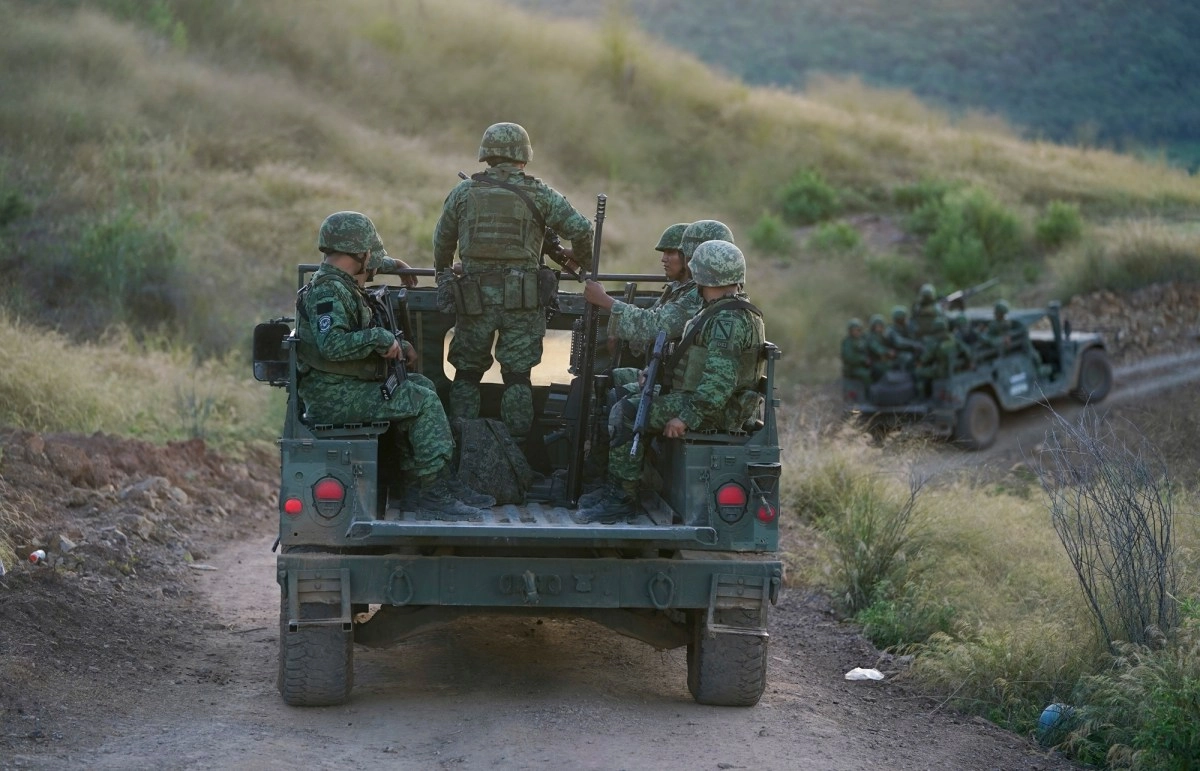

Carteles Inc., a book written by researcher Guadalupe Correa-Cabrera, is an ambitious, uncomfortable and clearly political volume. It is not just another work about drug trafficking, drug lords or criminal violence, but rather a structural reading of the transformation of organized crime in Mexico: from organizations dedicated to drug trafficking to business, paramilitary and transnational networks with the capacity to dispute territories, capture legal economies and influence strategic sectors.
The starting point of Los Zetas, presented not only as a particularly violent group, but as a paradigm shift. Its importance would not only be in the brutality of its methods, but in having inaugurated or consolidated a different form of criminal organization: more territorial, more diversified, more entrepreneurial and with a logic of control that goes beyond the traditional drug business.
From there, the work moves towards a broader thesis: criminal violence in Mexico cannot be understood only as a dispute between cartels, but as part of a framework where militarization, extractive economies, energy, local politics, business interests and gray areas of the State come together. In that sense, concepts such as paramilitarism, modern civil war and monopoly of violence do not appear as theoretical decorations, but as central categories to explain the political dimension of the phenomenon.
One of the most interesting aspects is the inclusion of the energy issue. The book seeks to take the discussion away from the usual terrain of drug trafficking and toward a more uncomfortable question: who benefits from violence? The question “Cui bono?” points precisely to that. If violence produces dispossession, territorial control, displacement, contracts, routes, permits, protection or access to resources, then it cannot be analyzed solely as disorder; It must also be analyzed as a mechanism of power.
The final part updates this hypothesis to the Q4 period and the so-called “new generation” criminal networks. This opens a relevant discussion: whether the model inaugurated by Los Zetas was exceptional or if, on the contrary, it ended up becoming a template for new forms of organized crime in Mexico and the region.
The main strength of the book is its explanatory ambition.
In short, Carteles Inc. is a relevant work for those seeking to understand Mexican violence beyond the conventional narrative of “cartels against cartels.” Its central proposal points out that contemporary organized crime is not only an anomaly of the State, but a form of power that is articulated with markets, territories, institutions and strategic sectors. This work is an important contribution to discussing criminal evolution in Mexico from a deeper, more uncomfortable and less complacent perspective.
(*) Carlos Seoane Noroña is an international consultant in risk management, crisis management and corporate security, with more than 38 years of experience in the sector and managing partner of Seoane Consulting Group. He is a columnist for El Universal, author of the book What Could Go Wrong? and specialist in executive protection, investigations and crisis management.