

Prosecutor's Office asks to postpone La Tuta's hearing due to a possible negotiation with the drug trafficker
Servando Gomez Martinez, former leader of Los Caballeros Templarios, could reach an agreement with the Prosecutor's Office to plead guilty to drug trafficking
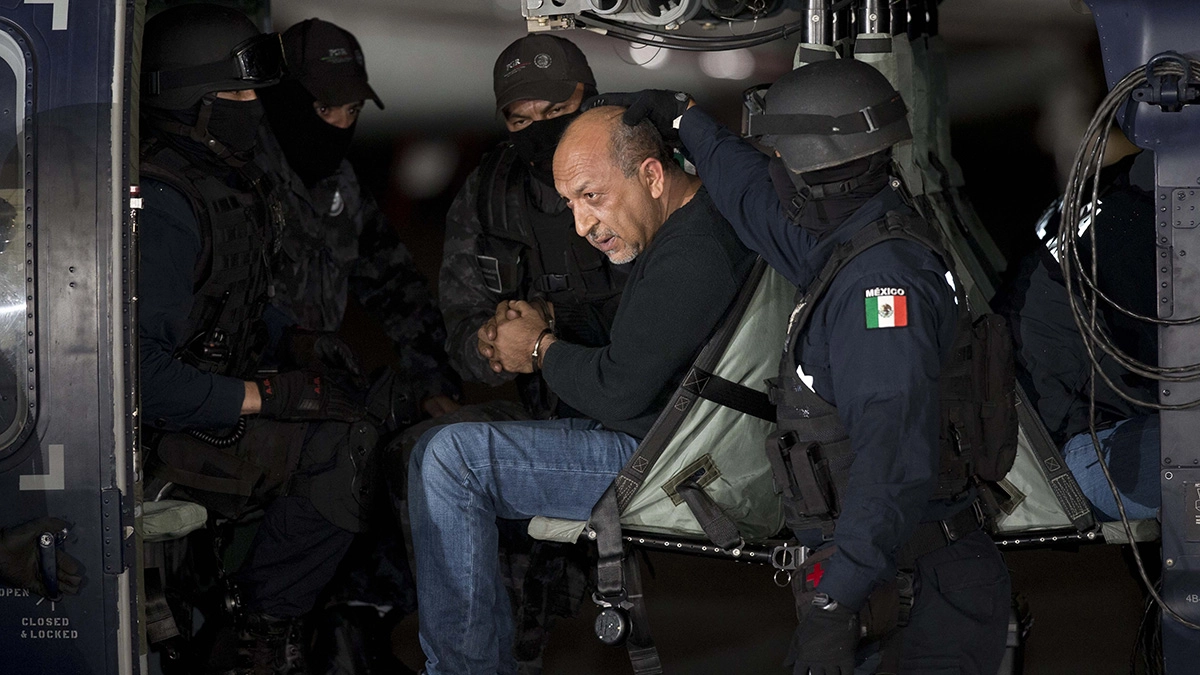

The United States Department of Justice and the defense of Servando Gomez Martinez, known as "La Tuta," asked a federal judge in New York to postpone for three months the pretrial hearing scheduled for next Tuesday. The joint request suggests that both parties are negotiating a possible agreement that could lead to a guilty plea from the former crime boss. Sources familiar with the case told the newspaper Milenio that, in addition to discussions about a potential agreement, the process of analyzing and submitting evidence continues. The official request, dated December 4 and signed by prosecutor Henry L. Ross, states that the postponement “is in the best interests of the pursuit of justice.” This would be the second time the hearing has been postponed; the original date of October 23 was also rescheduled by mutual agreement. Federal Judge John G. Koeltl, who is presiding over the case in the Southern District Court of New York, has not yet ruled on the motion. However, in cases where the defense and prosecution agree, these postponements are usually granted without much opposition.
Servando Gomez Martinez, a former high school teacher, rose to notoriety as one of the leaders of the Knights Templar, a criminal organization with a strong presence in Michoacan. According to U.S. authorities, the drug lord directed methamphetamine and cocaine trafficking networks into the United States, in addition to controlling laboratories and logistical operations for the cartel.
He is accused of conspiracy to traffic drugs and controlled substances, charges for which he could receive a long-term sentence.
Gomez Martinez was deported from Mexico on August 12—after a surveillance operation reinforced by Mexican authorities—and transferred to the United States to face federal proceedings. He is currently in the Metropolitan Correctional Center in Brooklyn, where other drug lords such as Rafael Caro Quintero, Vicente Carrillo Fuentes, and Ismael “El Mayo” Zambada are also incarcerated.
Possible Mass Extradition on the Horizon
The postponement comes as both countries hold broader negotiations on further extraditions. According to The Wall Street Journal, Mexico and the United States are preparing a third round of extraditions of criminal leaders, as part of bilateral talks ahead of the meeting between President Claudia Sheinbaum and President Donald Trump in Washington.
The newspaper reported that the Mexican government organized a months-long operation to transfer 55 organized crime figures between February and August 2025. To prevent leaks and potential escapes, prisons were reinforced, staff were replaced, food suppliers were changed, and new video surveillance systems were installed. Some inmates were isolated to prevent them from sharing sensitive information.
Among the prisoners monitored most closely was La Tuta, whose communications and financial transactions were reviewed in detail before his extradition. Along with him, Abigael Gonzalez Valencia, leader of Los Cuinis, was also extradited. The logistics for the transfers included the use of aircraft that arrived from different parts of the country at the Altiplano prison days before the expulsion, as well as armored vehicles and military security. Mexican authorities even set up temporary shelters in case conditions forced a delay to the flight to the United States. The prisoners were taken to a runway near Mexico City and boarded a plane from the Ministry of National Defense bound for the United States.The logistics for the transfers included the use of aircraft that arrived from different parts of the country at the Altiplano prison days before the expulsion, as well as armored vehicles and military security. Mexican authorities even set up temporary shelters in case conditions forced a delay to the flight to the United States. The prisoners were taken to a runway near Mexico City and boarded a plane from the Ministry of National Defense bound for the United States.The logistics for the transfers included the use of aircraft that arrived from different parts of the country at the Altiplano prison days before the expulsion, as well as armored vehicles and military security. Mexican authorities even set up temporary shelters in case conditions forced a delay to the flight to the United States. The prisoners were taken to a runway near Mexico City and boarded a plane from the Ministry of National Defense bound for the United States.