

Rubén Rocha, governor of Sinaloa, appears before the Mexican Prosecutor's Office after US accusations.
The legal appointment occurs after serious accusations presented by the DOJ, which link senior state officials with drug trafficking and bribery collection.
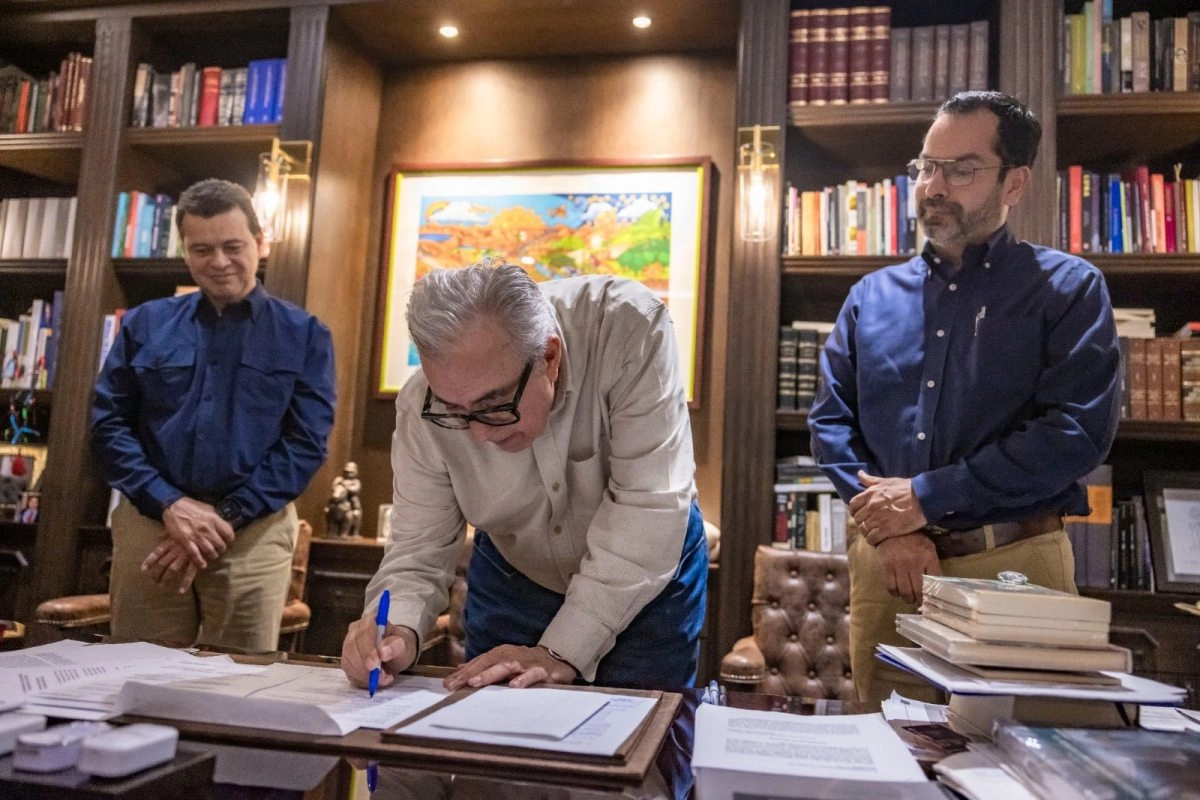

The licensed governor of Sinaloa, Rubén Rocha Moya, appeared before the Attorney General's Office (FGR) in the city of Culiacán (western Mexico) as part of the investigation opened in that country, following accusations presented by US authorities that link Sinaloan officials with alleged activities related to drug trafficking and arms trafficking.
Rocha Moya reported his appearance through a message published on his official X account, where he assured that he responded to the questions asked by an agent of the Federal Public Ministry and reiterated his willingness to collaborate with the Mexican authorities during the development of the process.
“With my head held high, I will not stop fighting for the truth to prevail,” said the state president, who recently requested a temporary license from his position while the investigations progress.
The proceedings are part of the FGR's response to an accusation filed on April 29 by prosecutors from the Southern District of New York, who accuse ten current and former officials of Sinaloa for alleged links to factions of the Sinaloa Cartel, particularly with the group known as Los Chapitos.
Sinaloa officials under investigation
In addition to Rocha Moya, the president of Mexico, Claudia Sheinbaum, confirmed that the Morenoist senator Enrique Inzunza Cázarez and the licensed mayor of Culiacán, Juan de Dios Gámez Mendívil, were also called to testify.
US authorities maintain that several officials would have provided political protection, confidential information and institutional support to leaders of the Sinaloa Cartel in exchange for bribes. The charges include conspiracy to import narcotics into the United States, as well as possession and trafficking of high-powered weapons.
The deputy attorney general of Sinaloa, Dámaso Castro Saavedra, also appeared before the FGR, who denied any links with criminal organizations and stated that he came in compliance with the federal subpoena.
“We trust in the institutions, in the work of the investigations and in the clarification,” Castro Saavedra declared to local media after leaving the Prosecutor's Office facilities in Culiacán.
So far, both Rocha Moya and the other officials mentioned have rejected the accusations made in the United States.
Sheinbaum rules out formal accusations in Mexico
During his morning conference on Monday, Sheinbaum clarified that the appearances before the FGR do not represent formal accusations in Mexican territory, but rather ministerial interviews aimed at integrating information within the investigation folder.
“From what the Prosecutor's Office has told us, there is no accusation against anyone, but simply interviews,” said the president.
Rocha Moya also publicly defended the Mexican judicial system and assured that he trusted national institutions. In his message, he also supported the reforms promoted by the so-called Fourth Transformation, the political movement initiated by former president Andrés Manuel López Obrador.
The case has provoked strong political attention in both Mexico and the United States due to the relevance of the officials mentioned and the impact it could have on the bilateral relationship in terms of security and the fight against drug trafficking.
According to reports spread by Mexican media, some financial institutions have frozen accounts linked to people under investigation to avoid possible international sanctions derived from the US accusations. However, Mexican authorities have not publicly confirmed additional judicial measures against Rocha Moya or the others involved.