

Screwworm alert in dogs and cats in Texas and New Mexico: how to detect it
Cases of screwworm in dogs trigger alerts in Texas and New Mexico. Know the symptoms, the danger of the parasite and how to protect your pet
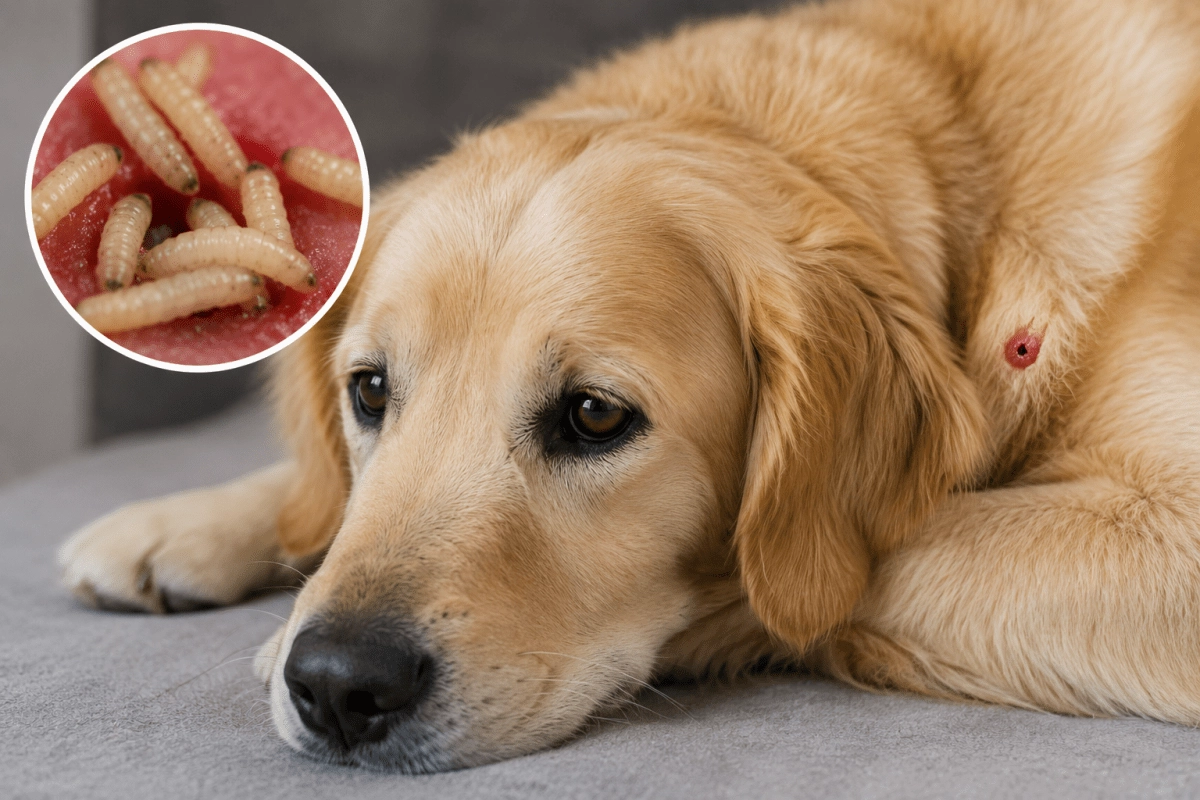

The reappearance of the New World screwworm in the United States is no longer just a concern for ranchers. Veterinarians and animal shelters issued warnings to dog and cat owners after infections were confirmed in pets within the outbreak affecting Texas and New Mexico.
The parasite can enter through a small wound, a tick bite, an operated area, or even through natural openings in the body. Their larvae do not feed on dead tissue: they penetrate the skin and consume living tissue, so an infestation can progress quickly and cause serious injuries if not treated in time.
In which states were cases detected?
Texas concentrates most of the outbreak. The state Animal Health Commission reported cases in 13 counties and 24 facilities, with surveillance measures and movement restrictions in different areas.
A case was also confirmed in Lea County, New Mexico, in a dog that had initially been reported as a case from Andrews County, Texas, because the veterinarian who treated him was in that state. The United States Department of Agriculture later clarified that the animal lived in New Mexico and reclassified the infection as the first detection in that state.
As of the official update consulted, there is no federal confirmation of domestic cases in other states. Preventive alerts may extend to neighboring areas, but that does not mean that Arizona or California have confirmed cases.
You can see: CDC alert for a parasite that causes intense diarrhea: confirmed cases in 17 states
What is screwworm
The name can lead to confusion: it is not a worm that normally lives in the ground, but the larva of a fly, Cochliomyia hominivorax.
The female lays her eggs in open wounds or near the eyes, ears, nose, mouth, genitals, and other moist areas. When the eggs hatch, the larvae burrow into the tissue and begin to feed. The wound may enlarge, become infected, and give off a strong odor.
Which dogs are most at risk
Animals with recent cuts, scrapes, bites, tick bites, or surgical wounds are the most vulnerable. Newborn puppies, dogs that spend many hours outdoors, and pets that live near ranches, livestock, or wildlife also require special monitoring.
A minimal injury may be enough. For this reason, veterinarians recommend checking your pet every day, especially after walking through fields, weedy areas, or places where flies are abundant.
You can see: Pet food is removed from the market due to possible metal contamination
Warning signs in dogs and cats
A wound that grows, drains fluid, or does not improve deserves attention. They should also turn on the alarm:
The USDA recommends contacting a veterinarian immediately if any of these signs occur. It is not advisable to remove the larvae at home or apply home remedies, because specimens may remain inside the tissue and the lesion requires professional cleaning and treatment.
Can it kill a pet?
Yes, if not treated. The larvae can deepen the wound, reach delicate tissues, promote severe infections and cause shock. However, animals can recover when they receive early veterinary care.
Treatment may include complete removal of the larvae, wound cleaning, antiparasitic medications, and, when appropriate, antibiotics.
You can see: Scientific study reveals how dogs influence the mental health of their owners
How to protect your pet
Prevention begins by keeping the wounds clean and covered according to the veterinarian's instructions. It is also important to check the skin after each outing, check for ticks and quickly treat any cuts, even if they seem small.
Veterinarians and shelters are using prescription flea and tick medications because some active ingredients can kill larvae when they begin feeding. Not all products are suitable for all animals, so the choice should be consulted with a professional.
During the outbreak, it is also advisable to prevent dogs with open wounds from remaining outdoors without supervision and not to transport animals from affected areas without reviewing current restrictions.
You can see: This is the breed of dog that ChatGPT recommends having
Can it affect people?
The screwworm can infest humans, although this occurs much less frequently than in animals. The risk increases when a person has an open wound and lives or travels in an area where the fly circulates.
The CDC indicated that no locally acquired human cases had been reported in the United States within this outbreak. Even so, a wound with maggots, increasing pain, or discharge should receive immediate medical attention.
Why did it come back after decades?
The United States had eradicated the parasite in 1966 by releasing sterile male flies. The method prevents females from producing viable offspring and is reused in affected areas.
The current outbreak advanced from South America to Central America and Mexico before reaching the United States. Federal and state authorities maintain surveillance, traps and releases of sterile insects to try to stop their reproduction.