

Death of Mexican in ICE operation sparks demand for greater transparency and accountability
The organization Fuerza Migrante maintained that the death of Lorenzo Salgado Araujo, killed by an ICE agent, cannot become another file
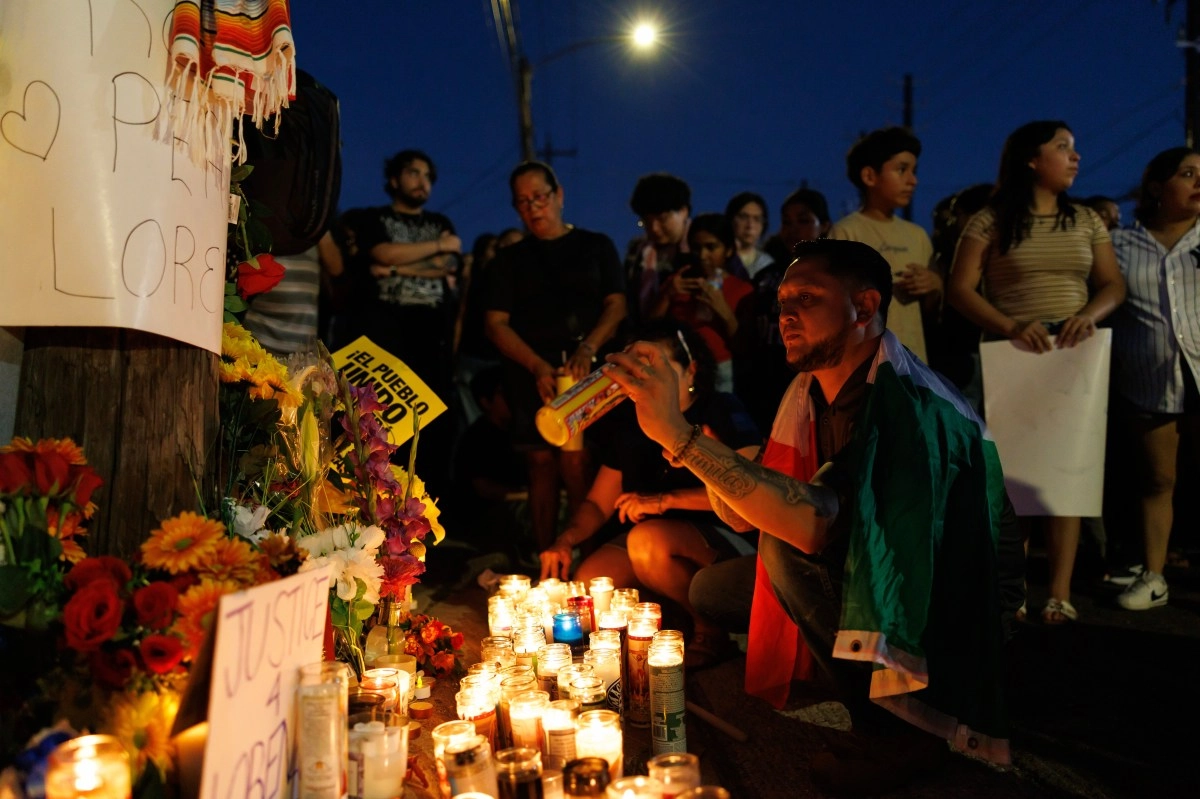

The death of Lorenzo Salgado Araujo, a 52-year-old Mexican killed by an ICE agent during an operation in Houston, Texas, has intensified demands from civil organizations, legislators and Mexican authorities to strengthen transparency, independent supervision and accountability in the actions of US immigration authorities.
The case, which occurred on July 7 in a predominantly Latino neighborhood in Houston, has transcended the discussion about the use of force to become a call to review the control mechanisms over ICE operations, particularly when they end in the death of a person.
In a position released this Thursday, the organization Fuerza Migrante maintained that "the death of Lorenzo Salgado Araujo, a 52-year-old Mexican killed by an ICE agent during an operation in Houston, Texas, cannot become just another file. His family deserves truth. The community deserves transparency. And any action by an authority that ends with the loss of a human life must be subject to the highest level of review, supervision and accountability."
The document takes as its starting point the mobilization promoted by the organization LULAC (League of United Latin American Citizens), which promoted a public petition to demand a “complete, independent and transparent” investigation, as well as the preservation and publication of all available evidence, including videos, communications and testimonies. It also highlights the creation of a support fund for the family of the deceased.
The demands coincide with those of Salgado Araujo's family, which rejects the official version presented by the Department of Homeland Security (DHS). While ICE maintains that the agent fired in self-defense after the driver allegedly rammed an official vehicle and tried to run over an agent, family members claim that Lorenzo believed he was the victim of an assault because the vehicles involved were not clearly identified and demand that all available evidence be released.
One of the elements that has fueled doubts is that the operation did not have body camera recordings, a circumstance recognized by the authorities and which has complicated the independent reconstruction of the events. Likewise, ICE has not publicly stated whether Salgado was the original target of the operation.
Proposals to strengthen supervision
Fuerza Migrante proposed four measures to prevent similar cases from being limited to internal investigations: mandatory activation of a technical and independent review every time a person dies during an immigration operation; establish bilateral monitoring between Mexico and the United States in high-impact cases; incorporate external observers when there are contradictory versions or possible excesses in the use of force; and publish institutional recommendations at the conclusion of each investigation to correct flaws in the protocols.
"Justice cannot depend on media pressure or a family's ability to demand answers. A person's life must be protected by clear rules, effective controls and accountable authorities," the document states.
Government of Mexico announces legal actions
The pressure has also escalated to the diplomatic level. President Claudia Sheinbaum announced that Mexico will file criminal complaints in the United States for the death of Mexican citizens during immigration operations and in ICE custody, considering that the diplomatic channels used so far have not produced sufficient results.
According to the Mexican Government, at least 17 Mexicans have lost their lives in recent months: 14 while in ICE custody and three during detention operations. Reuters reported that the case of Lorenzo Salgado raised to at least six the number of people who have died during immigration policy enforcement actions since President Donald Trump returned to the White House in January 2025.
The Fuerza Migrante document takes up these figures to warn that "when events are repeated, the institutional response cannot be limited to clarifying responsibilities case by case. It must also review whether the protocols, internal controls and supervision mechanisms are being sufficient to protect life and prevent abuses."