

Lupita Infante, free and empowered, puts on its crown
The singer presents her third studio album, which she considers her most real and personal.
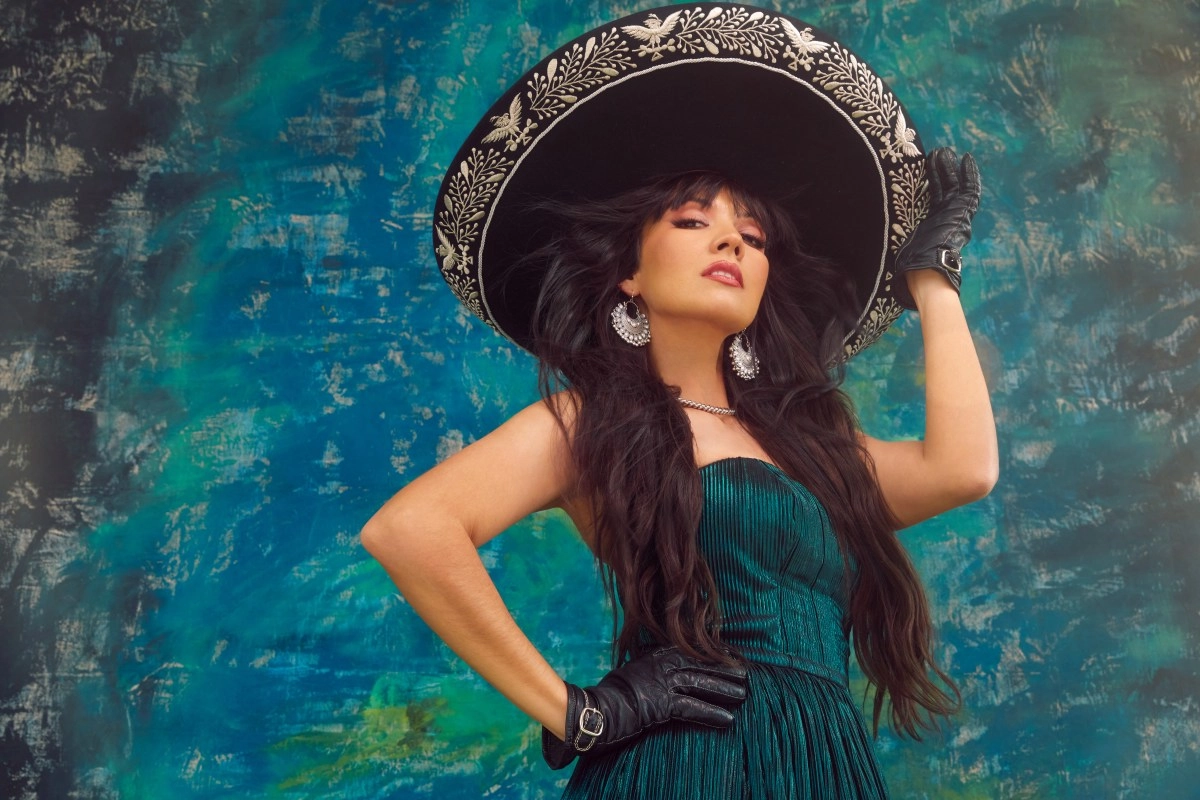

Lupita Infante has a lot to say about “La corona es mia,” her third studio album. First, that it has brought her many surprises, among them the haters, who are not happy that Lupita uses some bad words in the songs.
“People have the expectation that maybe because she is a woman it looks bad,” she said. “But at the same time, I feel like it can shed light on certain social issues in an exaggerated way because the truth comes out when you exaggerate, but you do it with that intention.”
At the end of the day, she said, “music is expression, that culture, it's alive, always changing, and it represents a moment in life.”
Another aspect of this production is that this is the first album she's produced; other people had done it before. She assembled her team and, without a concrete plan, entered the studio to explore and determine how she wanted this new album to sound.
When she had recorded 17 songs, she decided that ten would be on her new production; all of them are songs that she and other collaborators wrote, except for one that her late father, Pedro Infante Jr., recorded previously.
“On this album, I felt in control,” she said in a recent conversation. "I feel empowered to say, 'this is my voice'; it's not for everyone, and that's great because I want to give myself the freedom to express another side of my personality, of my music. So there are some bad words, and people have been offended by that, but it's part of growing up and seeing that artistic exploration."
Lupita was partly inspired by artists like Xavi, a Mexican-American boy who, for her, has refreshed the Mexican music genre with the inclusion of modern and novel elements.
But that doesn't mean Lupita is abandoning mariachi, the genre that gave her birth as an artist and through which she has become known ever since. Rather, she has consulted with producers who understand and are familiar with this tradition in order to, without breaking any rules, give her music its own unique touch.
“There's banda, there's nortena,” she said. “If I had a musical blender, I think it has touches of Javier Solis, Amalia Mendoza because it has very classic mariachi sounds with traditional instruments.”
What's new, she explained, is the way the requinto and the tololoche are being played, for example, because “we took elements from how they are being played these days to give it a punch and get people excited.”
But it also has softer, more pop sounds, like what Calor G does, she said. And for the first time, she has guests; This time they are Adriana Ríos, Nora Gonzalez, and Victoria La Mala.
“A little touch of the band, a cup of love, two spoonfuls of toxic woman, and four cups of empowered woman,” she said. “And there you have the album.”
As for the album's title, Lupita describes it as a statement that symbolically says that the crown has always been there for every woman, “but sometimes we stop believing in ourselves or we get carried away in another direction that makes us lose sight of that dream we want.” fulfill.”
And whether anyone likes it or not, Lupita says it's the album that best represents her because it has a sound that identifies her as much as the lyrics.
This summer, Lupita will show the world what her album is made of when she opens for Pepe Aguilar, Mariachi Vargas, and Los Angeles Azules in concerts across the United States and Mexico.
She'll sing with a mariachi, no doubt, but she'll continue exploring sounds “without losing the essence.”
“I have a very deep respect for mariachi music,” said Pedro Infante's granddaughter. “But at the same time, I have that thorn of exploration.”