

ISRO: Oceansat-3 and 8 nano satellites will be launched today from Sriharikota, know what is the specialty
In 2009, Oceansat-2, an Earth-observation satellite (EOS), was sent into space.

Time to Read 2 Min
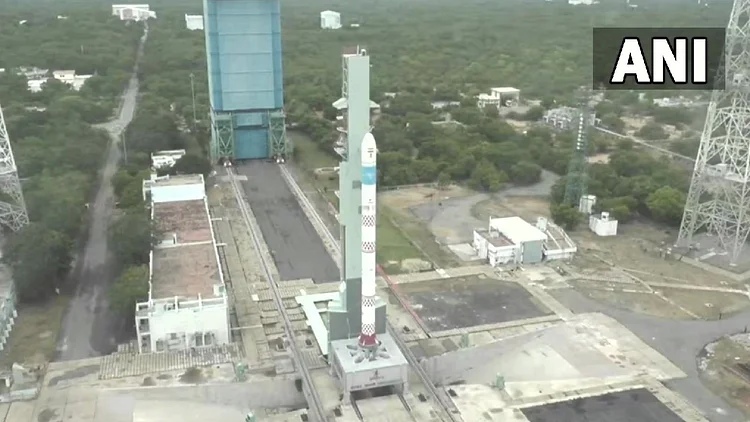
ISRO: Indian Space Research Organization (ISRO) is going to launch Oceansat-3 and eight nano-satellites from Satish Dhawan Space Center, Sriharikota today i.e. Saturday, 26 November. According to the information received from ISRO, the launch from Sriharikota spaceport is to be held at 11.46 am on Saturday morning. These satellites are being launched as part of the PSLV C-54 or EOS-06 mission. It is being told that the primary payload of the mission is Oceansat-3, the third generation satellite of the Oceansat series. Apart from this, the Anand nano-satellite, developed by Pixel India, and other nano-satellites developed by Dhruv Space, Astrocast and Spaceflight USA will also be launched.
What is the specialty of Oceansat-3?
Explain that in 2009, Oceansat-2, the Earth-observation satellite (EOS) was sent into space. Now the national space agency is going to launch the third Oceansat-3 EOS to monitor and record ocean observations. Be aware that the satellites of the Oceansat series are earth observation satellites, dedicated only for oceanography and atmospheric studies. If we talk about its other feature, then this satellite is capable of forecasting marine weather, so that the country is prepared for any cyclone in advance. The total mass of this satellite is 960 kg and it will work on 1,360 watts. Also tell that Oceansat-3 will be installed in Sun-synchronous orbit. It is estimated to have a mission life of five years.
Eight nano satellites will also be launched
Pixel and Dhruv Space are space technology companies based in Bengaluru (plus California, USA) and Hyderabad (plus Graz, Austria) respectively. Pixel is one such spacetech startup which is ready to launch its third satellite Anand. Anand is a hyperspectral microsatellite. It is reported to weigh less than 15 kg, but has a wavelength greater than 150, enabling it to capture images of Earth in greater detail than today's non-hyperspectral satellites.