

More and more women are switching to reusable menstrual products. Find out why
Approximately 12 billion disposable sanitary pads and 7 billion tampons end up in U.S. landfills each year
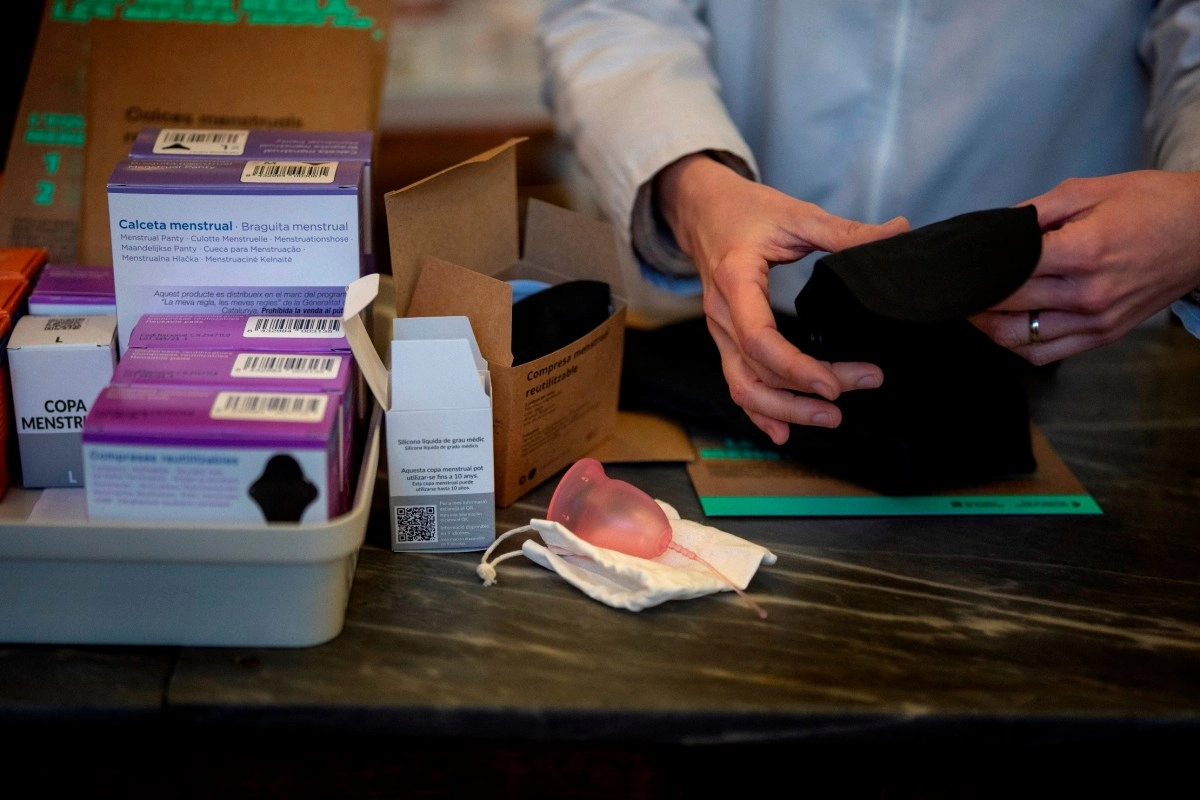

Flexible discs and other reusable menstrual products are gaining traction as alternatives to the billions of disposable pads and tampons that end up in landfills each year year. Products like pads, silicone cups, and menstrual underwear can be reused for years, making them cost-effective and long-lasting, while also helping to reduce waste.
The popularity of reusable alternatives has grown since the pandemic, when it was easier to experiment with menstrual products in the privacy of the bathroom, according to women's health experts.
It's been six months since Selin Celikoyar bought her last tampon and switched to a reusable menstrual pad, she told the Associated Press (AP). "I was already wary of tampons from an environmental and biological perspective. I thought they were wasteful and expensive to constantly buy," she said.
Celikoyar said she used tampons and sanitary pads for years because they were the options she'd known since she was little. But when she saw her friend switch to a menstrual disc, she decided to try it too.
"The experience has been a game changer," she said.
Single-use products end up in the landfill
About 12 billion disposable sanitary pads and 7 billion tampons end up in U.S. landfills each year, according to Dr. Luwam Semere, chief of obstetrics and gynecology at Kaiser Permanente Santa Clara, the AP reported.
Sanitary pads are mostly made of plastic. Once in a landfill, they take up to 800 years to degrade, according to the National Institutes of Health.
Disposable sanitary pads and tampons are arguably the most popular period products. Dr. Navya Mysore, a women's health expert, said this isn't because they're better, but because they're often the first options shown to girls.
“I often wondered,'What did your mom wear? What did your grandmother wear?' And that's how I got into menstrual hygiene," said Mysore, a primary care physician in New York City.
Pros and Cons of Switching
The most popular menstrual cup is the menstrual cup, which is inserted similarly to a tampon. The discs are inserted more deeply so as not to interrupt sex. Both have a much larger capacity than a tampon and can stay inserted for up to 12 hours, rather than the four to eight hours recommended for tampons. Semere also said that the risk of toxic shock syndrome, commonly associated with tampons, is much lower with menstrual cups and discs.
The downsides? The products require a certain technique to insert them correctly, and if done incorrectly, they can be a disaster. The cups and discs also need to be cleaned regularly with soap and water.
“It's difficult to do if you're at work and using a shared public bathroom. It's not the most comfortable," Mysore said.
Menstrual cups prevent leaks by creating a suction, so people who use IUDs for contraception run the risk of them coming out if they remove a menstrual cup without breaking the seal.
Inserting discs that don't use suction can also take some getting used to.
"They're up there, you don't feel them, but sometimes they can be harder for women to get out," said Dr. Annemieke van Eijk, an epidemiologist at the Liverpool School of Tropical Medicine.
But for Celikoyar, the advantages of the discs outweighed the disadvantages. She said a greater scope for change has allowed her to get through two consecutive concerts and an overnight flight without any worries.
“There’s an ease of use there for the modern woman that is significantly better than traditional methods,” she said.
Cost Comparison
Menstrual cups and discs typically cost between $15 and $40 and come in different shapes and sizes. They’re available online, at drugstores, and big-box stores.
“Ideally, you want to experiment a bit with what type of cup works best for you. And the cost can be prohibitive,” van Eijk said.
A reusable product can help save money in the long run. Celikoyar estimates she used three tampons a day for seven days, or about 20 a month. Given that tampons cost between 20 and 25 cents each, someone who switched to a reusable product would likely recoup their investment after a few months.
For people who prefer sanitary pads,The most common reusable option is menstrual underwear, which is comparable to regular-looking underwear with an extra absorbent lining. They're good because we see people getting irritation from using sanitary pads, Semere said. Because of the different materials in disposable pads.
The downside, as with pads, is the inability to tell when you've absorbed all you can.
Mysore said that's why some of her patients use underwear as a backup and combine it with cups, discs, or tampons.
"You can mix and match different menstrual products, depending on how heavy your flow is and what your period is like," she said.