

China and the United States are fighting a silent war and the protagonist is rare earths
Beijing tightens its control over key materials while Washington tries to shield its technology industry.
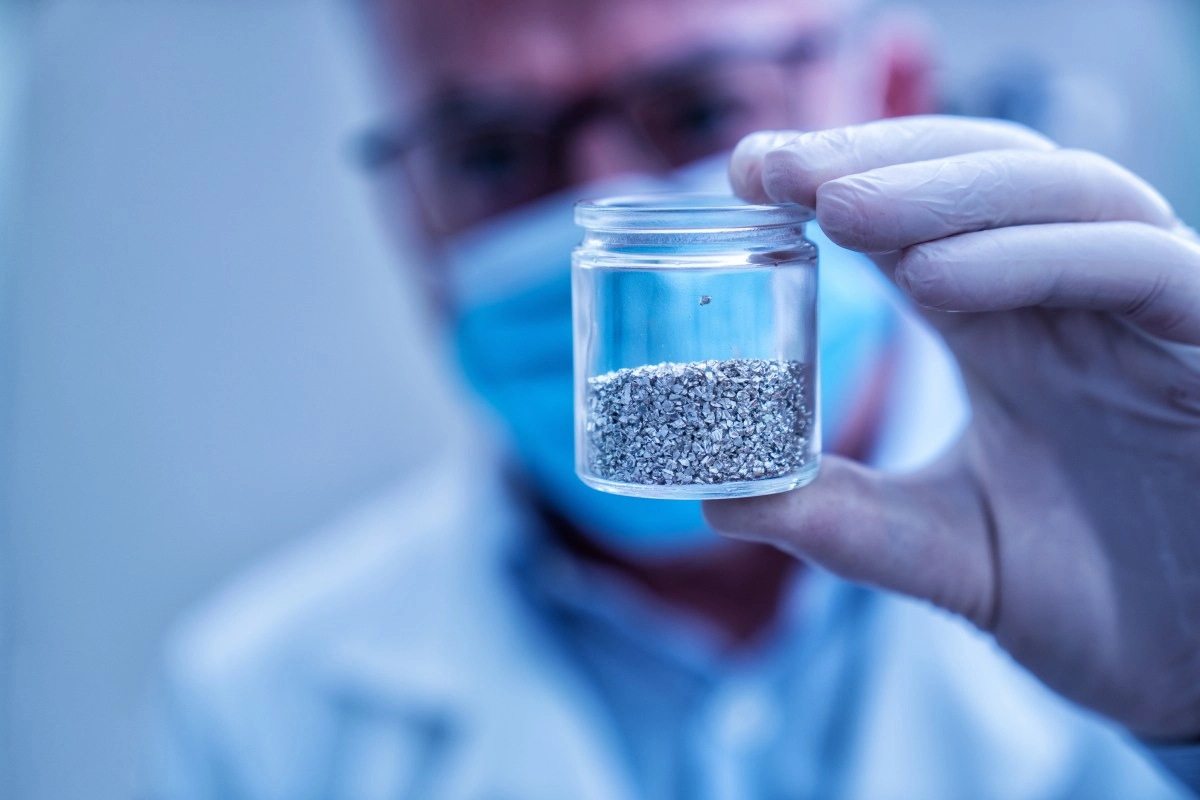

The next great technological battle will not have missiles or apocalyptic headlines, but supply contracts, export licenses and minerals with names that almost no one can pronounce. China and the United States are already silently fighting a war and the main weapon is rare earths and other critical materials.
While in public there is talk of chips, artificial intelligence and trade vetoes, something even more delicate is at play in the background. Who controls the materials that feed that industry will control the pace of global innovation.
What rare earths really are and why they matter so much
When we talk about rare earths we are not referring to a single thing, but to a group of elements and materials that are essential for almost everything we call “advanced technology.”
Without these materials the story of generative AI, giant data centers and premium consumer electronics falls flat. We can design the best processor in the world on paper, but if we lack the appropriate material to interconnect it or manufacture it in volume, it becomes a pretty drawing and little else.
An example that illustrates the problem very well is indium phosphide, a key material for high-speed optical chips that are beginning to be used to connect processors using lasers within data centers. These optical chips promise to reduce latency and increase bandwidth, just what the new wave of AI models demand.
China not only dominates a good part of the classic rare earths. It also has strategic materials such as indium under its influence. China is estimated to produce about 70 percent of the world's indium, giving it enormous capacity to pace the industry that relies on compounds such as indium phosphide.
China tightens the tap on critical materials
The conflict is not theoretical. At the beginning of May, Donald Trump traveled to China accompanied by a group of American technology heavyweights, including executives from giants such as Nvidia, Apple and photonics companies such as Coherent. One of the big issues on the table was the slowdown in the granting of export licenses for indium phosphide and other key materials.
What Beijing is doing is much finer than a simple frontal veto. Instead of blocking only finished products, it complicates or slows down access to the materials needed to make them, strangling the supply chain at the source.
In February 2025, China began to apply restrictions to the Indian supply chain and the impact was immediate. Prices shot up around 250 percent and American companies began to push hard to unblock the situation, concerned about the cost and availability of these materials.
Firms such as Lumentum and Coherent, in which Nvidia has invested billions of dollars to secure optical modules for its data centers, have multiplied their capacity with new plants. Even so, they have already committed practically all their production for 2026, 2027 and 2028, which shows the brutal tension between demand and supply. The bottleneck is not so much in the factories but in the raw materials that continue to leave China mostly under strict controls.
The domino effect does not stop in the United States either. Taiwanese manufacturers such as VPEC or LandMark Optoelectronics are also suffering supply interruptions, a sign that this silent war is spreading throughout the Asian technological map. Europe, for its part, has embarked on building a kind of rare earth “bunker” to reduce its dependence on China, a movement that makes it clear that no one wants to be left out of this board.
The two-speed war that will define the next generation of technology
The interesting thing is that we are not facing the typical “good guys versus bad guys” narrative. China has an advantage in resources and long-term planning, while the United States dominates chip design, software and large AI platforms. They are two different speeds within the same technological war.
On the one hand, Washington is trying to recover industrial muscle with subsidies to semiconductor factories and policies to repatriate part of the production. It wants to depend less on the outside, but to do so it needs precisely those materials that its main geopolitical rival today controls.
On the other hand, Beijing is not limited to exporting minerals. It is promoting its own technological ecosystem with companies such as Huawei, SMIC or Yuanjie, which already manufacture photonics and semiconductor components with global ambition. China has set itself the goal of becoming the world's leading technological power around 2030 and has both a clear plan and the materials to try to achieve it.
The result is a kind of “two-speed war.” On the surface we see chip vetoes, restrictions on selling equipment to certain countries and legal battles, while underneath an equally or more important war is being waged for control of the resources that make all of the above possible.
For the average user this conflict goes unnoticed. You won't see a new button on your phone or an alert message on your streaming platform. However, decisions made today on indium phosphide, indium metal, rare earths and other strategic materials will influence how and when the next generations of AI, connectivity and computing products arrive.
The question is who will know how to play this deep game best. Perhaps the key is not just to have mines and refineries, nor to lead the development of increasingly larger AI models. The true advantage will appear when a country manages to balance materials control, industrial capacity and leadership in innovation without completely breaking the global chains that support current technology.
For now, the only thing that is clear is that rare earths and critical materials have ceased to be a topic for mining geeks and have become the heart of the new technological geopolitics. And although almost no one talks about them on a day-to-day basis, their role will be decisive in ensuring that the next great product that appears on the cover exists... or remains trapped in a roadmap that is never fulfilled.