

Screaming, honking and football: how to care for dogs and cats during World Cup matches
How to prevent your pet from being scared by the screams of the World Cup: tips for dogs and cats during matches, celebrations, honking, visitors and loud noises
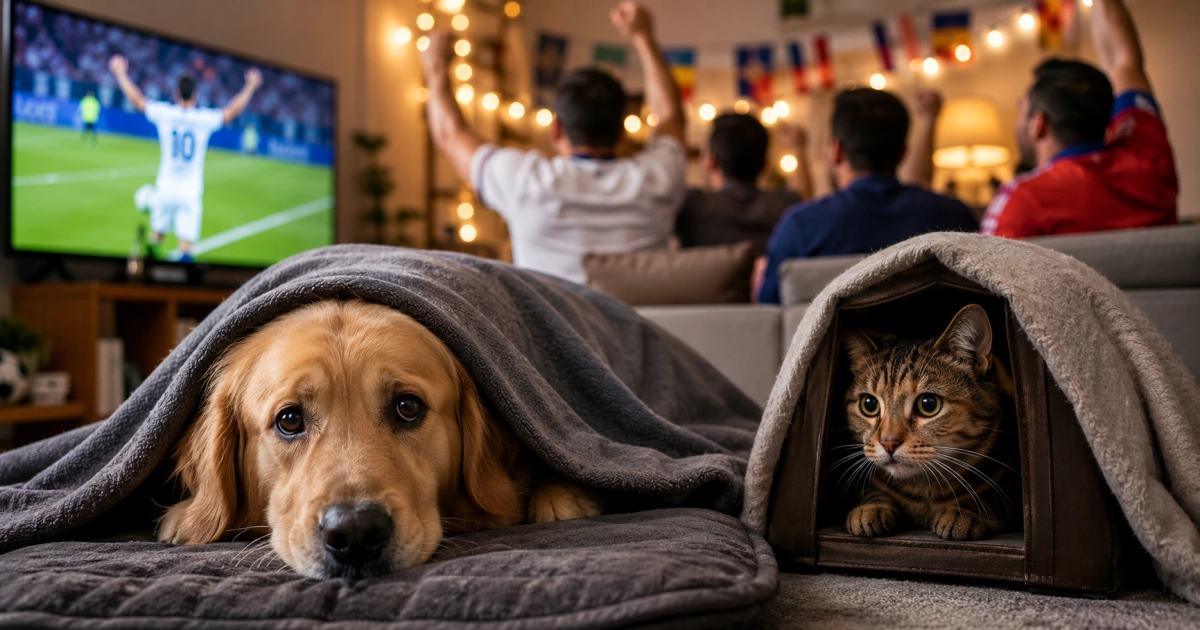

The World Cup is experienced with shouted goals, hugs, jumps, discussions in front of the television and family gatherings that can end in a party. For pets, however, all that weather can be a lot less fun.
Dogs and cats don't understand that a goal shout is a celebration. For them, a sudden noise, many people at home, honking horns on the street or fireworks can feel like a threat. Some hide. Others tremble, gasp, bark, meow, try to escape, or freeze.
Therefore, if the World Cup is being experienced intensely at home, it is also a good idea to prepare the animals. It is not about stopping celebrating, but rather preventing the pet from being trapped in the middle of the noise without a safe place.
Prepare a shelter before the game starts
The simplest measure is to anticipate. Before the meeting, it is advisable to leave a quiet room available, away from the television, speakers and the area where guests gather.
That space can have their bed, a blanket, water, toys and, in the case of cats, their litter box. An open carrier, box, or corner where the animal already feels comfortable can also work. The important thing is that you do not experience it as a punishment, but as a refuge.
If the pet chooses to hide, do not force it to come out. Taking her out from under the bed, picking her up or taking her to the living room to “get used to it” can increase fear.
You can see: Where to watch the World Cup matches in Dallas for free: giant screens and Latin atmosphere
Close doors, windows and balconies
During games, the noise doesn't always just come from the house. In many neighborhoods there may be honking, music, shouting from other apartments, or even fireworks.
That is why it is important to close windows, doors and balconies before the game. A frightened pet may try to escape within seconds, even if it normally doesn't.
If there are visitors, it is advisable to warn them to be careful when entering or leaving. In houses with a patio or apartments with a balcony, prevention is key: a strong scare can make the animal act unexpectedly.
Reduce the impact of noise
You can't always control a family's enthusiasm watching a game, but you can reduce the noise that reaches the pet. Closing curtains, lowering the volume on the TV a little, avoiding loud speakers, and playing soft music in another room can help.
In some cases, white noise or a low-volume radio can drown out louder sounds. The idea is not to completely isolate the animal, but to soften sudden changes.
It also helps to maintain a certain routine. If the pet eats, sleeps or goes for a walk at a regular time, it should be respected as much as possible, even if it has left.
Signs that your pet is scared
Each animal reacts differently. A dog may pant, shake, bark, seek constant contact, hide, or pace. A cat may crawl under the bed, dilate its pupils, lower its ears, hide its tail, stop eating, or appear irritable.
In both cases, it is not advisable to challenge them. Fear is not disobedience. If the animal is scared, yelling at it or chasing it only makes the situation worse.
It is best to talk to him calmly, give him space and allow him to stay in the place he chose. Some pets are looking for company; others prefer to be alone. You have to respect that difference.
You can see: He is 30 years old and is a world record: the cat that defies the passage of time
Be careful with food at meetings
Parties also usually bring snacks, alcohol, sauces, chocolate, bones or leftover food on the table. For pets, that can be another risk.
It is advisable to keep dangerous foods, drinks and containers out of reach. Guests should also be asked not to give them food “out of affection,” especially if the animal has a specific diet or usually has digestive problems.
When to consult the veterinarian
If the fear is very intense, if the pet hurts itself trying to escape, if it stops eating for many hours or if each game turns into a crisis, it is advisable to consult the veterinarian.
Some animals with marked anxiety may need a specific plan. There are management strategies, pheromones, gradual training and, in certain cases, medication indicated by a professional. No sedatives or human medications should be given without veterinary supervision.