

Secretary Hegseth rules out making public second video of attack on vessel in the Caribbean
Amid questions about violations of international law and human rights, Secretary Hegseth refused to release video of attack in the Caribbean
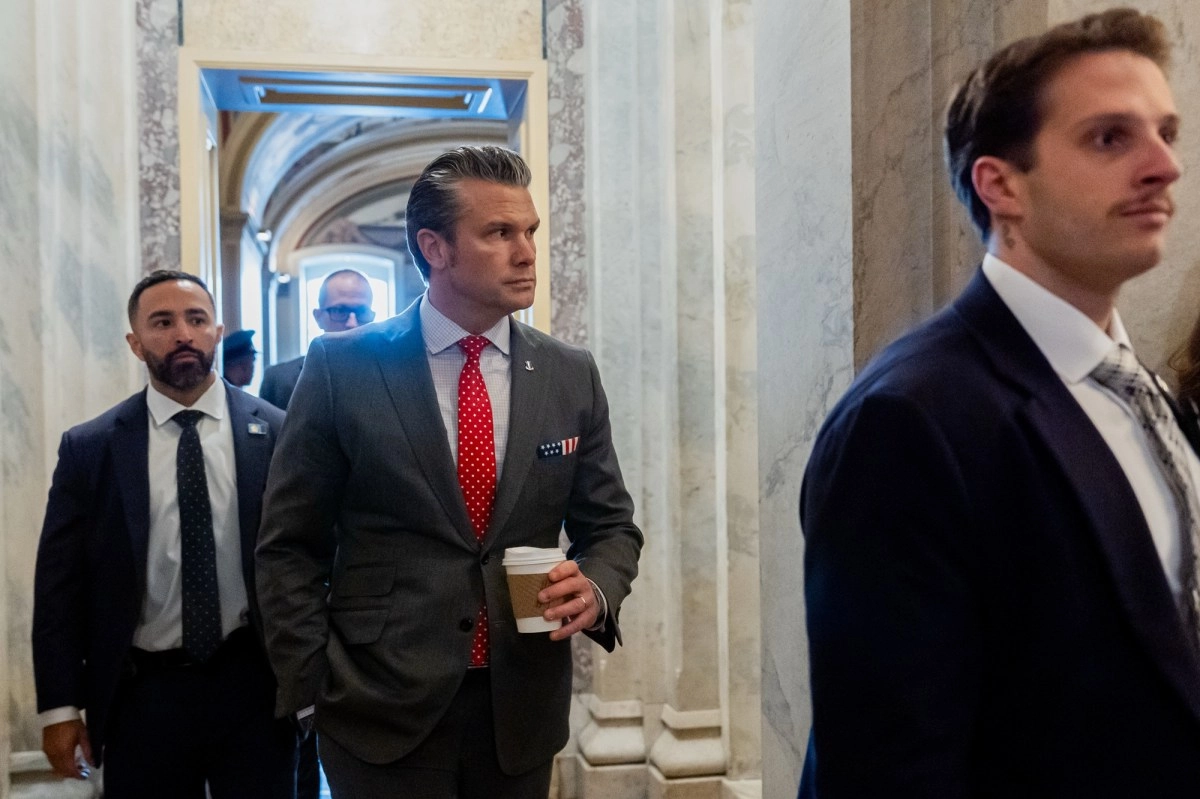

After private meetings with some senators, Secretary of Defense Pete Hegseth ruled out making public the second video of the attack on a vessel in the Caribbean in September, which sparked controversy over the "kill all" order.
"According to the “It’s a long-standing policy […] the policy of the Department of Defense, of course, we’re not going to release a full, unedited, top-secret video of that to the general public,” Hegseth told reporters after the meeting with senators.
Senate Minority Leader Chuck Schumer (D-NY) criticized the briefing Hegseth gave on the attacks in the Caribbean and the Pacific.
“The administration came to this briefing empty-handed,” Schumer said.
The senator believes the lack of transparency from President Donald Trump’s administration regarding the September 2 attack—the first in the open-sea strategy—contributes to distrust of the operations.
“If they can’t be transparent on this, how can you trust their transparency on all the other issues being discussed in the Caribbean? Every senator has a right to see it,” Schumer asserted.
Secretary Marco Rubio declined to reveal details, even from the hearing with senators.
But he assured that they would continue to report on the military strategy.
“We will continue to cooperate with Congress on this,” he stated.
He described the military strategy as a new “anti-drug mission.”
“This has been a very successful mission that continues, and we are pleased to be here today to report to Congress on its development and progress,” he insisted without offering details.
Republican Senator Lisa Murkowski (Alaska) told reporters that all senators should be allowed to view the video.
Earlier, following the Washington Post report on the September 2 attack, Murkowski argued that if the order to kill survivors is real,That constitutes a war crime.
“That makes you a war criminal. […] I mean, there are rules of war. We don’t do that,” he said at the time. “I’ve heard from two people who saw the same video, that they saw it differently.”
Democrats have been pressing the Trump Administration over the attacks in general in the Caribbean and the Pacific. They were joined by Murkowski, as well as her Republican colleague Rand Paul (Kentucky), over a failed resolution on limiting war powers for President Trump.
On December 1, a group of senators sent a letter to the Trump Administration requesting the release of the Justice Department’s Office of Legal Counsel’s (OLC) legal recommendation on U.S. military airstrikes on vessels in the Caribbean and the Pacific.
“Few decisions are more momentous for a democracy than the use of lethal force,” says the letter signed by Democrats who serve on the Senate Armed Services Committee. “We believe that declassifying and releasing this important document [the legal opinion] would improve transparency in the use of lethal force by our nation’s armed forces and is necessary to ensure that Congress and the American people are fully informed of the legal justification behind these attacks.” That effort was led by Senators Richard Blumenthal (Connecticut) and Jack Reed (Rhode Island), the ranking members of the Committee. More criticism of attacks: There are several critics of the Trump Administration’s military campaign in the Caribbean and the Pacific, where 95 people have died, labeled by the Trump administration as “narco-terrorists,” but whose activities are not publicly known. Mike Bedenbaugh, a Navy veteran, historical conservationist, political analyst, and author of Reviving Our Republic, criticized the current administration’s military strategy against the vessels. “Something deeper is very wrong here; we are normalizing Things that should never be normal. Vessels and their crews destroyed in the Caribbean without any public evidence. This is poison; a free nation cannot survive under this kind of stress,” he said. Human Rights Watch published a new report on the attacks against vessels. It answers “no” to the question of whether the U.S. is respecting international law. “The Trump administration claims that the attacks are taking place within the context of an ongoing armed conflict and that they constitute lawful attacks against legitimate military targets. However, there is no armed conflict in the Caribbean between the United States and any drug trafficking organization,”Therefore, there is no group of people that constitutes a legitimate military target,” the report states. “Consequently, the United States’ obligations in this context are detailed in international human rights law, which governs the use of lethal force by countries outside of armed conflict.”