

The outrage over the case of the young man who died handcuffed by the police while bleeding to death after being stabbed
The images recorded by the police camera have generated enormous commotion in the country and raised doubts about the actions of the agents.
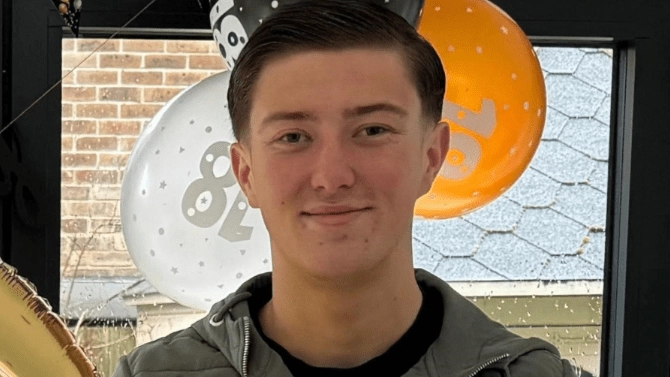

The scandal surrounding the stabbing death of an 18-year-old young man, who died handcuffed by the police while asking for help because he could not breathe, has unleashed a wave of indignation in the United Kingdom, spurred, in turn, by a racial component that figures from the right and far-right have exploited.
The apparent police failure, which initially failed to heed the pleas of the dying young man, Henry Nowak, while his attacker falsely claimed to have been the victim of a racist attack, and the release of the shocking camera footage from the officers who responded to the scene, have sparked tensions and intense scrutiny over the way the police handled the case.
British Prime Minister Keir Starmer himself has stated that the images raise “serious questions about police action,” particularly about how accusations of racism by the attacker “influenced decision-making.”
A demonstration this Tuesday in Southampton, near where Nowak died, in which British far-right figures such as Tommy Robinson participated, turned into a violent confrontation with the police, at whom they threw all kinds of projectiles and which left 11 officers injured and at least two arrested.
Nigel Farage, the leader of Reform UK, the party that wants to carry out mass deportations, had previously heated things up by saying in a live broadcast that the response should be “pure, cold rage” and assuring that people were already “fed up with anti-white prejudice” and that “white lives matter as much as black lives.”
How Nowak died
Henry Nowak was returning to his university residence in Southampton on the night of December 3, 2025 when he came across Vickrum Digwa, 23, who stabbed him repeatedly and who was sentenced this Monday to life imprisonment for his murder.
Digwa used a 21 centimeter dagger known as a kirpan, which British laws allowed him to carry exceptionally (although always sheathed) due to the symbolism it has for the Sikh religion, which the attacker professes.
When the police arrived at the scene, Digwa lied to the officers and said that he had been the victim of a racist attack by Nowak, he claimed that he had ripped off the turban he was wearing and pulled his hair, and that he had only defended himself, something that, according to the evidence, was denied at trial.
Meanwhile, Nowak was lying on the ground, from where he alerted the police that he had been stabbed and said, up to seven times, that he could not breathe.
"Have they stabbed you? Where? I don't think so, friend," one of the agents responded, as can be heard in the recording of the camera that the uniformed man was carrying, and which has been made public with the permission of the family.
That same police officer, who had dragged Nowak out from behind a car by his clothes, quickly recites his rights and handcuffs his hands behind his back while the young man wheezes because he is out of breath.
Nowak says again that he has been stabbed, but the agents just lift his clothes a little without looking very deeply, while someone is heard on the recording saying that he does not believe he has received any stab wounds.
Only when the student was already unconscious, almost three minutes after the recording began, did the police call an ambulance.
Digwa was sentenced Monday to life in prison with a minimum of 21 years to serve.
At the trial, magistrate William Mousley said he was sure Nowak had not made any racist comments against the Sikh man who killed him.
Before a court full of attendees, the judge told Digwa that he had brought “shame” to his family and his religion, and assured that his actions had “stoked racial tension in Southampton and throughout the country, which has made many Sikhs concerned for their safety.”
Nowak's family has regretted that their son "did not die with dignity", and received "inhuman and degrading" treatment by the police, who have apologized.
Political controversy
The police action, which handcuffed Nowak while he was dying instead of his attacker, is at the center of the controversy, and has reached the British Parliament.
The focus of the criticism has not been so much on the fact that they did not quickly detect that the young man had been stabbed or that they did not heed his pleas, but rather that they prioritized, according to their critics, the reporting of racist aggression.
According to the leader of the Conservative Party, Kemi Badenoch, the recording of the fateful night shows that “the police no longer know how to do the right thing.”
He blamed the training officers receive to combat racism and “all this nonsense that came out after the Black Lives Matter Movement.”
“I don't want the police to look at the color of your skin when deciding how to treat you… I think they do it because it's what they are taught,” Badenoch denounced.
For Nigel Farage, of the Reform UK party, what happened shows a “two-tier United Kingdom… where the rights of white people matter less than those of ethnic minorities.”
The Minister of the Interior, Shabana Mahmood, asked to wait for the results of the investigations being carried out on the case, but rejected any “political demagoguery.”
“I don't think this is the time to pit white Britons against non-white Britons,” he said, referring to Farage's criticism.
The language used in the Police Anti-Racism Pledge, a document that guides officers and aims to ensure “equality in the outcomes of policing,” is being reviewed, the National Council of Police Chiefs announced Tuesday.
This Commitment sought to somehow repair the “difficult history of the police in their relations with black communities,” but a part of that document has sparked debate, specifically the one that states that not everyone should be treated “the same way.”