

Tension in Washington: Trump calls NATO a failed nation And says he didn't support it, while Rutte seeks....
The closure of airspace by its “allies” and the refusal to use military bases to attack Iranian targets have exhausted the president's patience
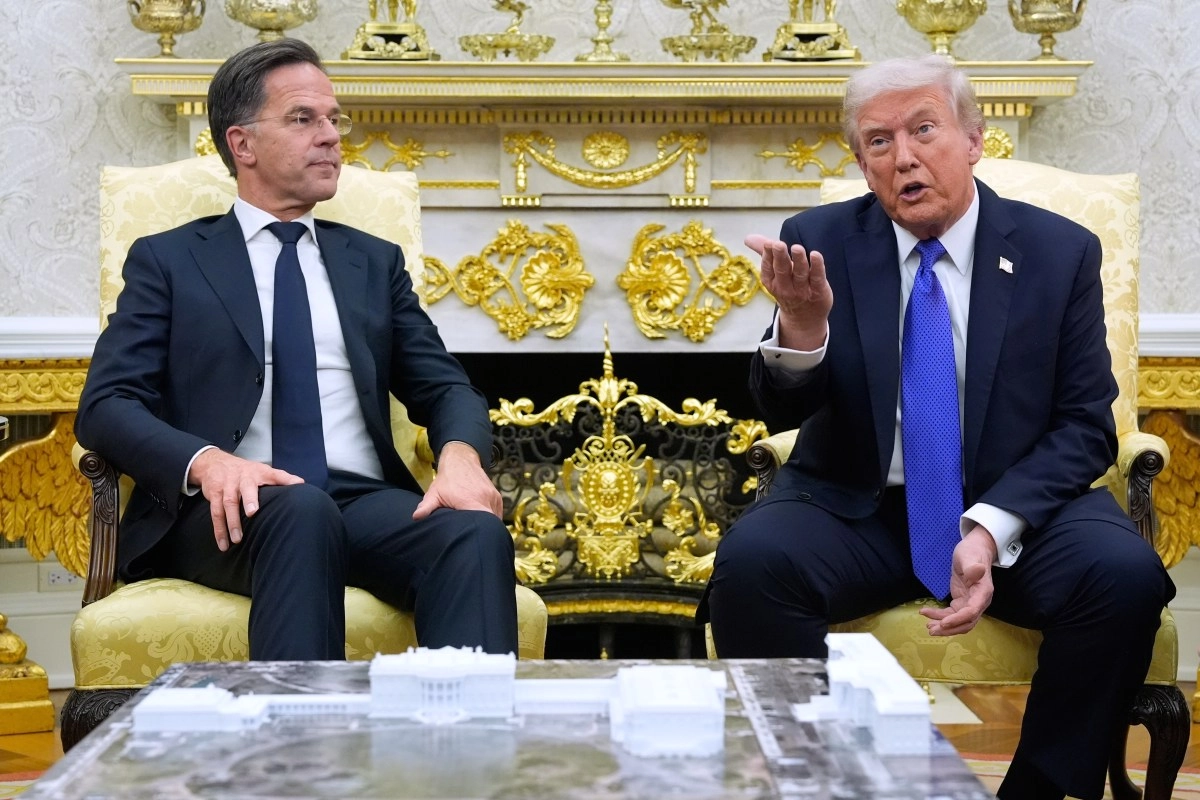

US President Donald Trump reiterated his criticism of NATO, asserting that the military alliance "wasn't there" when his country needed it, after holding a private meeting at the White House with the organization's Secretary General, Mark Rutte.
The meeting, which lasted nearly two hours and was held behind closed doors, took place amid growing tensions between Washington and several European allies over their level of support for recent military operations in the Middle East.
Following the meeting, Trump posted a message on his Truth Social network in which he again questioned the reliability of the alliance.
“NATO wasn’t there when we needed them, and they won’t be there if we need them again,” the president wrote, also referencing Greenland, an issue that previously generated friction with allied countries.
Criticism for Limited Support in Conflict with Iran
The US president’s statements come after weeks of rebukes toward NATO members, whom he has accused of not fully supporting US military actions in the context of the conflict with Iran.
Among the White House’s main complaints are the closure of airspace by some European countries, the refusal to allow the use of military bases for US operations, and the lack of naval deployment in the Strait of Hormuz, a key route for global energy trade.
Trump has even gone so far as to call the allies “cowards” and describe NATO as a “paper tiger,” in addition to hinting on several occasions at the possibility of the United States leaving the organization.
These tensions occur despite Washington historically being the main military pillar of the alliance since its creation in 1949, and at a time when an increase in defense spending by member countries is being discussed for the next decade.
Rutte acknowledges disappointment, but highlights openness
For his part, Rutte offered a more nuanced view of the match. In an interview with CNN, the Secretary General acknowledged that Trump is “clearly disappointed” with NATO, but stressed that he was also willing to listen. “The President listened attentively to our arguments about what is happening in Europe and in relation to Iran,” said Rutte, who admitted that not all allied countries met Washington's expectations. The official avoided confirming whether Trump directly raised the possibility of withdrawing the United States from NATO during the meeting, although he emphasized that the organization is undergoing a transformation process and that European countries are increasing their defense commitments. Before his meeting with Trump, Rutte also held talks with the Secretary of State, focusing on military coordination, the war in Ukraine, and the sharing of responsibilities within the alliance. The meeting at the White House took place a day after Washington and Tehran agreed to a temporary two-week ceasefire, which includes the reopening of the Strait of Hormuz. This step has been seen as a relief for international markets, given that a significant portion of the world's energy supply passes through this route. Despite this progress, the differences between the United States and its NATO allies highlight a moment of uncertainty about the future of transatlantic cooperation and Washington's role within the alliance.The meeting at the White House took place a day after Washington and Tehran agreed to a temporary two-week ceasefire, which includes the reopening of the Strait of Hormuz. This step has been seen as a relief for international markets, given that a significant portion of the world's energy supply passes through this waterway. Despite this progress, the differences between the United States and its NATO allies highlight a moment of uncertainty about the future of transatlantic cooperation and Washington's role within the alliance.The meeting at the White House took place a day after Washington and Tehran agreed to a temporary two-week ceasefire, which includes the reopening of the Strait of Hormuz. This step has been seen as a relief for international markets, given that a significant portion of the world's energy supply passes through this waterway. Despite this progress, the differences between the United States and its NATO allies highlight a moment of uncertainty about the future of transatlantic cooperation and Washington's role within the alliance.