

The Mexico vs. Argentina in the 2010 World Cup: a black day for refereeing worldwide, revealed Argentine referee
Fifteen years later, Argentine referee Hector Baldassi acknowledged that his colleague Roberto Rosetti stabbed Mexico against Argentina in the 2010 World Cup.
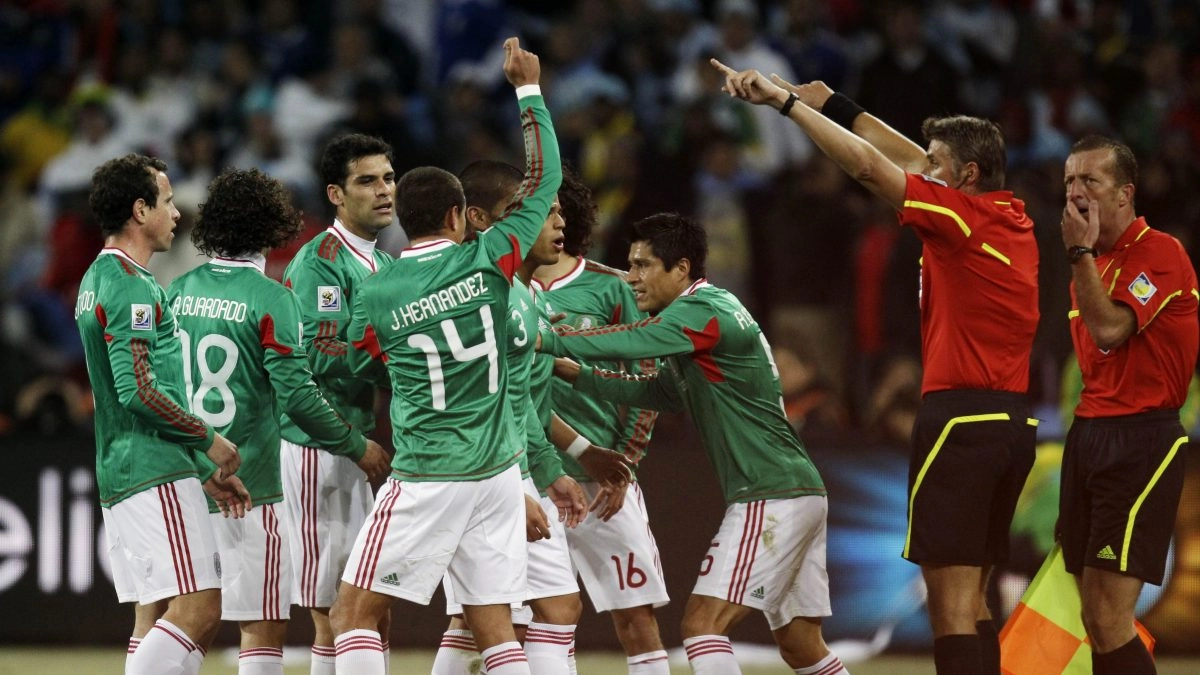

While it is true that if the Italian referee Roberto Rosetti had disallowed Carlos Tevez’s goal against Mexico in the 2010 World Cup in South Africa, it would not have changed the Mexican defeat against the Argentine national team, the reality is that it was a clear offside and should have been disallowed.
This was the opinion of the Argentine international referee Héctor Baldassi, who did not mince his words in admitting 15 years later that the error of his Italian colleague in said game was considered a black day for refereeing worldwide due to the flagrant nature of the goal scored by his compatriot Carlos Tévez.
Baldassi stated the above in the podcast “Alta suciedad”, where he explained that this error was considered one of the biggest in the history of the World Cup and that it led the International Board in charge of the entire structure of the rules of the game and FIFA to begin to consider the use of technology in football that gave way to what is now known as the famous VAR (Video Assistant Referee).
The South American referee said that even at night in the referees’ meeting there was an atmosphere of gloom because everyone felt that the goal shouldn’t have counted because it came from a clear offside and that it ultimately ended up affecting the Mexican national team.
“That day (of Mexico vs Argentina), we were all screwed up in the refereeing, everyone in the meeting was screwed up because we felt it was our own.”
The controversial play
Héctor Baldassi explained that after the match, the referee of that match, Roberto Rosetti, acknowledged that he realized his serious error due to the replay broadcast on the stadium’s screens, where it was clearly seen that it had been a clear offside, but he couldn’t reverse his decision because it would take years before the use of technology to correct this type of error and others would be authorized. unlawful,but that was undoubtedly what led to the demand for their use.
Baldassi, along with former Spanish referee Mateu Lahoz, acknowledged that this controversial action gave way to FIFA to accelerate the evidence and arguments to support referees with the use of technology as it has now become an indispensable tool in football matches and is what comes closest to sporting justice.