

Approved that Mexicans abroad vote in all elections
It is a first step to give more voting power to Mexicans who live outside of Mexico
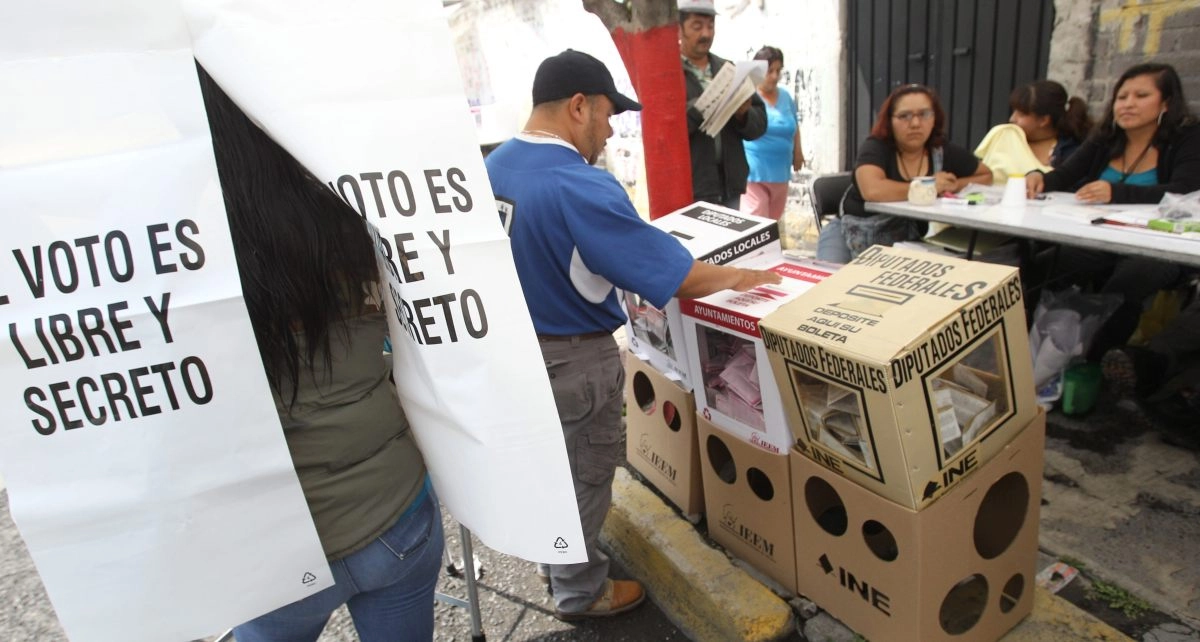

The Political-Electoral Reform Commission of the Chamber of Deputies of Mexico approved a ruling so that Mexicans living abroad can vote in all elections, whether local or state, not just presidential.
If everything goes well Well, and this initiative is included in the political-electoral reform project promoted by the president of Mexico, Claudia Sheinbaum, Mexicans living outside of Mexico could begin participating in all elections as early as 2027.
In a statement, the Political-Electoral Reform Commission reported that the opinion that reforms article 329 numeral 1 of the General Law of Electoral Institutions and Procedures was approved, so that citizens residing abroad can exercise their right to vote for the election at the federal level of the head of the federal executive power, senators, federal deputies, and judges of the judicial branch of the federation.
Also, Mexicans Residents abroad may exercise their right to vote in the local elections for governors, the head of government of Mexico City, and local deputies; persons holding the municipal presidencies and mayoralties of Mexico City, judges of the judicial powers of the states, provided that this is determined by the constitutions of the states and of Mexico City.
In addition, they must exercise their right to vote within the scope of direct or participatory democracy mechanisms in popular consultations and recall of mandate.
It is specified that the decree will come into force as of 2026, in accordance with the electoral calendars established by the National Electoral Institute at the federal level and the Local Public Bodies at the state level, respectively.
But for this to become a reality, this initiative must be included in the political-electoral reform project and the state congresses would have 180 days natural to standardize and harmonize their electoral legal framework.
Representative Victor Hugo Lobo Román, president of the Commission, explained that the reform seeks to guarantee the principles of equality and non-discrimination among Mexicans so that their political-electoral rights are not differentiated from those residing in the country with those who are abroad.
"The Mexican Congress recognizes that the place of residence should not be a factor that prevents them from fully exercising their political-electoral rights," he said.
Migrant representative for Morena, Aniceto Polanco Morales, author of the measure, affirmed that rights are not begged for, but rather conquered and must be equal for all; and lamented that its full exercise for Mexicans living abroad has been in dribs and drabs.
He added that we are going through very difficult times in the United States, since human rights are being violated; And that is why today more than ever, this ruling sends a good message.
Maribel Solache Gonzalez, also a migrant deputy from Morena, assured that migrants were not in the Constitution or in secondary laws and only remained in the discourse, so it is necessary that they now be in the legal frameworks.
“This initiative is a good first step, we hope to be part of the discussion, bring it up to the plenary session for a vote, and hopefully we can get the state congresses to approve it,” said Solache, who also managed to get her initiative to reform article 334 of the General Law of Electoral Institutions and Procedures approved by the Commission, which intends that in the embassies and consulates of Mexico, a program is established to facilitate the issuance of voter ID cards.
Representative Pablo Vazquez of the Citizen Movement party proposed to build an internal agreement, in order to urge the Federal Executive Branch so that the Presidential Commission for Electoral Reform can consider the incorporation of the six political parties and that their leaderships registered in the country can integrate it, so that from there this initiative that is being proposed can be designed, from an area of greater plurality, inclusion and representation.
Representative Solache also asked to send a letter to the Jucopo (coordinating body of legislative work), to the president and to the Presidential Commission, since, if someone should be At those tables, "we are the ones from the Political Reform Commission, but I would also like to see vulnerable groups, the migrant bench, Afro-Mexicans, and the indigenous community there."
Juan Jose Gutierrez, The leader of the Full Rights of Immigrants Coalition said that the important thing about the initiative promoted by Representative Polanco is that it coincides with the moment and time in which Congress and the Federal Government are going to make the political reform.
"It also has to do with expanding our rights as immigrants, and being able to fully exercise them."
He said that he hopes that Representative Polanco has the ability to move and convince influential people to incorporate the initiative into the reform of the political system.
If this issue is included in the discussion of electoral reform and is approved, we can advance in record time, especially if we manage to get the state congresses to approve it.
Therefore, he indicated that Mexicans abroad could vote for the first time in 2027 in elections from which they have been marginalized, but they would also be able to run for these offices.
We are talking about being able to vote and be voted for from abroad.