

Iran promises a decisive answer to the US attack while Trump talks about ‘regime change’ in Tehran
As top Iranian officials make statements, the US president appears to contradict his own officials

Following the US attack on Iran’s nuclear facilities on Sunday, the world is wondering what Tehran’s response will be.
Iranian Supreme Leader Ayatollah Ali Khamenei has not made an official statement, but several senior military commanders have threatened to respond to the US attacks.
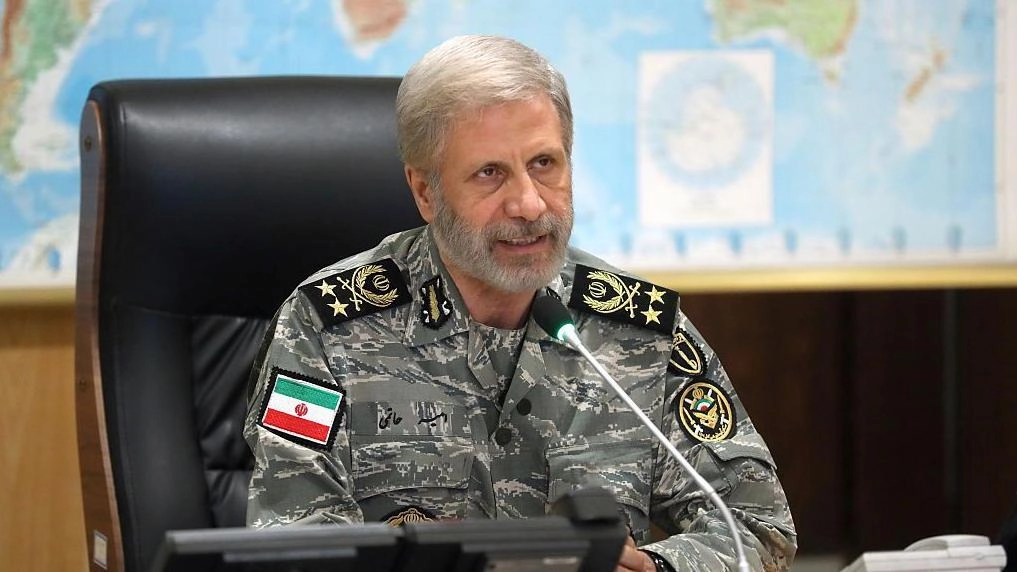
On Monday, Iranian media published a video of the Nation of Islam’s commander-in-chief, Amir Hatami, speaking with his officers in an operations room.
In the video, Hatami claims that every time the US committed “crimes” against Iran in the past, “it has received a decisive response, and this time it will be the same.”
Meanwhile, Iranian military Chief of Staff Abdolrahim Mousavi issued a statement saying that Washington has opened the door for its forces to take “any action” against US troops. And he adds that Iran “will never give in.”
And in another warning, the spokesman for the Islamic Revolutionary Guard Corps (IRGC), Ebrahim Zolfaghari, said on Monday that the United States “directly entered” the war and has violated Iran’s “sacred soil.”
He added that the world’s leading power will face “grave, regrettable and unpredictable consequences” through “powerful and targeted operations.”
And in remarks in English directly addressing Donald Trump, Zolfaghari said: “Mr. Trump, the gambler! You may start this war, but we will be the ones to finish it!”
Possible Iranian responses
Iran “is going to respond in some way. It’s hard to say what it will be,” Lieutenant General Mark C. Schwartz, former US security coordinator for Israel and the Palestinian Authority, told the BBC.
The main Lieutenant General Schwartz's concern is the U.S. forces stationed at bases in Iraq, Jordan, and Syria, rather than those in Bahrain and Kuwait.
In total, the U.S.Iran has military installations in at least 19 locations in the Middle East, eight of which are considered permanent by many regional analysts: Bahrain, Egypt, Iraq, Israel, Jordan, Kuwait, Qatar, Saudi Arabia, the United Arab Emirates, and Syria.
Iran has several allies in the region who could act on its behalf. Kata'ib Hezbollah, the Iran-backed Iraqi Shiite militia, would be the most viable to do so, followed by the Houthis in Yemen, the lieutenant general said.
The United States designated Kata'ib Hezbollah, also known as the Hezbollah Brigades, a foreign terrorist organization in 2009.
“Regime Change”
Meanwhile in Washington, Trump spoke Sunday of the possibility of “regime change” in Iran.
The president wrote on his social media platform: “It is not politically correct to use the term 'Regime Change,' but if the current Iranian regime is not capable of MAKE IRAN GREAT AGAIN, why shouldn't there be Regime Change???”
Trump's statement, however, appears to contradict what other members of his administration have said.
During the end of This week, Defense Secretary Pete Hegseth said that “the mission (to attack Iran) was not and has not been aimed at regime change,” and Vice President J.D. Vance said the United States is not targeting a new government in Tehran.
Elliott Abrams, who served as Washington’s envoy to Iran during Trump’s first term, told the BBC that there has been a lot of confusion about the US president’s recent comments.
Abrams said the president may have been “joking.”
Click here to read more stories from BBC News.
Subscribe here to our new newsletter to receive a selection of our best content of the week every Friday.
You can also follow us on YouTube, Instagram, TikTok, X, Facebook and on our new WhatsApp channel.
And remember that you can receive notifications in our app. Download the latest version and activate them.