

Iran launches wave of missiles against Israel in retaliation for previous attacks
Explosions were reported in the Iranian capital, Tehran, after a preemptive strike by Israel. Israel suffered Iranian missile attacks in response.
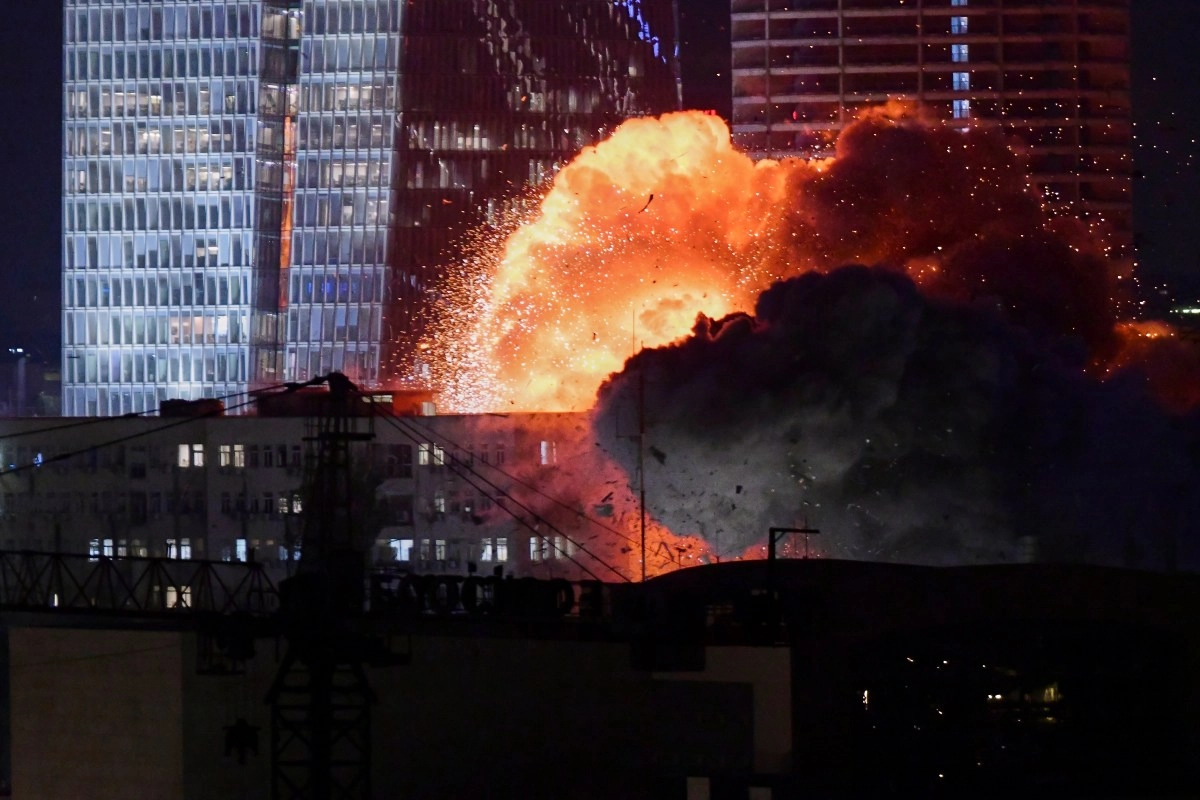

Israel launched violent attacks against Iran's nuclear and military structure on Friday, deploying warplanes and drones previously smuggled into the country to storm key facilities and assassinate senior generals and scientists.
Israel said the bombing was necessary before its adversary bring it closer to building an atomic weapon, although experts and the U.S. government have assessed that Iran was already actively working on such a weapon before the attacks.
At least 78 people were killed and 320 wounded in Israeli strikes in Iran early Friday, Iran's ambassador to the United Nations said. It was not immediately known how many were civilians and how many military personnel.
Explosions were heard in two eastern Tehran neighborhoods shortly after 4 a.m. local time Saturday, the semi-official Tasnim news agency, which is linked to the Islamic Revolutionary Guard Corps, reported. The agency shared video of smoke rising from behind buildings.
Iran responded by firing waves of ballistic missiles at Israel, causing explosions in the skies above Jerusalem and Tel Aviv that shook buildings.
Iran's new wave of attacks on Israel
Iran launched waves of missiles at Israel late Friday and early Saturday.
Explosions echoed across Israeli skies late Friday as Iranian ballistic missiles were intercepted, including several that landed near Israel's main military compound in Tel Aviv. The attacks came in at least two waves and hit at least seven locations in central Israel.
The Israeli military urged civilians, already shaken by the earlier wave of rockets, to take shelter as the missiles damaged homes and killed at least two people.
Iran fired a fourth wave of rockets at Israel early Saturday morning, setting off alarms in several areas of the country, the Israel Defense Forces (IDF) reported.
Just after 4:30 a.m. local time on Saturday, the army reported that air raid sirens had been activated “after the identification of missiles originating from Iran towards the State of Israel.”
“The Israel Defense Forces are operating to intercept and attack wherever necessary to eliminate the threat,” the Israeli army said in a statement.
Although a few minutes later the same army had told the Israeli population that the threat had passed and that they could “leave the protected areas,” the IDF again reported that they had identified new missiles launched from Iran and again told civilians to take cover.
Between the first warning and the second warning, which came just after 5:00 a.m. local time, no more than half an hour passed.
Local Israeli media reported that the sirens sounded in areas in the north of the country. The IDF recalled that "the defense is not airtight."
The army has intercepted some of the Iranian attacks, but several missiles fell in Israel, especially in Tel Aviv and its metropolitan region, causing dozens of injuries and one death since Friday.
Iran thus responded to the extensive offensive launched by Israel last Friday against nuclear and military centers and personnel in the Persian country, which left around 70 people dead and hit some Iranian uranium enrichment plants.
Israeli Defense Minister Israel Katz said on Friday that Iran crossed a red line by launching missiles at civilian population centers in Israel. Katz added that the Iranian leadership would pay a very high price.
Iran promised a "crushing response" to the Israeli attack and said it would intensify its attacks.
Leaders in the Middle East and Europe have called for a de-escalation. UN Secretary-General António Guterres urged both sides to show maximum restraint, his spokesman said. Reporting from The Associated Press, The Washington Post, CNN and Agencia EFE
Between the first warning and the second warning, which arrived after 5:00 local time, no more than half an hour passed.
Local Israeli media reported that alarms sounded in areas of the north of the country. The IDF recalled that "the defense is not airtight."
The Army has intercepted some of the Iranian attacks, but several missiles fell in Israel, especially in Tel Aviv and its metropolitan region, causing dozens of injuries and one death since Friday.
Iran is responding in this way to the extensive offensive launched by Israel last Friday against nuclear and military facilities and personnel in the Persian country, which left around 70 people dead and hit some Iranian uranium enrichment plants.
Israeli Defense Minister Israel Katz said on Friday that Iran crossed a red line by launching missiles at civilian population centers in Israel. Katz added that Iranian leaders would pay a heavy price. Iran vowed a “crushing response” to the Israeli attack and said it would intensify its attacks. Leaders in the Middle East and Europe have called for de-escalation. U.N. Secretary-General António Guterres urged both sides to show maximum restraint, his spokesman said. Reporting from The Associated Press, The Washington Post, CNN and Agencia EFE
Between the first warning and the second warning, which arrived after 5:00 local time, no more than half an hour passed.
Local Israeli media reported that alarms sounded in areas of the north of the country. The IDF recalled that "the defense is not airtight."
The Army has intercepted some of the Iranian attacks, but several missiles fell in Israel, especially in Tel Aviv and its metropolitan region, causing dozens of injuries and one death since Friday.
Iran is responding in this way to the extensive offensive launched by Israel last Friday against nuclear and military facilities and personnel in the Persian country, which left around 70 people dead and hit some Iranian uranium enrichment plants.
Israeli Defense Minister Israel Katz said on Friday that Iran crossed a red line by launching missiles at civilian population centers in Israel. Katz added that Iranian leaders would pay a heavy price. Iran vowed a “crushing response” to the Israeli attack and said it would intensify its attacks. Leaders in the Middle East and Europe have called for de-escalation. U.N. Secretary-General António Guterres urged both sides to show maximum restraint, his spokesman said. Reporting from The Associated Press, The Washington Post, CNN and Agencia EFECNN and EFE Agency