

Why India is interested in having Venezuela as a key oil supplier
Delcy Rodríguez's visit to India highlights Venezuela's growing role in Delhi's oil diversification
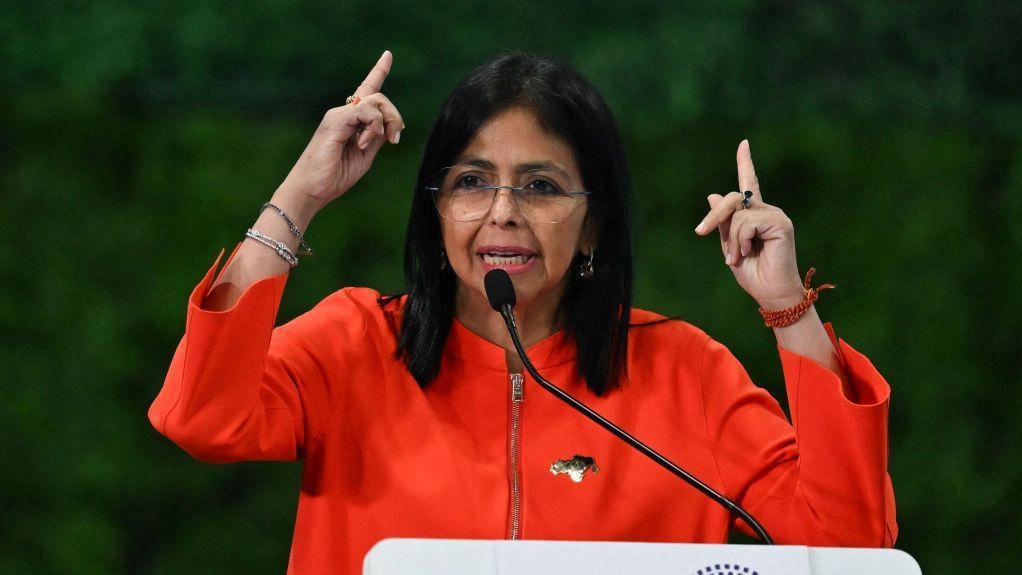

The interim president of Venezuela Delcy Rodríguez arrived in India this Wednesday to hold talks on trade, investments, health and renewable energy.
However, the relationship between both countries continues to revolve around a single commodity: oil.
India is the world's third largest oil importer and has drastically increased its purchases of Venezuelan crude in recent months, turning the South American producer into an increasingly valuable supplier, just at a time when the war in Iran has strangled energy flows from the Gulf.
India imports about 90% of its oil.
About half of its crude oil imports — about 2.5 to 2.7 million barrels per day — transit through the Strait of Hormuz, the strategic Gulf passage that is now effectively closed due to the conflict.
This gives Venezuela an importance that far exceeds its place in India's trade statistics.
black gold
Bilateral trade was worth just US$679 million in 2024-25, a tiny fraction of India's global trade.
However, Caracas is hard to ignore as New Delhi seeks to diversify its oil suppliers.
Venezuela was India's fifth-largest source of crude oil imports in May, supplying it with about 266,000 barrels a day, representing about 5.3% of the country's total crude oil imports, according to maritime analysis firm Kpler.
Only Russia, the United Arab Emirates, Saudi Arabia and Brazil supplied larger quantities.
After a year-long hiatus — caused by U.S. measures against buyers of Venezuelan crude — Indian refiners resumed imports in February, following a sanctions relief deal reached between Washington and Caracas.
Today, it is impossible to ignore the world's largest proven oil reserves as New Delhi seeks to diversify its crude supplies to reduce its dependence on the Middle East.
This is the backdrop for Rodriguez's sixth visit to India, where he is scheduled to meet Prime Minister Narendra Modi and other senior officials.
“It is an important energy partner for us,” said Randhir Jaiswal, spokesperson for India's Ministry of External Affairs, noting that Indian state energy companies maintain investments in Venezuela.
According to Kpler, India imported around 280,000 barrels a day of Venezuelan crude in April and May — the first shipments after a nine-month pause — and arrivals in June are expected to exceed 300,000 barrels a day.
The Hormuz Crisis
The return of Venezuelan crude coincides with growing concerns about supply disruptions in the Middle East and uncertainty around the Strait of Hormuz.
“However, the timing of the initial shipments arriving suggests that they were likely secured long before the recent disruptions, highlighting a long-term supply strategy rather than a purely reactive response,” said Sumit Ritolia, senior research analyst at Kpler.
For Indian refiners, however, the appeal is not merely geopolitical.
Relatively cheaper to acquire, but complex to refine, Venezuelan crude oil is a heavy, sulfur-rich oil.
India's sophisticated refineries are among the few capable of efficiently processing it into diesel and jet fuel.
This renewed interest marks a partial return to a previous relationship.
Before US sanctions halted imports in 2019, Venezuela had become one of India's most important oil suppliers; It rose to third place in 2012 and remained in the top five thereafter.
By 2019, it was shipping nearly 16 million tons of crude oil a year, helping to boost bilateral trade to $6.4 billion, driven overwhelmingly by oil.
However, Venezuela is unlikely to transform India's energy matrix, experts say.
Production has increased by approximately 400,000 to 500,000 barrels per day (kbd) this year, but remains well below historical levels, limiting its ability to replace major suppliers.
“Instead, Venezuelan barrels should be seen first and foremost as an attractive diversification option: they give Indian refiners access to cheap heavy crude oil, while reducing dependence on a single supply region,” Ritolia said.
Whether Venezuela becomes a larger supplier will depend on production, sanctions and geopolitics.
However, New Delhi sees scope to deepen the energy relationship.
As the Indian government expressed in a statement, Venezuela has been “an important partner” in the areas of energy and investment; In fact, Indian state-owned companies already own significant stakes in the country's oil sector and are “interested in exploring opportunities to further expand their presence.”