

Israel and Iran step up their attacks while numerous people flee or are evacuated
Netanyahu said Iran will pay “a very high price” for civilian deaths
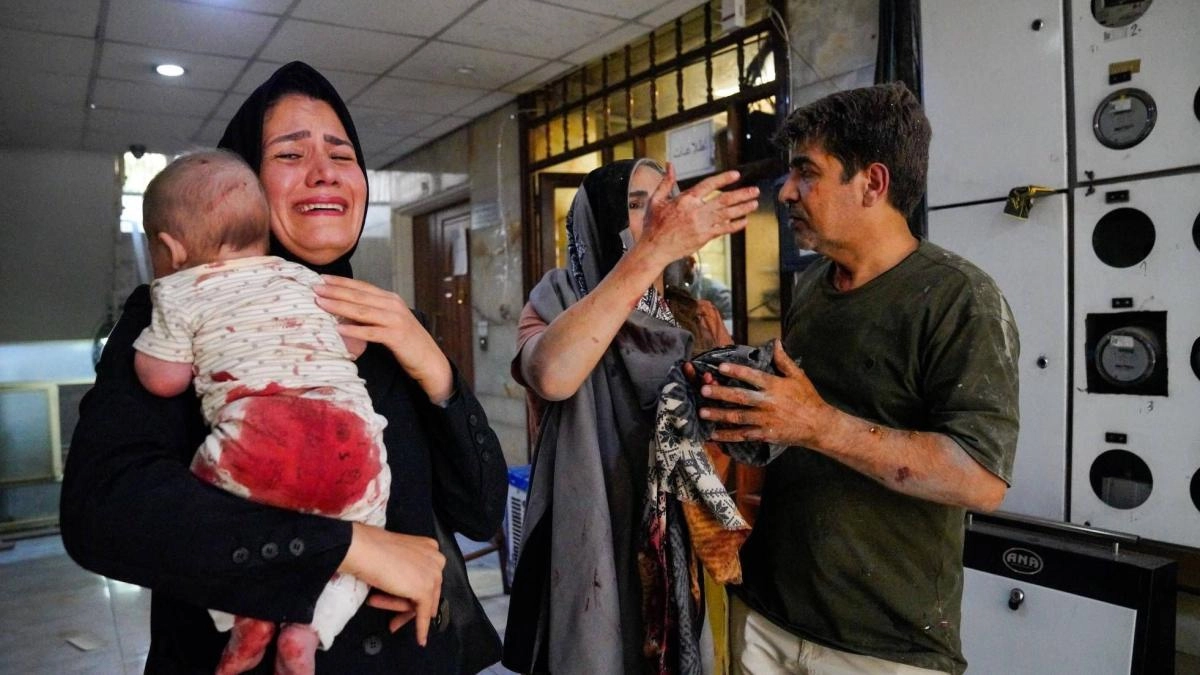

Tensions between Israel and Iran continue to rise following the attacks the two countries have exchanged since Friday.
State media in Iran reported new Israeli bombings on Monday in Tehran and in the province of Ilam, near the border with Iraq, claiming that one of the targets was a hospital.
For its part, Israel said has deployed some 50 warplanes to attack Iranian missile installations, launchers and command centers and said it has achieved “complete air control over Tehran.”
On Monday, the Israeli military issued an urgent evacuation order for Tehran’s third district in the northeast of the city, which is home to more than 300,000 people.
The district houses the headquarters of Iran’s state broadcaster, the Islamic Republic of Iran Broadcasting. “The Iranian propaganda and incitement megaphone is about to disappear. The evacuation of nearby residents has begun,” Israeli Defense Minister Israel Katz said.
Iranian media later reported that the network’s building was attacked and several employees were killed.
Katz had earlier said that “there is no intention to physically harm Tehran residents,” but warned that “they will be forced to pay the price of the [Iranian] dictatorship and evacuate their homes” in areas targeted by the military.
After three days of Israeli attacks, “everyone is trying to escape” from Tehran “one way or another,” one Tehran resident told the BBC Persian Service.
Iran’s government expanded its cancellation of flights in and out of the country, according to state media, while Israel claims to have achieved “complete air control over Tehran.”
But Israel has also has suffered the consequences of Iranian retaliation.
Iran launched a wave of missile attacks in the early hours of Monday, some of which managed to penetrate the Iron Dome air defense system.
BBC Middle East correspondent Hugo Bachega,describes how groups have been clearing debris from buildings hit by Iranian missiles in the town of Petah Tikva, at around 4:00 a.m. local time.
In Tel Aviv, cranes lift the remains of mangled cars from the streets, and broken glass and shattered masonry hang from some buildings near the impact points.
“There has been a change of attitude, for many Israelis,” notes correspondent Bachega. “Many felt the sophisticated air defense system was impenetrable, a feeling that has changed since Iran launched its retaliatory strikes.”
Eight people were killed in the attacks early Monday, bringing the total since Friday to 24, according to the Israeli prime minister’s office.
Iran’s Health Ministry reported at least 224 dead, 90 percent of them civilians.
Civilian Casualties
Iran and Israel have accused each other of targeting civilians with their airstrikes.
In a statement, Israel’s foreign minister called Iran’s Supreme Leader Ali Khamenei a “cowardly murderer” who deliberately targeted civilian areas “to deter the Israel Defense Forces from continuing the attack that is overwhelming its capabilities.”
According to police, six people, including two children, They died in the city of Bat Yam, in central Israel. There, rescuers were searching for missing people in the rubble of destroyed buildings.
Israeli Prime Minister Benjamin Netanyahu traveled to the area on Sunday, saying Iran would pay a “very heavy price” for civilian deaths and urging the public to follow security instructions from authorities.
The Israeli military has previously carried out strikes in Tehran that he says targeted buildings linked to Iran’s nuclear program and an oil depot, in what appeared to be the first attack on the country’s energy infrastructure.
On Friday, Iran’s representative to the United Nations, Amir-Saeid Iravani, said the “overwhelming majority” of casualties in his country were civilians.
Israel has said it is targeting Iranian military facilities, including nuclear infrastructure.
BBC journalists are barred from entering Iran because of restrictions imposed by the Iranian government country, making it difficult to obtain information on the damage caused by the Israeli offensive.
Notices to the population
On Friday, the Netanyahu government began Operation Rising Lion, with which it has been attacking Iranian nuclear facilities and other military targets.
The Israel Defense Forces (IDF) justified the start of the offensive by the “continued aggression of the regime” in Tehran.
Key figures in Iran’s armed forces and prominent scientists of its nuclear program were killed in the operation.
Iran launched dozens of ballistic missiles toward Israel on Friday night, in what Tehran called the beginning of its “crushing response” to the Israeli attacks.
On Sunday, the IDF reported that, as part of the operation, it has attacked more than 170 targets and 720 components of military infrastructure in Iran.
Tehran, for its part, launched missiles against central and northern Israel, after the Israeli army confirmed a series of attacks on facilities of its nuclear infrastructure.
On Sunday, the Israeli army reported that it began sending warnings in Farsi to Tehran residents living near the sites it considers to be targets, so that leave these areas immediately.
In a post on the IDF’s Farsi-language account on the X social media site, an urgent warning was issued to Iranians:
“All persons in or around military weapons production factories and their supporting institutions must leave these areas immediately and not return until further notice.”
“Your presence next to this infrastructure puts your lives at risk.”
“A very sad morning”
Israeli President Isaac Herzog wrote on his X account that Sunday morning was “very sad and difficult.”
The “Iranian criminal attacks” killed and wounded “Jews and Arabs, Israeli citizens and new immigrants, including children and the elderly, women and men,” Herzog wrote.
Meanwhile, Iranian Foreign Minister Seyyed Abbas Araghchi said the attacks would end once Israel halt its military campaign.
In a meeting with foreign diplomats, the official indicated that Israel's attacks had crossed a new red line in international law by targeting his country's nuclear facilities.
Iranian President Masoud Pezeshkian had threatened a "more severe" response if Israel does not back down.
The United States government, for its part, has said it has no involvement in Israel's attacks on Iran.
However, Araghchi urged Washington to "assume its responsibility" and condemn such attacks.
A sixth round of talks between the United States and Iran on a possible agreement regarding Tehran's nuclear program was scheduled for this Sunday.
"Just three days ago,The possibility of progress towards an agreement between the United States and Iran on their nuclear ambitions was still in the air. Now, the explosions and sirens that shake the night in Israel and Iran seem to have drowned it out,” said Sebastian Usher, Middle East editor of the BBC.
Click here to read more stories from BBC News Mundo.
Subscribe here to our new newsletter to receive every Friday a selection of our best content of the week.
You can also follow us on YouTube, Instagram, TikTok, X, Facebook and on our new WhatsApp channel.
And remember that you can receive notifications in our app. Download the latest version and activate them.