

Why more and more young Russians are joining neo-Nazi groups
A recent attack on a young student in western Russia alarmed many and highlighted the return of extremist ideology.
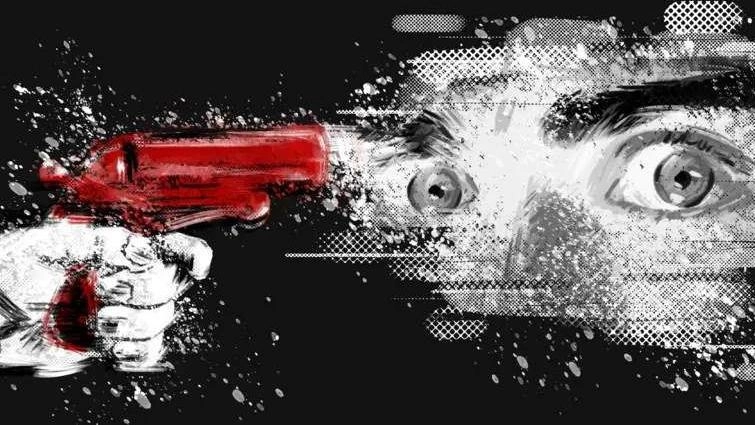

Late last year, in the medieval Russian city of Kostroma, a teenager was shot in the face with a flare gun as he walked home from a screening of a film about a left-wing activist.
The attack was allegedly carried out by a member of a local neo-Nazi group calling itself Made With Hate.
This violent and politically charged act symbolized a growing trend across Russia.
Despite the Kremlin’s repeated justification of its large-scale invasion of Ukraine as a battle against “Nazism,” there has been a sharp rise in neo-Nazi violence within Russia itself.
According to the Sova Center, a Moscow-based organization that monitors hate crimes, far-right attacks in Russia more than doubled in 2023 compared to the previous year.
This follows a decline over the previous ten years. Many of the perpetrators were under 16.
This new wave of extremism dates back to the 1990s and early 2000s, though it has yet to reach the murderous brutality of that chaotic period when hundreds of attacks occurred each year after the collapse of the Soviet Union.
Then the violence was fueled by the spread of underground extremist literature.
Now it is through social media platforms such as Telegram and TikTok that many young Russians encounter and amplify far-right ideology in digital spaces often beyond the reach of local law enforcement.
Swastika-shaped graffiti
In Kostroma, a city of about 264,000 people on the banks of the Volga River in western Russia, a group of teenagers began communicating via a channel on the Telegram messaging service in early 2024.
Initially, the chat focused on organizing trips to soccer matches or casual encounters.
But soon the group was spraying graffiti with swastikas and other far-right symbols around the city, according to one former member, Anton, who was 17 at the time and spoke to the BBC on condition his real name not be used.
The teenagers called their gang Made with Hate.
By summer last year, they had moved on to physical violence.
“They would get together and everyone would beat someone up,” said Anton, who told the BBC he left the group in October last year after realizing his views didn’t match those of other members.
“They would go around, looking for drug addicts and alcoholics, and mug them. They were always on the lookout for people from left-wing movements,” he added.
The attacks were often filmed and posted on Telegram channels, whose membership was growing rapidly. These came not only from Kostroma, but also from other Russian cities and in some cases - according to Anton - even from Ukraine and Poland.
The attack
The person attacked as he was leaving a film screening was Yaroslav (not his real name), a 17-year-old who moved from Moscow to Kostroma to study jewelry making.
In November 2024, he and a friend went to see a documentary about the slain anti-fascist Ivan Khutorskoy, an event organized to commemorate 15 years since his death at the hands of neo-Nazis.
When Yaroslav left, he was approached by nine people who questioned him about his political views, according to Antifa.ru, a Telegram channel of the anti-fascist movement in Russia.
They took out a flare gun and Yaroslav was shot in the face.
The attackers They dispersed, but doctors at a nearby hospital were unable to save his eye. Yaroslav was forced to abandon his studies and return to live with his parents near Moscow. He declined to speak to the BBC.
Two days after the incident, the alleged assailant, also 17, was arrested and now faces more than a decade in prison on charges of hooliganism and causing grievous bodily harm with a weapon.
According to Anton, the teenager was a member of the group Made with Hate, which he had joined just weeks before his arrest.
Another teenager was also later arrested in connection with the attack. Anton said the suspect was a leading figure in the neo-Nazi group.
Both suspects remain in pre-trial detention.
Nostalgic Brutality
The new neo-Nazi groups emerging in Russia, according to Vera Alperovitch, a researcher at the Sova Center, are trying to revive “the traditions and all types of violence that developed in the 2000s.”
The method of the attacks is reminiscent of neo-Nazi gangs of decades ago. For example, gang members organize meetings with people they believe to be homosexual, as well as those they have labeled as "pedophiles" and "drug addicts," as well as the homeless, to attack them.
They also carry out "white cars," a term used for coordinated attacks on train passengers.
This is more about a need for attention than ideology, says Alperovitch. "The thirst for notoriety plays a bigger role now than ever."
In far-right circles in the 2000s, he explains, the movement was driven by a neo-Nazi ideology. “These were intelligent people who read neo-Nazi literature and published their own magazines,” Alperovitch says.
The resulting violence was a serious problem in Russia, with hundreds of racially motivated hate crimes each year.
By the early 2010s, the movement was effectively dismantled, with the help of law enforcement. Many of its key figures were sentenced to long prison terms.
Now the activity of Nazi skinheads in Russia is on the rise again, but this subculture is still in its infancy and has not yet been formalized politically and ideologically, says Alperovitch.
“These are not ideological fighters like before. Putin, the war, the United States… everything is too complicated for them,” Alperovitch told the BBC.
“(There is only the idea that) there are migrants, we should beat them up and make a video.”
Xenophobic rhetoric from Russian officials and state media is at the heart of the recent increase in attacks, as well as “the general militaristic bias of Russian society,” he said.
“From time to time we hear from far-right chat rooms and channels that a criminal case has been opened against this or that activist, or even a group of activists, and that they have been detained,” says Alperovich.
“But law enforcement agencies do not advertise it in the media, apparently trying not to draw attention to the fact that there are neo-Nazis in Russia. The Russian authorities, for their part, tell us that they only exist in Ukraine.”
Lack of belonging
The rise in extremist violence is not just a Russian phenomenon.
Paul Jackson, a professor at the University of Northampton in the UK, said that poorly moderated platforms like Telegram have given the global far right a “powerful new dynamic.”
“Young people sometimes feel a lack of meaning in society and find answers to their frustrations in extremist content. Often,For young men, themes of hypermasculinity underpin these feelings,” Professor Jackson warned.
Graham Macklin, a researcher at the University of Oslo, notes that the average age of attackers is decreasing.
Back in Kostroma, the neo-Nazi movement continues to grow despite ongoing criminal cases.
“A year ago there were 15 people in the right-wing movement, including me, and now there are probably 40 to 50 people, mostly teenagers,” said Anton.
Yegor, an anti-fascist activist from Kostroma who did not want to give his surname, said it had become “fashionable and cool” to join such far-right gangs.
“They want to fit in, to create an image of themselves as tough guys.”
In April, Anton enlisted to fight for Russia in the full-scale invasion of Ukraine, although when he spoke to the BBC His reasons for doing so seemed unclear.
“Basically, just because my father was a soldier,” he told the BBC, explaining that his late father had previously served in the restive southern region of Chechnya, long the scene of a separatist conflict.
“I didn’t sign up to defend anyone’s ideas,” he said. “If they kill me, they kill me.”
Click here to read more stories from BBC News Mundo.
Subscribe here to our new newsletter to receive a selection of our best content of the week every Friday.
You can also follow us on YouTube, Instagram, TikTok, X, Facebook and on our WhatsApp channel.
And remember that you can receive notifications in our app. Download the latest version and activate them.