

Bolivia approves a historical law that prohibits marriage with minors under 18 years old without exceptions
The Chamber of Deputies approved this Wednesday a law that modifies the Family Code that allowed marriage at 16 years old with parental permission.
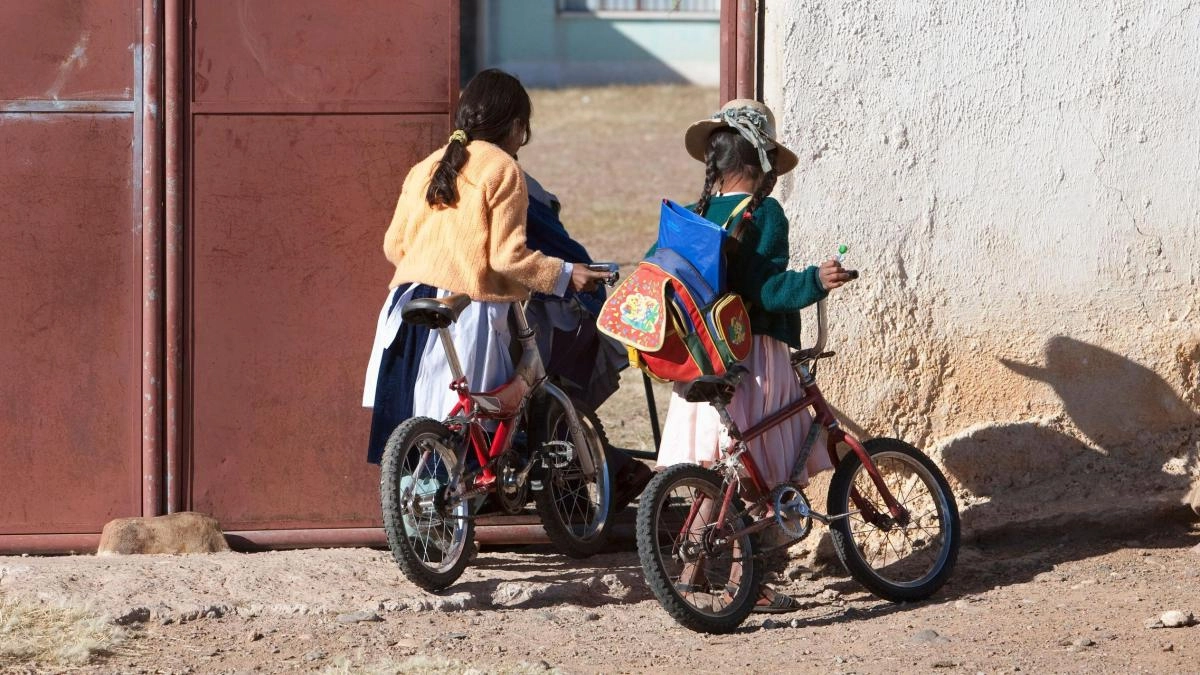

Maria* was 14 years old when her parents recommended that she marry a man twice her age. Shortly after, she became pregnant, the delivery became complicated, and her husband left, leaving her alone with the newborn.
The Family Code that governed in Bolivia established 18 as the minimum age for marriage, but allowed teenagers aged 16 and 17 to marry with the authorization of their parents or guardians.
This Wednesday, the Chamber of Deputies approved a law that eliminates all exceptions for the marriage of minors.
“This is a historic event that represents an enormous and fundamental step in the defense of the rights of children and adolescents in Bolivia,” said Jimena Tito, of the organization Save the Children, in conversation with BBC Mundo from La Paz.
Between 2014 and 2024, the Ombudsman's Office recorded more than 4,800 teenage marriages and early unions of people aged 16 and 17.
In addition to this, there were 487 marriages of girls under 15 years old, according to data from the Civic Registry Service, an agency dependent on the Supreme Electoral Tribunal.
“The problem was the exception. Our regulations prohibited marriages for girls and adolescents up to the age of 18, but allowed an exception that made at least 4,804 underage marriages possible,” Tito explains.
The senator for the Movement Towards Socialism, Virginia Velasco, met Maria while working with a group of vulnerable families in El Alto.
That experience led her in 2022 to promote in Congress, with the support of numerous human rights organizations, the bill that she sought to put an end to child marriages in Bolivia.
“It has not been easy. It has been a fight that we fought together, falling and getting up. It is a historic and unprecedented achievement to prevent the rights of children and adolescents in Bolivia from being violated,” the senator tells BBC Mundo.
The project was approved in the Senate at the beginning of the year and,With the approval of the Chamber of Deputies this Wednesday, all that remains is for President Luis Arce to sign it into law.
Child Marriages
For those promoting the project, the sanction of this law is only the beginning of a long road that must reach every corner of Bolivia.
Save the Children's expert on child protection issues in the country, Jimena Tito, highlights the numbers that show the scale of the problem.
“The data emerging from the research highlights that the problem of child marriages is of enormous magnitude,” she points out.
The situation is even more serious if one considers that almost 3% of Bolivian girls — some 32,000 minors — have entered into a free union or cohabitation before the age of 15.
These girls have not married nor do they have a marriage certificate because stable and continuous cohabitation between an adult and a minor 16 years old is illegal in Bolivia, even before the modification of the Family Code.
For Tito, the thousands of minors who have entered into free unions or cohabitation open the door to a series of crimes that can range from sexual violence and child pregnancy to rape and human trafficking.
In addition, more than 458,000 pregnancies in girls and adolescents were registered from 2015 to 2023, according to data from the Bolivian Ministry of Health.
When asked about the cultural practices that may be linked to this type of marriage, Tito responds that none of them can ignore human rights.
With the sanction of this law, Bolivia aligns itself with international standards and responds to the recommendations of organizations such as the UN and the Inter-American Commission on Human Rights.
The first step
The law approved this Wednesday by a majority of 87 modifies the Family Code and the current Family Process.
In this way, the representatives who supported the initiative seek to eradicate child marriages and unions, many of which are facilitated by family agreements.
For the specialists, the parents of these girls may support these types of marriages in response to power relations or for economic benefit, but also because they believe that it is the right thing to do and that it is socially accepted.
"There may be a connection with economic issues, there may be a connection with indigenous issues, but the biggest connection that exists is the naturalization of this problem," explains Tito.
"If my neighbors don't say anything to me and instead come to the wedding, then that's fine for me, because I am not supported by my entire community and that way I naturalize it. That has to change," he adds.
The expert also highlights that this problem is not limited to rural areas.
Therefore, the promoters of this change understand that the work to ensure that Bolivian society stops naturalizing these practices has only just begun.
For Senator Velasco, who was also Minister of Justice under Evo Morales, this is only the first step. “Now it's time to work on raising awareness, visiting schools, universities, and small towns to tell people about girls' rights.”
This debate hits home in its own political space, at a time when the figure who has dominated the political scene for the past 20 years, Evo Morales, is being investigated for the crime of aggravated human trafficking in relation to the alleged abuse of a 15-year-old girl, with whom he allegedly had a child.
Refusing to testify, Morales has taken refuge in a small town in the Cochabamba Tropics, thus evading the arrest warrant filed by the Prosecutor's Office.
“Justice is equal for everyone. For deputies, senators, presidents, and vice presidents. They must all submit to the law. Anyone who has committed a crime must be punished according to the law,” says the senator.
*The woman's name has been withheld to protect her identity.
Click here to read more stories from BBC News.
Subscribe here to our new newsletter to receive a selection of our best content of the week every Friday.
You can also follow us on YouTube, Instagram, TikTok, X, Facebook and our WhatsApp channel.
And remember, you can receive notifications in our app. Download the latest version and activate them.