

Supreme Court authorizes Trump to freeze foreign aid funds
The ruling gives Trump victory in his attempt to control federal government spending even if it has been previously allocated by Congress
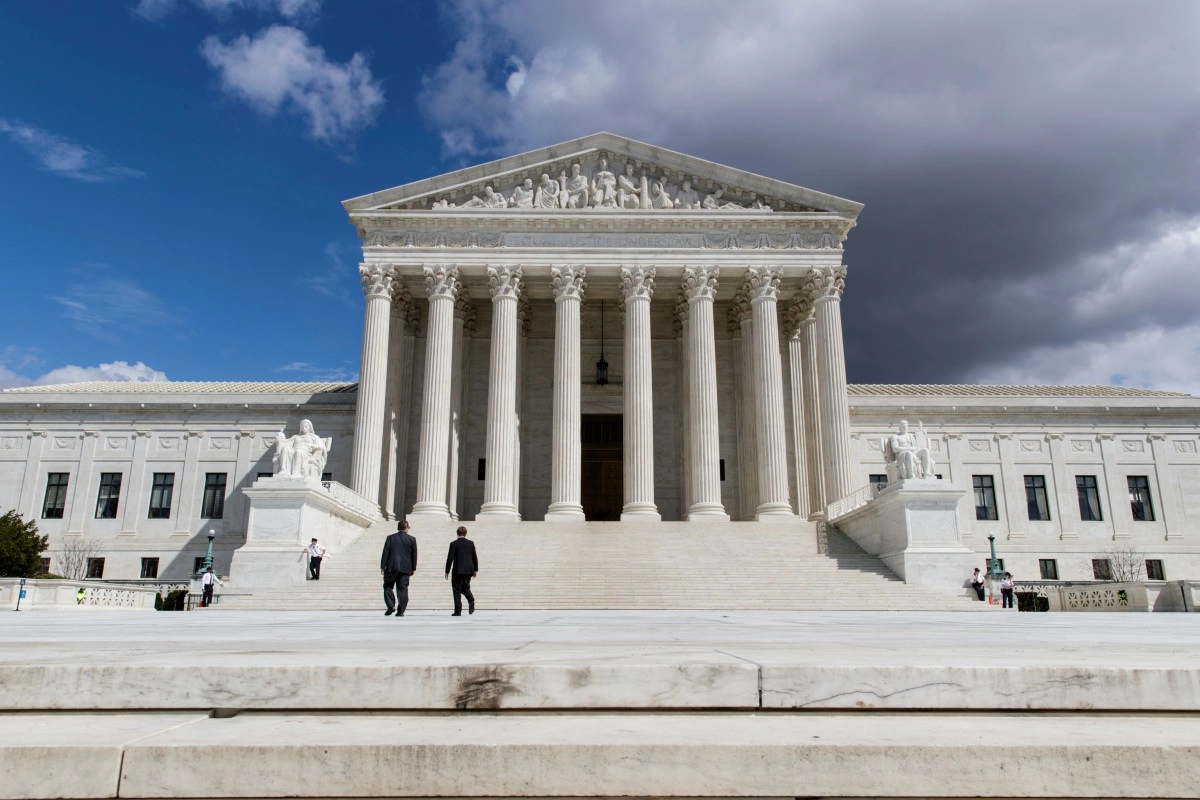

The Supreme Court authorized President Donald Trump on Friday to freeze $4 billion in foreign aid funds that had been previously allocated by Congress.
The ruling is a significant victory for Trump in his attempt to control spending approved by Congress during the past year.
In its brief ruling, since it was an urgent request from the government, the court's six-justice conservative majority ruled that Trump's ability to manage foreign relations "more than outweighs the potential harm" to recipients of the funds, although it noted that its decision is provisional until Congress and lower courts resolve the matter.
The $4 billion included funds for global health and HIV programs, which were allocated by Congress but which Trump called wasteful and has been fighting on two fronts.
In addition to defending the aid cuts in court, his administration is also seeking to "rescind" this allocation of funds in Congress.
The court's three liberal justices, Elena Kagan, Sonia Sotomayor, and Ketanji Brown Jackson, dissented from the decision, saying the issue requires in-depth debate because "the distribution of powers between the Executive Branch and Congress with respect to government spending" is at stake, according to the dissent signed by Justice Elena Kagan.
On August 28, the president announced that he would leave unspent approximately $4.9 billion of an $11.5 billion allocation approved by Congress for foreign aid.
He did so using a device called "pocket rescission," which consists of the reallocation of allocations on the eve of the end of the fiscal year - something that happens every September 30 in the US -, which causes its implementation to expire because the chambers do not have time to give their approval.
At the beginning of September, following the complaint of various cooperation groups, A federal judge in the District of Columbia ruled the action illegal and ordered the government to disburse the $11.5 billion by September 30, to which the government responded by insisting it would let the $4.9 billion go unspent and would appeal.
On September 6, a federal appeals court denied the government's request to overturn the order, so two days later the government asked the Supreme Court to stay it.
This is the third time the Supreme Court has allowed Trump to at least temporarily freeze federal funding, having already allowed him to cancel about $800 million in aid to the National Institutes of Health and another $65 million in teacher-training grants.