

European leaders support Iran-US agreement and they propose withdrawing sanctions; The UN describes it as a decisive ste
The main European powers expressed their support for the cessation of hostilities and offered to relax the economic sanctions that weigh on Tehran
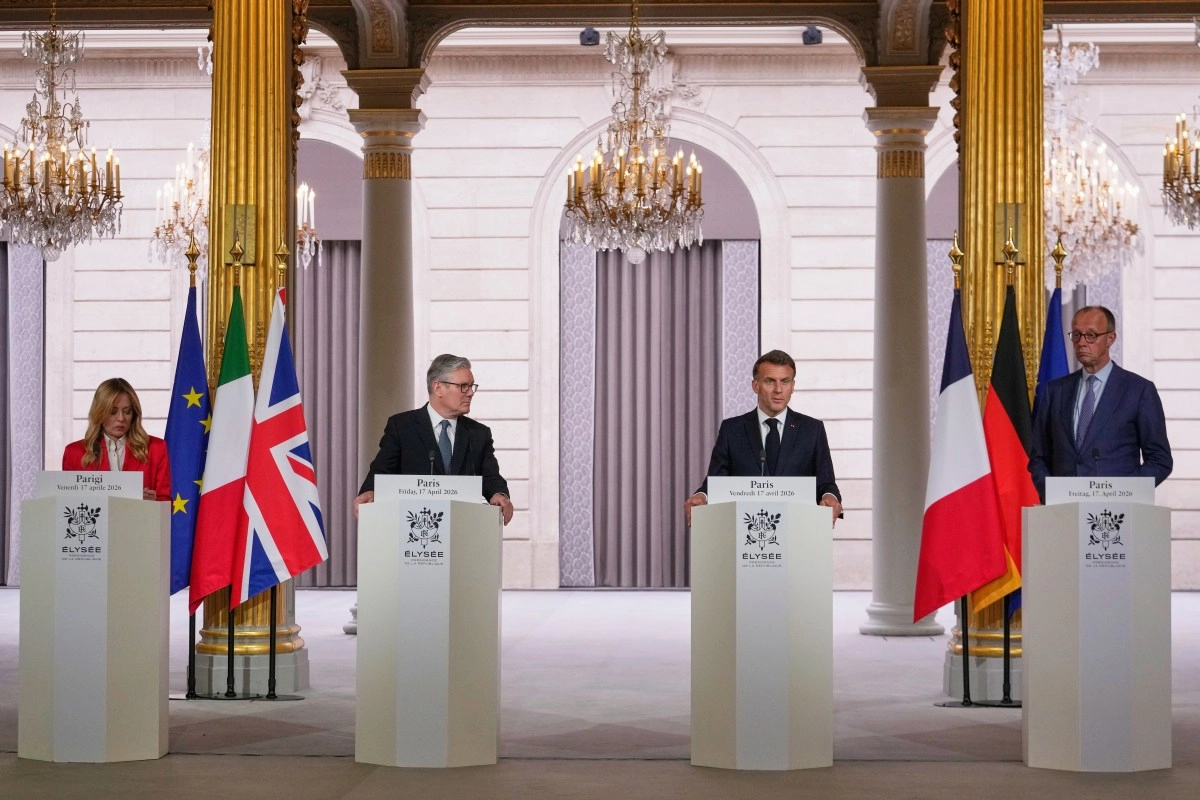

The main European allies of the United States celebrated the agreement reached between Washington and Iran to end the conflict in the Middle East and reopen the strategic Strait of Hormuz, while opening the door to relaxing economic sanctions against Tehran if it verifiably complies with its nuclear commitments.
In a joint statement, the governments of the United Kingdom, France, Germany and Italy, known as the E4, described the pact as a significant diplomatic advance and stressed the need to guarantee free navigation in Hormuz “without restrictions or tolls”, due to its direct impact on international trade and energy markets.
“We very much welcome the announcement of the memorandum of understanding between the United States and Iran,” the European leaders said in the statement released from Paris. The text also congratulated Pakistan, Qatar and other mediators for their role in the negotiations that led to the peace agreement.
Europe makes sanctions relief conditional on nuclear compliance
The four European governments reiterated that Iran should not develop nuclear weapons and stated that they were willing to review the sanctions imposed on the Iranian regime if there are “clear and verifiable” measures related to the control of its atomic program.
“We are prepared to lift relevant sanctions in response to clear and verifiable actions by Iran,” the joint statement said.
British Prime Minister Keir Starmer insisted that any lasting peace will depend on the commitments made by Tehran “being robust, verifiable and fully implemented.” Along the same lines, German Chancellor Friedrich Merz called for the agreement to be applied “with determination” to contribute to a more stable world economy and a “more secure” Middle East.
For his part, French President Emmanuel Macron stated on social media that Europe is ready to deploy defensive means to protect commercial shipping and support demining operations in the Persian Gulf. “The resumption of maritime traffic, without restrictions or tolls, is an indispensable condition for regional stability and the global economy,” wrote the French president.
The Strait of Hormuz, through which nearly 20% of the world's oil transited before the conflict, was closed by Iran in retaliation after the military offensive launched on February 28 by the United States and Israel.
The UN celebrates the pact and asks to take advantage of the diplomatic moment
The United Nations also reacted positively to the announcement of the agreement. The Secretary General, António Guterres, described it as “a decisive step towards a peaceful solution to the conflict” and highlighted that the understanding includes an immediate and permanent ceasefire, as well as the reopening of Hormuz and a framework for future negotiations.
“My warmest congratulations to the United States and Iran for reaching a peace agreement,” Guterres wrote on the X social network. The Portuguese diplomat also thanked Pakistan, Qatar, Egypt, Saudi Arabia and Turkey for their participation in the talks.
Through its spokesperson, Stéphane Dujarric, the UN also expressed its hope that the parties involved will take advantage of this moment to strengthen dialogue and move towards lasting peace in the region.
The agreement, whose full details have not yet been disclosed, will be officially signed on June 19 in Switzerland. According to announcements made by Washington and Tehran, the pact contemplates the cessation of hostilities and the restoration of navigation in the Persian Gulf.
The war began after a joint offensive by the United States and Israel that led to the death of Iran's supreme leader, Ayatollah Ali Khamenei, and led to a regional escalation with Iranian attacks against Israel and against countries hosting American military bases.
While international markets react cautiously, European diplomats and multilateral organizations agree that the effective implementation of the agreement will be decisive in reducing tensions in the Middle East and stabilizing the global economy.