

Fear of raids forces mother to return to Mexico
Tells about her return to and separation from her family who stayed behind in Los Angeles
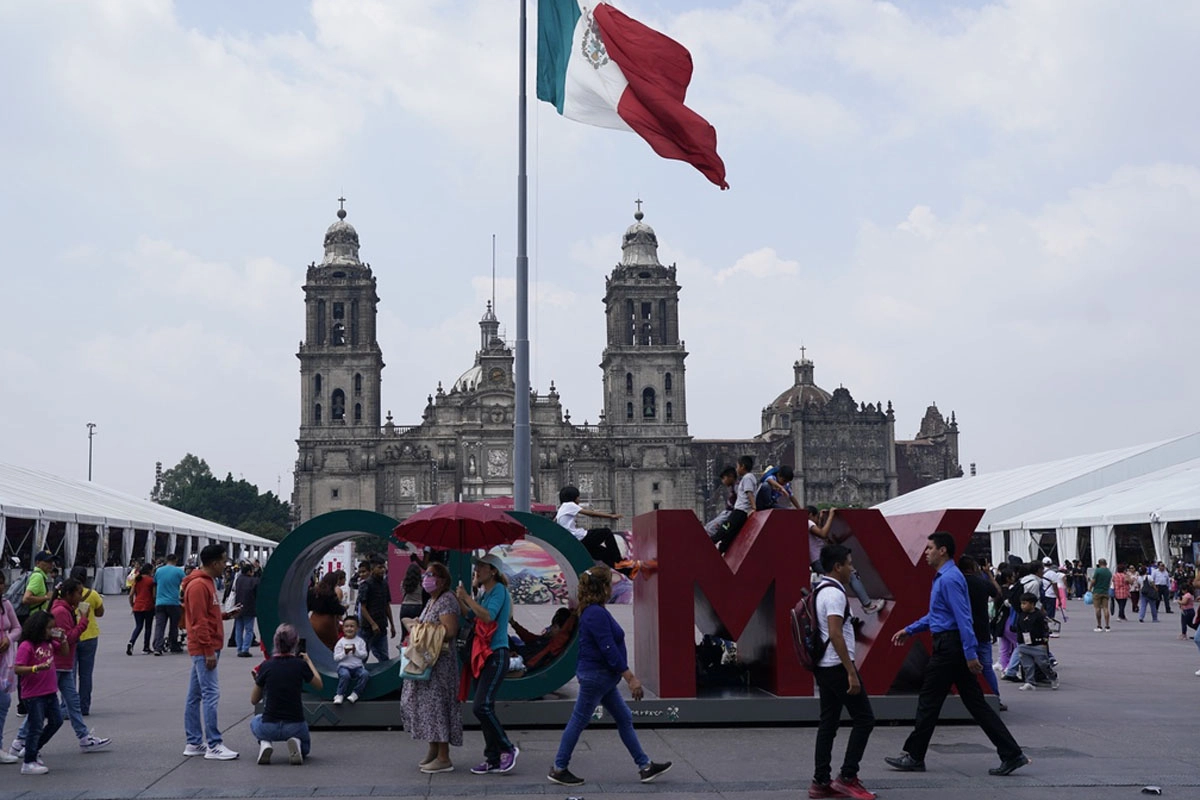

Panic-stricken, on the verge of a nervous breakdown due to fear of being arrested in an immigration raid, Lolita Olvera voluntarily returned to Mexico in February, leaving behind two decades of her undocumented life and her entire family in Los Angeles.
“What I was experiencing was very intense. I couldn’t sleep at night, thinking that the immigration agents were going to come and knock down our door and take us all. I felt anxious, on the verge of a mental breakdown,” says Lolita, 49, married, mother of three children and grandmother of four grandchildren. Twenty-five years ago, Lolita and her husband, along with two of their children, emigrated to Los Angeles, where they had another son. Currently, her three children range in age from 31 to 19.
Lolita earned her living as an apartment manager, and her husband works in maintenance.
Not even a month had passed since Donald Trump was sworn in as President of the United States when Lolita made a decision that changed her life forever.
“When Trump returned to the White House, I felt very ill. The news and comments on television and social media upset me greatly. I saw the president saying that they were going to send us to Guantanamo and I was terrified.”
It got to the point where she became nervous, suffering from dizziness and fainting, when she had always been a healthy woman.
“The emotional and psychological damage I was experiencing was so great that I said, 'I'm going to end up very bad.' That's when I spoke to my husband and told him I was going to return to Mexico. He and my children encouraged me, but In the end, I decided I had to return to my country and I couldn’t continue living like a prisoner, afraid to go out on the street.”
For years, Lolita and her husband looked for solutions to fix their immigration status, but after meeting with several immigration attorneys, they found that the chances of achieving it were remote, especially because they entered the country without documents.
“There was nothing they could help us with. Only my daughter was able to benefit from the DACA (Deferred Action for Childhood Arrivals) program.”
Lolita hopes that her two oldest children will eventually be able to obtain residency because both are married to natural-born U.S. citizens.
“For my children, the United States is their country. They were five and two years old when we brought them. They are now parents of children born here.”
She reveals that she was also motivated to return to Mexico by the fact that neither she nor her husband had anything in the United States, they didn’t have health insurance, and they don’t know how they will survive in their old age, when they can no longer work.
“I returned to Mexico with the idea of ??starting to pave the way for my husband to return as well, and to start a small business that will allow us to save for a dignified retirement and old age.”
The Return to Mexico
Lolita acknowledges that after 25 years of not being in Mexico, returning was a real shock in her life.
“It was a very difficult decision. I knew it meant separating from my husband and my children, and missing out on seeing my grandchildren grow up, but my mental health was devastated.”
After the joy of reuniting with her parents and siblings, whom she hadn’t seen for a quarter of a century, she became depressed.
“I even thought about how I could return to the United States. I couldn’t bear the idea of ??not returning to my family and not being close to them. It’s the first time I’ve been separated from my husband and children. The separation hurts me a lot, although it was something I decided to do because of how bad I was,” she says.
Six months after returning to Mexico, she sometimes wonders if she did the right thing.
“I’m also experiencing a period of homesickness, but in the midst of it all, I’ve regained some calm. I’m more at ease. I talk to my children every day; and my husband and I communicate several times a day. It’s been very hard for them too.”
She says she suffers at the thought that her husband could be detained by immigration agents and thinks about her two children who still don’t have legal status.
“I worry a lot about them, and every day I ask God to protect them.”
It saddens her to discover that they spent 25 years of their life behaving well in the United States, paying taxes and following all the rules, hoping for immigration reform that never came.
“My two oldest children graduated from high school; my youngest is studying. We’ve done the hardest jobs that no one wants to do to earn a place in American society, but we haven’t succeeded,” she says.
Back to start
At the same time, she says that returning to Mexico has meant starting from scratch and a process of adaptation.
“I know Christmas is coming, and thinking that it will be the first time I won’t spend it with my husband, my children and grandchildren fills me with tears.”
Even with all the challenges that returning has entailed, he recognizes that not everything has been bad.
“I thank God for the opportunity he has given me to see my parents and siblings. I am happy to see them again, and they have supported me a lot.”
The best of all, she admits, is that even with the desolation that the separation has brought her, returning to Mexico has allowed her to recover her mental health.
“I no longer feel like a hunted rat, all scared and full of panic. I feel free to go out whenever I want and breathe freedom. I have found a better country than the one we left when we left in search of a better life in the United States, fleeing corruption.”
She says her homeland is beautiful.
“My dream is that my husband and I can be reunited, and that together we can explore our Mexican land, travel and visit the magical towns.”
Voluntary Return
One possible indicator of the number of people who return to Mexico of their own free will is the number of procedures to obtain household goods certificates that are carried out at Mexican consulates.
This certificate is requested by those returning to the country in order to exempt the importation of their household goods from paying taxes.
According to the Consulate General of Mexico in Los Angeles, between January and August 2024, before Trump, 12 household goods certificates were processed; This year, in that same period between January and August, a total of 27 have been processed.
They clarify that not all people who decide to return to Mexico carry out their household goods or moving procedures.
Last July, President Claudia Sheinbaum said that around 75,000 have repatriated to Mexico voluntarily since January when Trump's second term began.
"There are around 75,000 compatriots, Mexicans, who have repatriated since January 20, when President Trump took office," said the president in her morning press conference.