

FIFA approves hosting the 2026 World Cup in Mexico despite fears of insecurity
Rodrigo Martínez-Celis, executive director of Security and Civil Protection of the organization, approved Mexico's participation in the organization
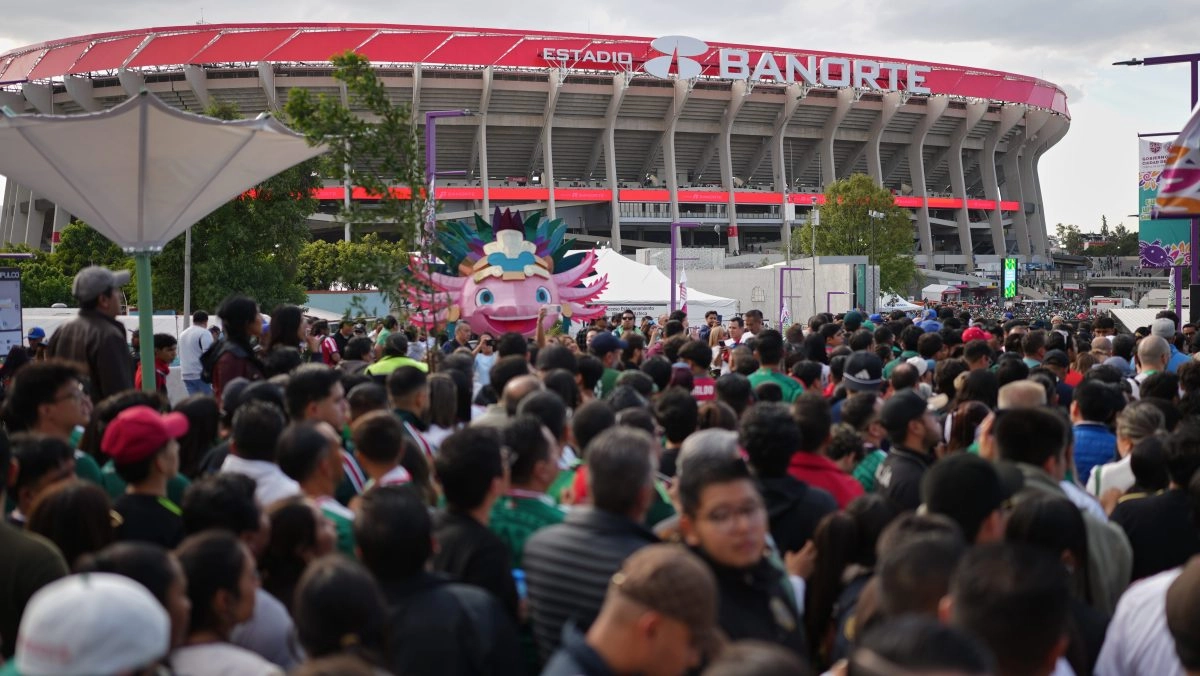

With the 2026 World Cup reaching its final stretch, FIFA made a positive assessment of Mexico's performance as one of the three venues for the tournament and assured that the country responded to the demands of a global-scale event. Rodrigo Martínez-Celis, executive director of Security and Civil Protection of the organization in Mexican territory, stated that the organization managed to dismantle previous questions related to the country's capacity to host the competition.
From the FIFA offices in Mexico City, the official explained that one of the main objectives was for the international conversation to focus on the sporting development of the championship and not on possible security problems. According to him, that purpose was fulfilled.
“The narrative that we could have found that Mexico was not ready to organize an event as we organized it, at the moment we can say that Mexico was ready to organize it and that is the image that the world gets,” he said, according to EFE.
Martínez-Celis maintained that, in FIFA's opinion, the most important indicator of the operation is that international attention remained focused on soccer during the tournament.
"The best indicator for us is that today the world is talking about how well the games were played in Mexico. Our mission accomplished is that people are talking about soccer and I think that is the best indicator for us," he added.
Security, incidents and contingency preparation
The person in charge of Security and Civil Protection highlighted the coordinated work with the federal Security Cabinet, considering that the actions of the authorities allowed confirming that Mexico had the necessary preparation to receive the championship. He even assured that the organization of the World Cup was treated as a matter of national security and pride for the country.
"The World Cup for Mexico was an issue of national security and national pride. And that's how we worked with them," he said.
He also made reference to the inaugural match played at the Mexico City Stadium, previously known as Azteca Stadium. He indicated that the match represented an additional challenge due to the mobility conditions of the capital and the massive demonstrations recorded during those days, although he considered that the start of the tournament was developed satisfactorily.
In his evaluation, Martínez-Celis acknowledged that there was an event that must be analyzed once the World Cup concludes: the death of five people during the celebrations related to the tournament.
He described that episode as a “terrible” incident and noted that it will be reviewed in the evaluation meetings after the championship final.
Another point addressed was the situation experienced in Jalisco before the start of the World Cup. The official recalled that, after the day of violence that occurred at the end of February after the death of drug trafficker Nemesio Oseguera, alias “El Mencho”, FIFA reinforced its risk analysis for the Guadalajara headquarters.
As explained, the agency prepared different response scenarios and held meetings with the National Security Cabinet to review the planned operations again.
"When that incident occurred, we began to build our risk analysis. We always have to have plan B, C and D. We were ready for any contingency. We had a meeting with the National Security Cabinet (...) where the operations and how we are going to be ready were reviewed once again," he commented.
Finally, Martínez-Celis highlighted Mexico's willingness to receive all participating delegations, mentioning the case of the Iranian team, which ended up establishing its concentration in Tijuana due to bureaucratic and logistical difficulties in settling in the United States.
"FIFA is oblivious to the geopolitical situation. Iran took a while to choose. And when they decide to stay in Tijuana, it is within the FIFA rule. Tijuana responded first," he concluded.