

How Keir Starmer went from winning the UK to resigning less than 2 years after becoming Prime Minister
The president will remain in office until a new leader of the Labor Party is elected, something that is expected before September
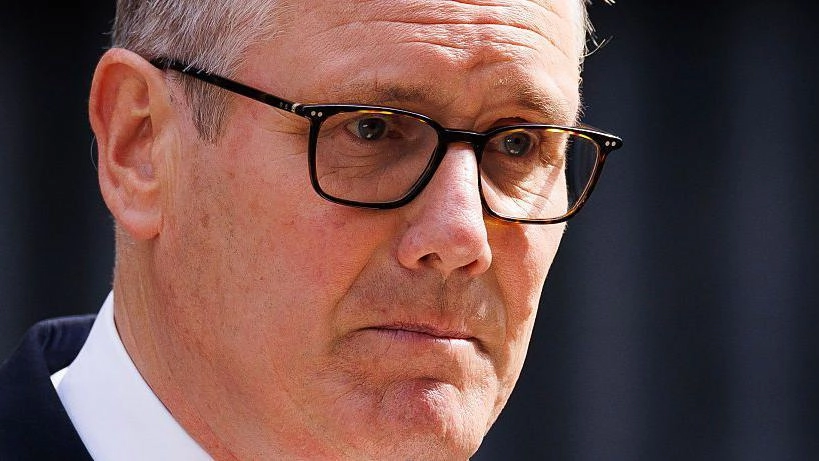

Keir Starmer announced this Monday his resignation as leader of the Labor Party and prime minister of the United Kingdom.
From 10 Downing Street, the residence of the British rulers, the politician, who came to power in July 2024, announced that he had communicated his decision to resign to King Charles III.
“Arriving at Downing Street two years ago was the proudest moment of my life,” he commented, visibly moved.
Starmer asked the National Executive Committee of the Labor Party to establish a calendar to choose his successor, which would begin this July 9 with the beginning of the reception of applications and its closure before the summer recess.
According to this timeline, there will be a new prime minister before Parliament resumes sitting in September.
Be that as it may, Starmer will continue to lead the government until his replacement has been elected.
Andy Burnham, who for months has been mentioned as a possible new prime minister, made it clear that he will seek to replace Starmer.
“Keir has provided an enormous service to our country and I want to thank him for his leadership and dedication during this very difficult period,” he wrote in a statement.
"Your decision marks the beginning of a transition and it is essential that this process be carried out in an orderly and responsible manner. I am committed to participating in this process," he added.
European leaders paid tribute to the outgoing British ruler.
“European and Ukrainian security is stronger thanks to you,” wrote European Commission President Ursula von der Leyen.
Rise and fall
Starmer's resignation comes less than two years after the lawyer-turned-politician delivered his party's biggest election victory in almost two decades.
In the general elections of July 2024, Labor won 412 deputies in the House of Commons compared to 121 for its Conservative rivals.
However, for months, the prime minister's continuity in power has been in doubt.
A series of scandals, such as the appointment of Peter Mandelson as ambassador to the United States, despite his ties to the deceased American sex offender Jeffrey Epstein, as well as unpopular measures - such as cuts to social benefits for retirees, the unemployed and people unable to work - seriously damaged the image of a president who never became particularly popular.
Today, only 18% of British people approve of the government's management, according to data from the polling firm YouGov, making it one of the worst rated in recent decades.
However, the poor results in the local and regional elections last May – in which the Labor Party lost thousands of councilors to the populist Reform UK and also control of the Welsh government – revived demands for the ruler to resign and for a change in the leadership of the party to take place.
"The question my party is now asking is not who was best placed to transform the Labor Party and bring it to power. That question has already been answered," Starmer said.
"The question is whether I am the best placed person to lead us to the next general elections. I have heard the response of my parliamentary group and I accept it with sportsmanship," he concluded.
With the overwhelming victory of Manchester Mayor Andy Burnham in last Thursday's election to elect the MP for the English constituency of Makerfield, many in the party believe they have found a suitable replacement.
Starmer said he will do everything possible to ensure an orderly transition of power and will offer his full support to his successor.
Likewise, he took advantage of his speech to take stock of his management and recalled that he received a party that was “politically, financially and morally bankrupt” and that, “again and again,” they told him that it was “finished.” However, he was pleased to prove that “those people were wrong.”
He also thanked the friends and colleagues who accompanied him during six years at the head of the party, as well as the Downing Street staff and the “extraordinary civil service” (civil servants).
And he concluded by saying that, by leaving “the most important job in the country,” he will dedicate more time to what he considers “the most important thing”: being a husband and father.
“The King of the North”
Starmer's resignation occurred on the same day that Andy Burnham, whom many in the country consider to be the next prime minister, was sworn in as a new member of the House of Commons.
Burnham, born 56 years ago in Aintree, a suburb of the English city of Liverpool, is a familiar face to Labor.
The politician held various positions in the governments of Tony Blair (1997-2007) and Gordon Brown (2007-2010) and tried on two occasions to take over the reins of the party.
Since 2017 he has served as mayor of Manchester, one of the country's largest cities. Due to his victories at the polls and his ability to disagree with the leadership of his party, the local press has nicknamed him the “king of the North.”
His election as MP was surprising, as polls predicted a close result between him and the populist and anti-immigration candidate of Reform UK.
However, Burnham won with almost 20 points of advantage and obtained 55% of the votes.
In his first message after Starmer's resignation, the new legislator stated that "the country expects stability, seriousness and constant attention to the most important issues, and that is what it will get."