

Why are multicultural voters, including Latinos, afraid to talk about politics in the United States?
Latinos, Blacks, and AANHPIs Explain Why They Fear Public Speaking About Politics
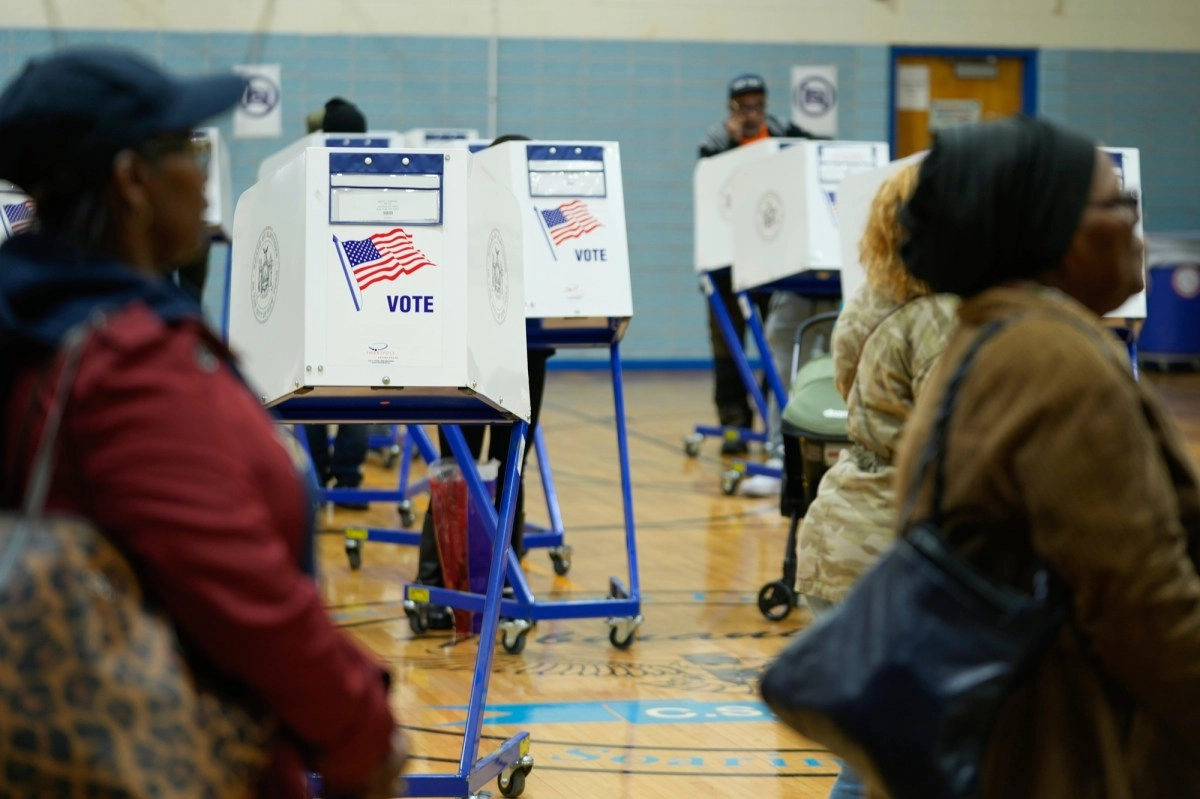

Multicultural voters, including Latinos, are connected to politics in the United States, but they have decided to speak publicly as little as possible about it, to avoid any type of aggression.
“The current climate has made talking openly about politics feel really dangerous, whether at work, online or even at the family table,” indicates the Culture Collective Pulse report from the My Code Intelligence Center for this newspaper.
The report includes opinions from the African American, Hispanic, and Asian American and Pacific Islander communities, who recognize that “fear.”
"In my work environment, I worry about disciplinary measures, discrimination, retaliation or losing my job. In my social circles, I fear being judged or rejected. On the Internet, I fear cyberbullying," said a Hispanic in the 35 to 44 age group.
The Culture Collective Pulse adds that this silence from voters is not due to disinterest, since the majority expresses interest in politics and claims to continue voting.
“[Voters] have simply decided that protecting themselves and their loved ones is more important than winning an argument,” it adds.
The fear of expressing a political position in public encompasses all aspects of people's daily lives, “from losing a job to facing physical danger,” a situation that intensifies when belonging to a minority group, the report indicates.
This report stands out in the midst of the midterm electoral process, which will allow the House of Representatives and part of the Senate to be renewed, in addition to several state positions, including governors, local congresses, attorneys general and other elected positions.
Should politicians worry?
The report – which is not a quantitative report, but a qualitative one – adds that politicians would even be at risk in their attempt to campaign among communities that live in fear of the political environment, if voters perceive that there is no “genuine credibility.”
“The opportunity [for politicians] lies not in exploiting a posture for short-term benefits, but in demonstrating a real understanding of what these communities actively protect: their peace, their families and their security,” adds the analysis of results.
Among black adults there is a particular fear of being targeted, considering that the US has an environment that they describe as “emboldened by racism.” This position is also expressed by Hispanics.
“I suffer harassment from racists,” confessed an Afro-descendant woman in the 35 to 44 age group.
“I am concerned about the number of racists there are today,” added a Hispanic in the 25 to 34 age group.
Silence has become a “calculated strategy” for voters.
“Everyone has the right to their opinion, but only if they do not express it out loud, because as soon as they do, hatred is unleashed and one is in great danger,” considered an Afro-descendant woman in the 25 to 34 age group.
The main reason for remaining silent is not just to avoid an uncomfortable conversation, but also to protect mental health, personal relationships, physical safety, and even family.
“[There is] overt racism, possible violence, anger and inappropriate responses,” said an AANHPI woman in the 45-54 age group.
In a previous report by the Cultural Collective Pulse, it was revealed that Latino voters even distrust how voting rules are being modified, in the midst of a war of redistricting – a process known as 'Gerrymandering' – initiated by Republicans in Texas and continued by Democrats in California.